Thursday, September 02, 2010

DELHIRIUM graphic!

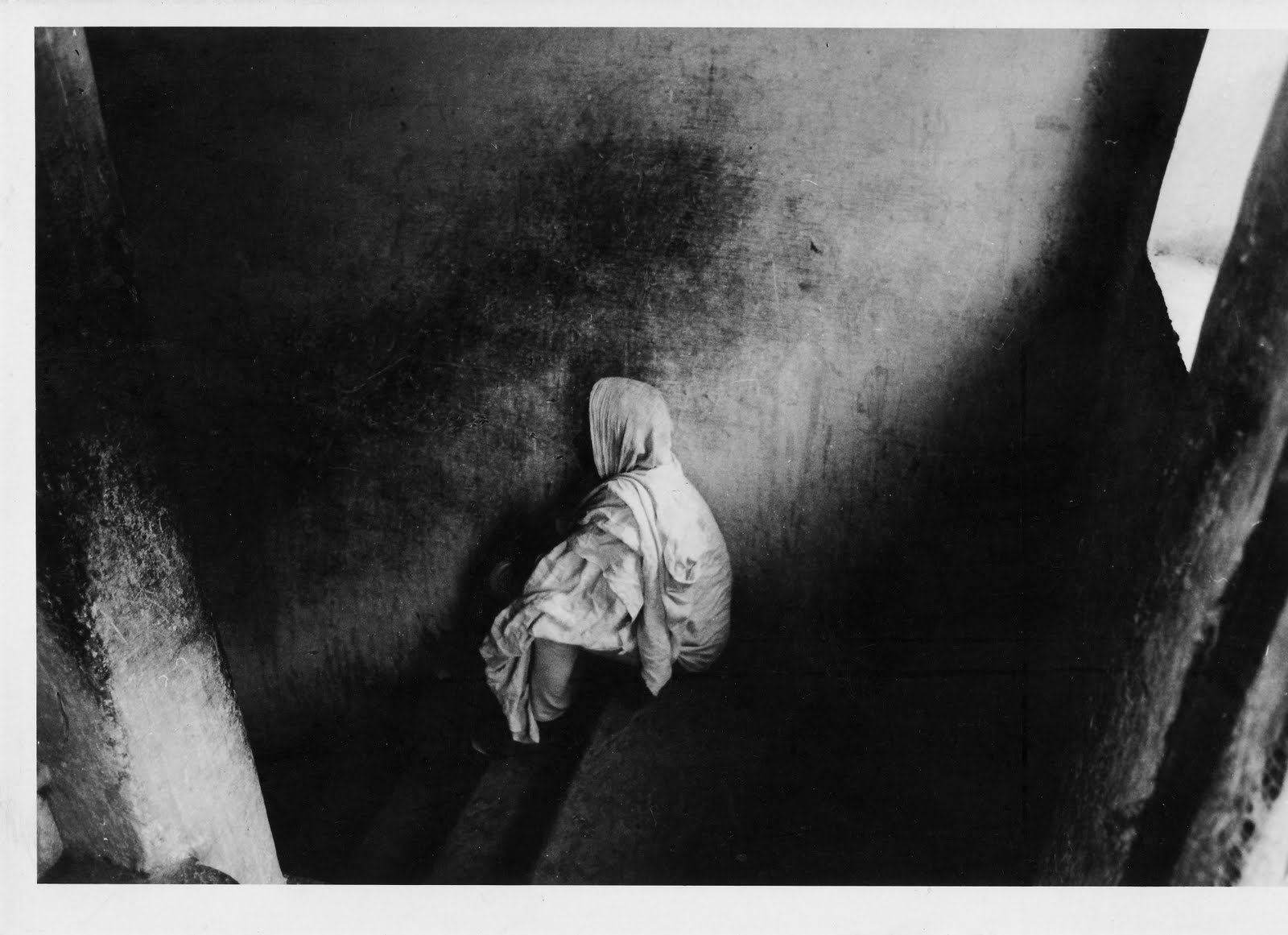
This illustration was commissioned by OUTLOOK TRAVELLER to accompany an article by LUCY PECK about Delhi's monuments. I am usually disappointed when I see my work in print but I think this one looks rather sweet in the current issue -- I don't think the issue's been uploaded to the net yet but it's on the stands. The illustration looks a little different in print because I created it in two versions, stacked (as it appears here) and also as a border across two pages (as it appears in the magazine).

Ah -- and here's a link to the article itself, THE OLDER DELHIS.


PAUL THEROUX's SIR VIDIA'S SHADOW


I've just finished reading Paul Theroux's SIR VIDIA'S SHADOW

and am still tingling with pleasure. I have always liked Theroux as a writer and look forward to his books but for some reason never got around to reading this one when it came out in 1998/99. Perhaps because I was not interested enough in VS Naipaul to care that they'd apparently had a falling out; perhaps because the reviews suggested that Theroux exposed himself as spiteful and small-minded while criticizing a famous lit-giant.


Whatever.


I am glad now that I waited to read it because in the intervening years I have read several new books by Theroux but only the odd word or two by Naipaul. The fact that the latter was finally awarded a Nobel changes nothing: I don't choose my reading based on prizes. I read 'SHADOW as if it were a murder mystery -- but with a friendship rather than a corpse at the heart of the mystery.


I would say that it's a must-read for anyone who is interested in books and literature, in writers and their lives. Theroux does expose himself -- and that is what makes this such an unusual book -- it's like reading the diary of an intelligent, well-read and sophisticated lover who has been jilted in the most atrocious way and then, in the way of ALL lovers, intelligent or not, cannot stop himself from screaming his heart out. The entire book is a very well-articulated, superbly crafted scream of deep, unquenchable heart-hurt. The pain of a lost friendship IS often more unbearable than the loss of romantic/sexual/conjugal love because it very often involves betrayals at levels that the loser does not even know existed until they are revealed.


It is a wonderful book, better than any fiction. Go on, then: run out and buy it/borrow it/read it AT ONCE.

Sunday, August 29, 2010

CUTTING CIRCLES

If you've never felt the need to cut circles out of a sheet of paper, you should stop reading this blog-post right now. If, however, you have spent the greater part of your life wondering if -- uh, no: feeling CERTAIN that -- somewhere in the Universe there's a gadget that cuts circles out of an ordinary sheet paper easily and without mess, then what I'm about to describe may be of use to you.

Perhaps it's something that graphic designers and artists are taught on their first day at art school -- but I didn't go to art school and also I didn't hang out with the kinds of people who ever showed the slightest interest in cutting circles out of paper, so I missed out on this little trick and had to wait 57 years to wake up one day and work it out for myself.

You'll need a couple of pieces of equipment: one, a compass with a bow-attachment and two, a box-cutter or Exacto knife. And of course a sheet of paper, a drawing board and a cup of water.

A bow attachment is something that is bundled along with most good compass sets and is used for drawing circles in ink rather than with a pencil-point. It resembles the beak of a slightly peevish hornbill -- and is definitely an instrument that looks as if it was designed in the nineteenth century (and probably was). But the point is, it works rather well, so long as one is reasonably un-clumsy with open bottles of ink.

Anyway. For the purpose of cutting circles out of paper, you don't use ink with your bow attachment. Instead, you fit the attachment to the arm of the compass that usually holds a pencil point and you dip the beak of the bow in the cup of water. This causes a very small amount of water to be taken up at the tip of the bow. Then you use the compass in the usual way, depositing a circle in plain water onto your sheet of paper. Put the compass down, wipe the tip of the bow (so that it doesn't rust) and then, using the box-cutter and/or Exacto knife, gently separate the circle from the rest of the sheet -- the water will weaken the paper just enough to allow you to do this without ripping the paper sideways. Ta-daaaaa! A neat and graceful circle-shaped aperture appears where before there was none.

It works best with thin paper of course -- but I cut a large number of circles out 150 gsm card the other day, slicing along the water track left by the bow attachment, with very little difficulty. The results were definitely neater and more circular than if I'd just used the cutter on its own.

All through my life, I have tried cutting circles out using scissors (hopeless!) and tiny knife-blades with circle-templates but the results have not been good because (a) tiny knife-blades seem to get blunt very easily so they require a great deal of pressure and (b) when the blades are NOT blunt, they slice through the plastic of the template. I have also tried attaching blades of various kinds to my compasses but it is too much of a struggle, and anyway, the blades bend and wiggle in a most uncooperative manner. Google searches reveal that Rotring and Staedtler make blade attachments for compasses -- but then these are NOT standard add-ons with compass sets and I have never got around to buying one.

No doubt there are laser-cutters out there, made exclusively for the professional and non-garden-variety of circle-cutter. But for me, this late-life discovery of the uses of a bow-attachment is very pleasant and I am very grateful to the Muse of Circles, whoever she is, for whispering this secret in my ear.

Monday, August 23, 2010

POPCORN MAGNOLIANA

This is an idea I had this morning for what will undoubtedly become a major snack item. My suggested name is:

POPCORN MAGNOLIA

The main (only!) ingredient is POPCORN.

Using freshly popped corn, squeeze the popped kernels into small molds about the size of fish fingers, plus something to keep the forms from breaking apart, like some kind of light batter (but not enough to seriously flavour the corn). Then these can be arranged on a plate around different kinds of dips -- such as hot caramel sauce, or chocolate for a sweet and sticky snack -- and Mughlai gravy, or BBQ sauce for savoury treats!


------------------------------

Many people make popcorn "balls" using honey or golden syrup to bind em up -- but there's no reason that something else can't be used -- I mean something savoury -- and at the same time, it's okay in my book to dip something with a sweet under-carriage into a savoury sauce.

Friday, August 20, 2010

A MONKEY-PUZZLE STORY

REVIEW: MONKEY MAN by Usha K.R.

[This has appeared in the current issue of BIBLIO]

Like an experienced angler landing a difficult catch, Usha KR keeps her line taut all the way through this elegantly plotted novel. Not till the end do we get to see the whole thing as it lies panting and struggling, revealed at last in all its oddity, neither a mystery nor a romance but a story of people caught in the embrace of a complex and hairy otherness.

The tale begins in Bangalore, as a fictional account of the real-life events that took place in New Delhi, circa May 2001. Reports began circulating of a mysterious, humanoid creature that attacked innocent citizens during the hours of darkness, causing a fear-psychosis to grip the city. The panic lasted for perhaps six months, resulting in injuries ranging from deep scratches to severe trauma and even death: at least two people were reported to have died as a result of falling down a flight of stairs while trying to escape from the monster. But the creature, such as it was, was never caught either in person or on film. The police released sketches based on eye-wtiness accounts, but ultimately, according to Wikipedia, "the entire incident has been described as an example of mass hysteria".

Usha's retelling of this half-forgotten news story is set in January 2000. A teacher called Shrinivas Moorty forms the heart of the book. Despite a sterile marriage and dead-end career, he has entered his middle-years with a few shreds of his youthful dreams still clinging to him. Next is Neela Mary Gopalrao, the woman bureaucrat at the Centre for Socio-Economic Studies who rules over her private fiefdom of clerks and peons with a rod of petty cruelties: cheques that will be needlessly delayed, inter-departmental letters that will never be delivered, cutting remarks that can never be countered for fear of dismissal. Finally there is Pushpa Rani, the young woman who has powered her way out of the slums and into a call-centre with the tenacity of a peepul-tree seedling growing out of a brick wall.

We are told at the outset that these three lives will be braided together and held in place by that monkey-shaped filament whose name adorns the cover of the book. And we look for the creature, as we enter the opening chapters, wondering from which corner of Ammanaguddi Street, dug up and traffic-clogged as it is, the shadowy being will spring. But the lives of the three characters soon dominate the stage and we are diverted by the unspooling of their histories until suddenly, with a twitch and a stifled scream, yes – there's the creature! Or … wait: what exactly are we looking for, again? Is this a novel about three fictional characters or a documentary about the changing soul of Bangalore? About a city or a country? About you or I? By the time we end the book, we know a little more about what we might have believed when we began it, but we also look reflexively over our own shoulders, wondering about the monkey-shaped spectres that haunt the hidden corridors of all our lives.

Usha K.R.'s gift as a writer is her ability to convince us that even the slighteset of stories is worth caring about. Her characters are so unremarkable that if not for the precision with which she describes them, we would not pay them a second's attention. Moorty, for instance: he has a slight paunch, his hair is thinning, he rides a scooter. Even the elements that make up his tiny inner spark, the love of western rock music, the fondness for good cinema and the Nehruvian socialism that still animates his deepest memories, are hardly very original. The songs and the bands are only too familiar, the socialism has grown so stale and the movies are all a bit passĂ© now. But it is this very ordinariness that makes the portrait so convincing. Like a frog that has been expertly dissected for us by our biology teacher, the fact that it is commonplace is precisely why we value it – because it reveals what is commonplace about all frogs.

Pushpa Rani by contrast, is a character whose real-life counterparts are so recently evolved from the primordial slime of India's social inequalities that her feet as still a little webbed, a little unknowable. None of us has enough data about what lies in the future of all the Pushpa Ranis rising up from the slums and shanty towns of Indian cities and in that sense a literary character created from her clay can be molded to fit almost any role. Neela is more familiar, the petty bureaucrat in the starched cotton sari, but she has some unexpected flourishes too. She is of mixed Hindu-Christian parentage and for that reason is neither wholly respectable nor wholly pariah. She is that stock figure-of-fun, a card-carrying member of the Spinster Party who will nevertheless permit one single pulse-beat of indiscretion to rattle around her veins for the rest of her natural life.

The secondary characters are as well-realized as the principals. They include Neela's underlings such as the brash, good-hearted peon Sukhiya Ram and her single overlord in the official pantheon, the lofty Dr Subramanyam; 'Bali Brums', short for Balaji Brahmendra, the "charismatic and hugely popular radio jockey of the city's brand new and only FM channel, Voices from Heaven"; and Moorty's fragile wife Lily, with her beauty and her childlessness, and Moorty's colleague at work Jairam, with his America-returned born-again capitalism. Pushpa Rani's co-workers and family have a faintly filmi quality to them, as if we have either seen them in BBC documentaries about Call Centres or in commercials about the near-magical properties of skin-fairness creams.

Holding all the characters together is the personality of the street along which so much of the action takes place. "The Ammanagudi Street of [Moorty's] boyhood was a nice mix of cows and men, and of course, the goddess after whom the street was named. Of the old shops, only two remained – a cycle-repair shop and a flour mill, going about their business for more than thirty years – before they were shown up by a fast food "palace" selling hot tomato soup at five rupees per cup and a cyber cafĂ© with twenty-four-hour Internet access … now that he had to go past the temple every day for the past two years, past the potholes filled with the over-runs from the manholes and the plastic bags that floated on the scum and got caught in the foot rests of his scooter every now and then, he had seen for himself how the Mother lived and even become familiar with Her routine. Every morning he did what every other passerby did – turn right to have a glimpse of her face – black stone, freshly annointed with oil, her nose, eyes and mouth outlined in silver, calmy accepting of all that her devotees did to her. A trishula was planted in front of her, lemons impaled fresh every morning on each of the three prongs – marking the bounds of direct access. No one could venture beyond except her priest – an unsmiling young man with a crew cut, the razor-trimmed arc of hair clean and precise against the skin of his neck. Late one morning Shrinivas Moorty had been witness to the priest lighting up a beedi and having a quiet smoke after closing the temple, and then making his way to the self-service joint up Ammanagudi street, presumbaly for an idli-vada … [The Mother] reminded him of his wife – the same mysterious rituals with the unguents and the stoic acceptance of worship. He remembered his mother and sister, who were easier than Lily and the Mother, and whose ablutions too were not as complicated, rubbing on their faces something called Afghan Snow, that came in an icy white glass jar and had a picture melting snow-covered peaks on the outside." (pgs 13 & 17)

Just as the street succumbs to the indignities of being dug up and built over, slowly strangulated with underground cables and wholly choked with a combination of garbage and over-sized cars, so too the human inhabitants succumb to the changes that have stampeded over them. In this twilight of the senses, where all that was once so familiar has been replaced by cement and plastic, the emergence of a "half-man half-beast" that briefly held several Indian cities in the grip of a fear psychosis is perhaps not surprising. As an interesting speculation about a phenomenon that was never properly explained the novel is refreshing and provocative. I look forward to whatever next Usha KR has in store for her readers.


ADDITIONALLY ...

Here's a link to a feature article that appeared in last week's issue of OUTLOOK (i.e., the Aug 15th issue for this year) about FOUR FAMILIES -- North, South, East, West -- each one having travelled a great distance from its origins. Inspirational.

Saturday, August 07, 2010

Catching Up

Waffle


ShowerBath

BeerWagon

Divya,Deke,Boston

The past few weeks have passed in a blur of activity. I'm not even going to try to present a clear record of all that happened. But these pictures may provide a few clues -- starting with the ENORMOUS Belgian waffle at the very top and ending with the wedding photograph of my niece Divya and nephew-in-law Deke at the event in Boston, 17th July.

The three days in Belgium were pure pleasure, spent in the company of Paul and Bea, exceptional hosts. The two pictures following the waffle are both from Belgium. One is of the shower-cum-sunken bath of the Ah-MAAAAZING hotel at which P&B accommodated me as their guest -- it was a small manor which had been renovated maintaining its authentic turn-of-the-century opulence, complete with constantly playing classical music in the foyer and courtesy wine in the little garden at the back. The second is of a beer-fuelled wagon -- the seated beer-drinkers cycle in unison, which is what powers the small wagon they're sitting in!

We did a lightning tour of Ghent and Bruges with a brief follow-through in Brussels including a visit to the newly opened RENE MAGRITTEmuseum, on the day before my departure, on Sunday 11th.

I arrived in NYC on the 12th, discovered to my great delight that there's a shuttle bus service direct from the airport to Port Authority Bus Station -- it's called NYAS, stands forNew York Airport Service and is REALLY convenient. At Port Authority I got onto the bus to Binghamton, arrived on schedule at 6 pm and there was my sister Su waiting to collect me and drive us both back to Sayre.

I was two nights in Sayre, then Su and I left for Boston, by car, on Wednesday. We checked into the Marriott in the evening, and on Thursday guests began to arrive for the wedding. Paul and Bea flew in from Belgium and I went to the airport to meet them, while Su and Divya came by in their car to collect all three of us and return us to the hotel. In between, I also had a most enjoyable lunch and business meeting with the publishers of the American edtion of I AM DIFFERENT, in Boston, that same afternoon.

Friday was spent with P&B, doing a "DUCK TOUR" of Boston and generally having a good time. The first formal wedding event took place at the hotel in the afternoon -- a mehendi ceremony plus cocktail and dinner -- it turned into an extremely lively affair as Deke's large family had begun to arrive and everyone was in Party Mode!

On Saturday, the wedding was scheduled at 4 pm, began on time and continued with dinner and dancing late into the night -- but not the wee hours. By the time we wrapped it, it was only 11.30 at night and we had cleared all our stuff out of the venue, which was Deke's Golf Club ball room. The next day, Sunday, was a general wrap up for all the guests at the hotel, since many of them left that day. Everyone was very relaxed, there was an enormous breakfast buffet, also attended by Deke and Divya. On Monday, Su and I drove back to Sayre.

I spent another three nights with her, then took the bus to New York on Friday. Spent a night with Visa & Chandru, then on Saturday left for Vermont, by train. It was a very pleasant ride -- I LOVE trains -- arriving exactly on time at 8.03 pm. Suzanna was there to collect me and in another hour we were in East Hardwick.

So THAT was great -- a huge change of pace -- there were three hives of bees, new goat babies (yes, I KNOW I can call them kids ...), turkey chicks in one enclosure, ordinary chicks in another enclosure, a steer whose head was soon to be on the chopping block, the haying was in full swing ... and much, much more. Including of course the mandatory fantastic meal at RAINBOW SWEETS of Marshfield, VT.

My final five days were especially hectic: by bus to White River Junction where I was met by Daisy, my friend in Lebanon (NH), and was whisked off to a lunch date with her new friend David, owner of the amazing MAIN STREET MUSEUM -- a museum of droll and unusual objects, chosen for "the stories" that are attached to them. The next day, Friday, I left for Newport via Boston's South Station, on the Dartmouth Coach.

I mention this because I managed to drop my little waist-pouch on the bus while getting off. Yes, OF COURSE my passport was in it! By the time I realized it was gone, so was the bus. But I was VERY lucky: the bus does an airport loop and returns to South Station. Meanwhile I had the help and reassurance of a very kind South Station control-booth officer called Keith, who called the driver of the Dartmouth Coach and confirmed that he had indeed discovered the pouch. An hour later, it was back in my hands, contents intact. PHEW. Only another Indian citizen will know what kind of nightmare it would be to lose travel documents just prior to an international flight.

ANYWAY. So I went on to Newport, spent two very happy nights with Steve, Marion and the girls, then returned to Lebanon for two very pleasant nights. On Tuesday morning at 6.15 a.m. Aaron, Daisy's husband, very kindly dropped me off at the bus terminal, where I boarded a nonstop coach all the way to New York. It stops very close to Grand Central Station, but I was able to catch the same convenient NYAS shuttle service back to JFK. My flight left on schedule at 6 pm. arrived an hour early in Brussels at 7 a.m., left again for Delhi and 10 a.m. and we landed once more at exactly 9.40 pm.

And that's my story for the past few weeks!

Monday, July 12, 2010

IN TRANSIT

... in Brussels airport. I've been off the net for three days and very BIZZY, staying with wonderfully hospitable friends in Ghent, Paul & Bea. Am now at the airport and getting ready to leave for NYC. I hope to post pictures and more news after I arrive. For now, I need to log off and concentrate on the flight ahead. I belong to a little-known sect of international travelers which believes that no flight we take can land or take off safely unless we guide it with the energy of our superior worrying ...

Sunday, July 04, 2010

JOEL STEIN in TIME Magazine, about those Immigration Blues

When I started reading MY OWN PRIVATE INDIA I assumed it was meant to be ironic. Then I began to think, well, you know? It's a view I vaguely sympathize with, because it IS unpleasant to wake up one day to find that one's familiar neighbourhood has become UNfamiliar. Everyone knows that. It's like falling asleep in a pale blue room and waking up in a green neon pizza parlour (or the reverse!).

Then I began to think, Uh-oh! Joel Stein's e-mail box is going to be filled with hot, wet hate VERY SOON!

MEANWHILE, in other news, here's my review of VISHWAJYOTI GHOSH's DELHI CALM. I can never find India Today's online review links, so this is my own text-version (with my title for it -- the print title is most likely different):

IN SEPIA VERITAS

The thing about a graphic novel is that it is so very personal. The author's hands have touched the work, not merely via the keyboard, but physically: the paper, the colours, the visual shape of the narrative. In this sense, it seems to me, Vishwajyoti Ghosh's graphic novel, his first solo work as an illustrator/artist, is so intensely internal that reading it is to trespass within the author's inner studio of thoughts, moods and memories. Even though he's invited us in by publishing the book, his style is that of an artist who would much rather not exhibit at all.

So yes: this is not a novel in the normal sense. Nor is it an autobiography. It's more like the disinterred remains of a national trauma, reconstructed by someone who must have been a small child at the time (three years old: I checked). The trauma was and is forever, the Emergency. Yet in this version, it is less a historical event than a state of mind. The political figures of that era are not named, nor are their parties vilified. The entire situation is presented as a crisis that began for an obscure reason and was then maintained forever, a bogeyman in the collective national psyche. The book suggests that as a nation and as a people, we have become so inured to being in condition of stressful anxiety that we have forgotten what it means to be any other way.

The narrative is presented in a series of discontinuous episodes focusing on the persona of a journalist, Vibhuti Prasad. Interspersed between his interactions with friends and fellow-thinkers, are sections presented in the form of newspaper clippings in which we see a character known as Moon who is clearly meant to represent a certain woman prime minister. The atmosphere of unease within the book is infectious to the extent that I find myself unwilling to name this historical character in my review. Indeed, it strikes me as both very odd and very sad that while India prides itself on being a nation with a free press, Ghosh could not afford to name anyone in his book.

The entire story is told as if it were a fever-dream, and though some events are all too familiar – the rise of the younger son, called Prince in this version, the forced sterilizations of that era, the midnight disappearances alongside the flowering of a rare and sweet idealism, as if only the extremes of political excess can squeeze the purest type of radicalism out of an otherwise inert populace – other effects are presented as fantasy. The wearing of ever-smiling masks, for instance, and the chopping back and forth across narrative lines.

The drawings are presented in a yellowy sepia brown, watercolour washes combined with sharp, scratchy ink-effects. I found the work most effective in some of the long perspectives, where the city is represented as a jumble of rickety aparments held together by telephone wires, illegal power cables and the once-ubiquitous cable TV lines. The title is a slap of bitter irony: there is nothing in the least bit calm about the book. It rakes over the coals of the past with anger and in mourning, for all that was lost and all that will never be.

Thursday, July 01, 2010

Review: SEASONS OF FLIGHT

This is the link to my review of Manjushree Thapa's Seasons of Flight. Here's the review:

In the opening pages, Prema, a young Nepali living in the US, is asked where she’s from. She tries explaining: “‘It is near India’, or ‘Where Mt Everest is’, or ‘You’ve heard of the Sherpas?’, so that they might say, ‘Geez, that’s real far’, or ‘I could have sworn you were Mexican/ Italian/Spanish’, or ‘You speak good English.’” In this efficient, endearingly familiar way, second-time novelist Manjushree Thapa introduces us to a story about displacement, self-definition and one South Asian woman’s search for fulfilment.

Prema’s story starts in a small village near Kathmandu, ascending quickly through the loss of her mother in childhood and the commonplace hardships of poverty, to a college degree in forestry, resulting in a job with an NGO. Secondary plot-lines include a younger sister who runs off with Maoist rebels when they come calling, an anaemic romance with a fellow NGO worker and a stoic, undemanding father who only wants to see her daughter go forward in her life.

One day, in a spirit of indifference, Prema signs up for the US Green Card Lottery. When she wins, her response is characteristically laconic, as if resigned to her fate. Her inner world, however, is taut with emotion and she turns her face westward with a faint quickening of hope. When she finds a lover in the US, an attractive Guatemalan, she responds with an ardour native to her own passionate nature and her mountain culture. Another kind of heroine might have capitalised on the romance to build the familiar multi-storeyed, bathos-laden Asian drama. Prema’s different. She knows her path is an “ever-directionless zigzag trail”. In the spirit of a true seeker, she exceeds the stereotype. Her strength lies in the miniature scale of her aspirations. Like a tiny field-mouse setting out to find a niche in the limitless sprawl of the North American cornfield, she succeeds by being undeterred by her smallness.

Thapa has a light touch and maintains an admirable balance between telling a story and making socio-cultural observations. I enjoyed noticing the altered perspective of someone who might be mistaken for an Indian, but isn’t. Prema’s personal life is enviably free of the guilt and family-honour-type tensions of the subcontinent. Thapa writes as if she knows what there is to enjoy about sex. In a literary ethos where authors all but compete to earn the Bad Sex award, it was a rare pleasure to read a description worthy of the opposite.

Monday, June 28, 2010

Sonic Plaything

Like someone said at the site from which I got this, "Time for a break". Go play on this charming little TONE MATRIX.

Wednesday, June 23, 2010

Good Punz

Some of these are golden oldies, but some are gnu ...
They were sent to me by the Incomparable AA.

01. I thought I saw an eye doctor on an Alaskan island, but it turned out to be an optical Aleutian.

02. They’ve designed a new kind of high-tech airport which can retrieve passengers from the aircraft even before it’s landed -- a case of out of the flying plane into the foyer.

03. A vulture boards an airplane, carrying two dead bandicoots. The stewardess looks at him and says, 'I'm sorry, sir, only one carrion allowed per passenger.'

04. The roundest knight at King Arthur's round table was Sir Cumference. He acquired his size from too much pi.

05. Did you hear about the Buddhist who refused Novocain during a root canal? He wanted to transcend dental medication.

06. Two hydrogen atoms meet. One says, 'I've lost my electron.' The other says 'Are you sure?' The first replies, 'Yes, I'm positive.'

07. Two Eskimos sitting in a kayak were feeling really cold, so they lit a fire in the craft. Not surprisingly, it sank … proving once again that you can't have your kayak and heat it too.

08. Two fish swim into a concrete wall. One turns to the other and says 'Dam!'

09. Atheism is a non-prophet organization.

10. No matter how much you push the envelope, it'll still be stationery.

Tuesday, June 15, 2010

Review: AFTERTASTE

This appeared in India Today this week. I cannot link to it, which is sad, coz it has a bright, chirpy graphic that rather nicely offsets the whips and chains of the text. But anyway, here's the review(the title in print is "MUMMY & MONEY"):

HEARTBURN
Dear Namita,
Two years ago, when your first novel "The Music Room" won the Vodafone Crossword Popular Book Award, I enjoyed meeting you at the ceremony in Bombay and applauded warmly when you won. How sad then, that I cannot be enthusiastic about Aftertaste.

What compelled you to write this mithai-house saga? How does anyone set out on a journey of 292 pages, knowing that it's going to focus wholly on dreary, unattractive people and the grubby monotony of their lives? Writing a novel is such a very conscious effort, after all. You must have had some very specific reason for wanting to do it. Yet even the hospital doorman in the prologue can see that this family of four adult siblings doesn't want their parent to walk out alive! It's like you're daring us to continue reading after having revealed the essential features of the story right there on page four.

But okay, let's suppose we dismiss the opinions of a minor character and forge ahead. We meet the family patriarch, his friends, his money-lender. We meet the two sons Rajan Papa and Sunny, and the two daughters Suman and Saroj, in their youth. We watch their mother grow into the matriarch known universally as Mummyji. The siblings grow up, get married and have children, all in an atmosphere of unsmiling tension. By book's end we still have no idea why you've introduced us to characters so annoying that they can't even masturbate in peace without an audience of readers looking on.

I can only assume that your real purpose was to write a stirring (haha, yes, pun intended) drama centred around mitthai. And yes, there are a couple scenes in which someone or other succumbs to the charms of a milky sweet: "The minute the khoya barfi entered his mouth, Kartar shrank from master to slave. He was seized by a strange sensation that he couldn't quite understand. His tastebuds unlocked an ancient room where he was an infant sucking on his mother's breast." But two pages later, you follow up with: "Rajan Papa slipped into a satiated sleep … He woke up to the squishy sticky feeling of rasgolla syrup streaming down his legs." I'm sorry, but that has not only ruined rasgollas for me, but inspired unnatural questions about advanced diabetics and whether or not their secretions might indeed be sugary. Bleah.
The other possibility is that you had planned to write a laugh-riot about sweating in the sweet-shop, but then your journalist's instincts got in the way. Before you knew it, your characters had curdled into soap-opera stereotypes and your research into the sweetmeat industry produced the kind of ho-hum material best suited to a Sunday Magazine article rather than a feature-length novel. Your prose turned from glib to glum and your plot sank into that armpit of tedium known as Hindu Undivided Family Failure. There's really only one solution to plots that go down this path: disk-erase and start afresh.

I know, I know, all this sounds like I'm going at your book with a blow-torch, right? Well think again. Whenever I've written what I believed was a devastating review in the past, the subject of my attack has gone on to win prizes and break bestseller records for that year. So take heart! This is really only my effort to boost your sales and enrich the lives of all those readers who will swarm to read your book, now that they know it's about their favourite fixations: money, mithai and Mummyji. See you at next year's book awards! Sincerely and with no hard feelings, MP

Monday, May 31, 2010

MOKSHA


An article I read about the widows of Vrindavan many years ago made such a deep impression on me that forever afterward, I could not hear the word "widow" without thinking of that article. There was a single photograph, showing tiny bowed figures dressed in greyish white, sitting by the steps of a temple.

Then on NDTV, recently, I happened to catch a glimpse of a documentary feature called MOKSHA, by filmmaker and friend Pankaj Butalia. The five minutes I watched were enough to make me want to see the whole thing, so with a few shakes of the e-mail tree and a month's delay because of my travel sched, the DVD was in my hands. Magic Lantern Foundation, the distributors of the film, were exactly as prompt and courteous as their name suggests they might be.

The film is quiet, powerful and very beautiful. I could say "sad" but the nakedness of what it shows us cannot possibly be covered by any mere words like "sad" or "tragic". At one end of the spectacle of Indian life there's the gaudy frenzy of weddings but at the other end ... these bowed figures, with their shaven heads, little cloth bags, scrawny hands and their bare bodies, blouseless, swaddled in thin cotton the colour of ash and bones.

The fragment I saw on NDTV quoted a nineteenth century account of a nine-year-old girl's death: she is a child-widow still living in her father's house. She falls ills and is burning with fever, but because it is a day of fasting she is forbidden water by a senior widow in the clan. She dies of thirst, having "licked the whole floor of the room (she was locked into) in search of a little moisture".*

What does one do with such stories, such images? One click away, on TV, there are girls striding about like gender empowerment shock troops, grinding their hips and sticking their glistening lips out at the world in quest of a better shampoo or a more meaningful potato crisp. Meanwhile, in Vrindavan, today, right now, even as you read this, there are thousands of these other women, unrecognizable as the same species so bent and shrunken are they, as they wait for death while eking out a living by singing bhajans to Krishna.

One of the achievements of this film, it seems to me, is that it manages to slide in between that moment when you want to turn your face away and that other moment, when you want to stare, to reveal the femininity of even these women who have been stripped of that very thing. There are the faint echoes of beauty that still cling to the shape of the nose, the calm straight lines of the brow, the ritual of applying white ash on the forehead, the bridge of the nose, some with dots on either side, some without. And there is that heart-breakingly steady gaze, without self-pity, as the life is described: yes, I am alone, yes, I have nothing, yes, my husband died in my arms, and then yes, my children threw me out.

(*not word-for-word)

Thursday, May 27, 2010

AMAZEMENTS of the OPTICAL KIND


Now you see him, now you don't: the work of LIU BOLIN. From the New Yorker. DOES EVERYONE SEE THAT THERE'S A MAN STANDING IN THE MIDDLE OF THIS IMAGE??? My guess is that most people who've stopped here have not realized that there's a reason why that otherwise ridiculous bird's nest soup stadium is featured at my blog ...

Wednesday, May 26, 2010

Possibly the World's Best Op-Ed

This appeared in today's edition of the Asian Age, reprinted from the New York Times. It's an op-ed written by the DALAI LAMA, by-lined as "Tenzin Gyatso".

Many Faiths, One Truth
By TENZIN GYATSO

WHEN I was a boy in Tibet, I felt that my own Buddhist religion must be the best — and that other faiths were somehow inferior. Now I see how naĂŻve I was, and how dangerous the extremes of religious intolerance can be today.

Though intolerance may be as old as religion itself, we still see vigorous signs of its virulence. In Europe, there are intense debates about newcomers wearing veils or wanting to erect minarets and episodes of violence against Muslim immigrants. Radical atheists issue blanket condemnations of those who hold to religious beliefs. In the Middle East, the flames of war are fanned by hatred of those who adhere to a different faith.

Such tensions are likely to increase as the world becomes more interconnected and cultures, peoples and religions become ever more entwined. The pressure this creates tests more than our tolerance — it demands that we promote peaceful coexistence and understanding across boundaries.

Granted, every religion has a sense of exclusivity as part of its core identity. Even so, I believe there is genuine potential for mutual understanding. While preserving faith toward one’s own tradition, one can respect, admire and appreciate other traditions.

An early eye-opener for me was my meeting with the Trappist monk Thomas Merton in India shortly before his untimely death in 1968. Merton told me he could be perfectly faithful to Christianity, yet learn in depth from other religions like Buddhism. The same is true for me as an ardent Buddhist learning from the world’s other great religions.

A main point in my discussion with Merton was how central compassion was to the message of both Christianity and Buddhism. In my readings of the New Testament, I find myself inspired by Jesus’ acts of compassion. His miracle of the loaves and fishes, his healing and his teaching are all motivated by the desire to relieve suffering.

I’m a firm believer in the power of personal contact to bridge differences, so I’ve long been drawn to dialogues with people of other religious outlooks. The focus on compassion that Merton and I observed in our two religions strikes me as a strong unifying thread among all the major faiths. And these days we need to highlight what unifies us.

Take Judaism, for instance. I first visited a synagogue in Cochin, India, in 1965, and have met with many rabbis over the years. I remember vividly the rabbi in the Netherlands who told me about the Holocaust with such intensity that we were both in tears. And I’ve learned how the Talmud and the Bible repeat the theme of compassion, as in the passage in Leviticus that admonishes, “Love your neighbor as yourself.”

In my many encounters with Hindu scholars in India, I’ve come to see the centrality of selfless compassion in Hinduism too — as expressed, for instance, in the Bhagavad Gita, which praises those who “delight in the welfare of all beings.” I’m moved by the ways this value has been expressed in the life of great beings like Mahatma Gandhi, or the lesser-known Baba Amte, who founded a leper colony not far from a Tibetan settlement in Maharashtra State in India. There he fed and sheltered lepers who were otherwise shunned. When I received my Nobel Peace Prize, I made a donation to his colony.

Compassion is equally important in Islam — and recognizing that has become crucial in the years since Sept. 11, especially in answering those who paint Islam as a militant faith. On the first anniversary of 9/11, I spoke at the National Cathedral in Washington, pleading that we not blindly follow the lead of some in the news media and let the violent acts of a few individuals define an entire religion.

Let me tell you about the Islam I know. Tibet has had an Islamic community for around 400 years, although my richest contacts with Islam have been in India, which has the world’s second-largest Muslim population. An imam in Ladakh once told me that a true Muslim should love and respect all of Allah’s creatures. And in my understanding, Islam enshrines compassion as a core spiritual principle, reflected in the very name of God, the “Compassionate and Merciful,” that appears at the beginning of virtually each chapter of the Koran.

Finding common ground among faiths can help us bridge needless divides at a time when unified action is more crucial than ever. As a species, we must embrace the oneness of humanity as we face global issues like pandemics, economic crises and ecological disaster. At that scale, our response must be as one.

Harmony among the major faiths has become an essential ingredient of peaceful coexistence in our world. From this perspective, mutual understanding among these traditions is not merely the business of religious believers — it matters for the welfare of humanity as a whole.

Tenzin Gyatso, the 14th Dalai Lama, is the author, most recently, of “Toward a True Kinship of Faiths: How the World’s Religions Can Come Together.”

Monday, May 24, 2010

Penguin India's INDIAN ESSENTIALS

PENGUIN INDIA recently published a collection of essays under the title INDIAN ESSENTIALS

I was one of twenty authors invited to write an essay for the book and the subject suggested to me was "commuting in India". I wrote my piece several years ago and was quite pleased with it, so I thought I'd post a couple of excerpts here as a teaser trailer. If you want to read the complete piece, you'll have to buy the book!


THE TRAVELLER

Right until the moment that I sat down to write my piece for this collection of essays, I had expected to make a patchwork quilt of some fifty years of train journeys, from early childhood to now. Then I opened a new file on my laptop and in that instant the gently bubbling spring of memories changed into a trickle of stale anecdotes about lost tickets, colourful fellow passengers and the time I threw up all the way from Madras to Bombay courtesy my mother's mutton sandwiches. I’ve told these stories dozens of times and though they’re reasonably entertaining when accompanied by cheese sandwiches and tepid coffee, they're not exactly marble-plaque material.

....

So I decided to fashion an amusement from scratch, using myself as fall-gal and the Indian Railways as my stage. I decided to go on an actual trip from Delhi to Madras, on the Rajdhani, but to treat it as if it were an amalgam of all my previous trips.

...

Naturally, then, my first priority was to create a disguise for myself. Stage magicians will tell you that the main part of a successful trick is misdirection - drawing attention away from the mechanics of the trick by doing something just outside the plane of intention. With this in mind, I did two things. The first was that I bought myself a set of clothes of the kind that I never normally wear: a salwar-kurta ‘suit’ made out of cheap shiny cloth, mud-brown in colour, with an all-over print of dull red flowers. On my feet I wore a pair of vomit-pink slippers, one size too small and I took care to paint my toe nails metallic sea green two weeks in advance of the journey, so that by the time I boarded the train my feet looked moth-eaten and diseased.

My second move was to shave my hair off.

My reason for taking this drastic step was simple: I didn't have the time or inclination to grow my hair out, yet a woman with short-cropped hair not only suggests that she makes regular trips to a hairdresser but also that she has the money and leisure to pay for such indulgences. By contrast, a shaven head, in India, instantly communicates a message of traditional values, self-sacrifice and most importantly, loss. A woman will not normally remove her hair except for sober reasons - the loss of a spouse, catastrophic illness, mental derangement, louse-infestation or in quest of a favour from the gods. Whatever the cause, nobody doubts the credentials of a tonsuree. The very nakedness suggests an exposure to the elements and an absolute lack of secrets that is pitiable and for that reason, disarming.

...

‘Excuse me?’ I said.

Both men looked up. They were mismatched in the way of famous comedy pairs, Laurel and Hardy or Tom and Jerry —something intrinsically funny about the differences between them. The tall, broad one said, ‘Yes?’ while the smaller, more delicate one just nodded, with his head cocked to one side.

My immediate impression was that they were both young, perhaps in their twenties. Travelling salesmen was my first guess regarding their careers, but they might just as well have been cousins going home for a clan gathering or graduate students taking a Puja break. They were dressed decently, but without any flair. In the dim light all I could see was that they were clean-shaven, wearing long-sleeved shirts, with their luggage stowed neatly under their seats. The big one’s hair rose up in a poll of black curls on top of his head while the smaller man’s hair was straight and slicked back, parted on one side: a large hearty rabbit and a small nervous mongoose.

‘I’m doing a survey,’ I said. ‘Is it all right if I ask a few questions?’

‘Sure, sure,’ said Rabbit, as he shifted his bulk aside very slightly, as if to make
space for me, except that there was plenty of space and therefore no real need for him to shift.

‘- usually, we are the ones asking the questions,’ said Mongoose, unexpectedly. ‘Never mind! We will give the answers this time.’ He said this with a straight face, neither smiling nor frowning. There was something melancholy in his sobriety.

We were all speaking in English, though theirs was more accented than mine.

I said, ‘Oh! Does that mean you’re … ?’

‘- media consultants,’ said Rabbit, turning the palm of his right hand up, as if this were a self-evident fact. Something in the way he performed this gesture made me want to giggle.

‘We do market surveys,’ said Mongoose, nodding morosely.

‘Really!’ I said, smiling too brightly. There are certain circumstances which cause me to laugh uncontrollably. I produce a loud, chuckling rattle - sub-machine-gun with a touch of hyena - that is difficult to turn off once it gets started. I grow breathless, my sides ache and my eyes stream with tears. The fits usually occur when there is an obvious trigger, such as a comedy film or the company of friends, but sometimes, as on this occasion, the hysteria rises inside me like a volcano of soap bubbles, for no clear reason at all. An image flashed before my eyes, of me with my shaven head and green-painted toe-nails falling off my seat howling with laughter, as the two media consultants looking on, puzzled and a little pained. I clamped my hand across my mouth, hoping they wouldn’t notice.

‘How about you?’ asked Mongoose. ‘You are in survey business also?’
Further images were flashing in my head: scenes from Peter Sellers’ movies, of Herbert Lom’s face starting to twitch as crazed cackles leak out of him. I feared something similar was about to happen to me. I began massaging my cheeks as if I was in pain.

‘Uhh,’ I stammered, ‘not really, no. I’m - I'm a journalist -’

‘You should let her ask the questions,’ said Rabbit to Mongoose, in a reproachful tone.

The smaller man turned towards me, his eyes trusting and morose. ‘Please, Ma’am, you go ahead and ask. We will tell you anything.’

I was very grateful for the relative darkness of their cubicle. Sucking in a deep breath, so that the giggles were pushed back down into my stomach, I said, ‘I’m doing a series of articles about reincarnation. Maybe the two of you have some interesting stories to tell me?’

There was a brief silence. Rabbit cleared his throat and shifted slightly in his seat. Looking straight ahead as if reciting a passage he had memorized, he said,

‘Well … speaking for myself alone, I can say I take six eggs once a day.’

‘Eggs?’ I asked, unsure of what I’d heard.

‘Hard boiled,’ he said, thinking that I’d wanted clarification.

Mongoose was shaking his head from side to side. ‘He refuses to listen. I have told him so many times, but still he eats them. He says it is a question of faith.’

‘Just a moment,’ I said. ‘Why are we talking about food?’

‘You asked about it, so I am telling,’ said Rabbit, turning his palm over once more.

‘It is true,’ said Mongoose. ‘We have been travelling together on field trips for three years. He takes six eggs every night before dinner -’

‘I’m sorry but … what do eggs have to do with reincarnation?’ I had gone to a stage beyond laughter now. There was a floating sensation in my head, as if my giggles had transferred themselves to my sinuses without pausing to be released along the way.

‘You can read it in the papers every day,’ sighed Rabbit, raising his eyes to the ceiling with a long-suffering expression. ‘Some people are dying, some people are getting attacks. Excess of eggs leads to catharsis of the hearteries - leading to incarnation. But I am still eating my six eggs a day because … because … it is my belief!’ He closed his eyes.

‘No one can help him,’ whispered Mongoose, ‘no one’. He seemed on the verge of tears.

I got to my feet, knowing that I would explode if I remained in their company a second longer.
‘Thank you!’ I managed, before I fled. ‘You’ve been very informative!’

Saturday, May 22, 2010

Excellent Article

This morning I woke up unnaturally early, thinking: I need to use my blog in a more pro-active way. A blog is an extraordinary vehicle, if you stop and think about it, for putting private ideas and interior moments right out there where everyone/anyone can see them. But most of us use our blogs for hanging out our wet hankies and maybe passing around links that have done the tour of the universe half a dozen times already.

So anyway, when I got up and looked at e-mail the first thing I read was this article by Dr DAVID MICHAEL GREEN, Associate Professor of Political Science, Hofstra University and broad-spectrum commentator. He posts regularly to his web-site, THE REGRESSIVE ANTIDOTE and I'm subscribed to his automatic mail-out list.

It seemed like the ideal thing to post here on a day which began on a sober, I'm-not-doing-enough-with-my-life-note. Go click! It'll kick-start your day. Or what remains of your day. Or light up your evening. Or ... whatever.

Tuesday, May 18, 2010

On Self Censorship

Some of you may have visited this blog in the past couple of days and seen a link, which I have now removed, to a website called ... ummm ... well, obviously if I say what it is that'll be pretty much the same as posting a link to it. No-one asked me to remove it, but on reflection I decided it was kinder and safer to avoid displaying it here, even though the article (in the New Yorker) was/is fascinating and even though I will still visit the site now and then.

It's NOT a porn site, but then again, it's quite a bit like one, so I thought: nah. I think it's funny and very bizarre but then again, lots of people I know might find it (a) disgusting (b) child-unfriendly. I don't think I normally receive visits from Persons of the Youthful Persuasion, but then again, it's always possible that someone young strays here from TULIKA's website. So I decided to err on the side of being super cautious.

Hmmm. I feel the weight of every single gray hair on my head ...

Thursday, May 13, 2010

May 14th


That was the view from the upstairs window in my friends' home in Vermont -- barely two weeks ago. It snowed two feet in one day. Two days later, emerald green meadows speckled with brilliant yellow dandelions were all that could be seen in every direction.

But that was 2 weeks ago, and since then I have been trotting about -- I had another night in Lebanon and a wonderful dinner, in terms of company, conversation and food -- returned to Boston the next day and spent two nights at my niece's new home in Randolph and then two nights at the Fairmont, the hotel my sister was staying in while attending a medical conference. I hadn't planned to be there for two days, but that's how it worked out, because the volcano began sputtering again and my flight was delayed by two hours. That meant I'd miss my connecting flight through Frankfurt, so I opted to take an earlier flight the next day.

Got back to Delhirium on Thursday morning.

Thursday, April 29, 2010

Lebanon, NEW HAMPSHIRE

... is where I am as I write this quickie post. I've spent two days with a friend in her "pink palace" -- a rambling house with wonderful light, one husband, two cats and a one-year-old-today baby.

There's so much I could write about but time constraints force me to keep this to the teeniest minimum. I arrived in the US on Friday night, spent that night in Boston with D&D, my niece and new nephew-in-law, traveled the next day to Newport and spent one happy night and day there, before returning to Boston on Sunday. Monday morning I had a very good session at Tufts University, talking to drama students of Prof Sean Edgecombe about my play HARVEST. Monday night I was once more with D&D, and we had an extremely jovial dinner at JOE'S, a high-quality burger restaurant. Tuesday morning I left for Lebanon, NH, intending to spend one night but then got SNOWED IN -- Vermont got two feet of snow -- so I delayed departure and am very grateful for the big friendly home I'm in.

And now I'm going to end this bulletin with a typically bizarre story, encountered on Yahoo News. Enjoy!
YOGI SURVIVES WITHOUT FOOD & WATER

Sunday, April 18, 2010

Feel Good Moment of a Lifetime?

Wow. That's all I can say to this astounding SURVIVAL STORY. The take-home message is: NEVER give up ... but also, if you must drown, do it in a very cold climate.

Saturday, April 17, 2010

The Eerie Beauty of Iceland's Volcanic Eruption

The Eerie Beauty of Iceland's Volcanic Eruption

The title of this piece is what it was given by TIME Mag. I would've said "dramatic" rather than "eerie". Dramatic, eerie, whatever -- I remember thinking it would've been fantastic to have had cameras trained on the vent say an hour or so before the actual eruption. It would have been the ultimate in fire and ice -- glacier and lava! Yum. Now, if we could only organize a mountain-sized chunk of sugar alongside, we might have cooked up a natural Baked Alaska fit for a giant.

Tuesday, April 13, 2010

Down The Dark Alley

This is perhaps a cruel contrast to my last post -- so if it's been a difficult day so far, you may want to click past this one right away -- but it's also got an astonishing and profoundly touching clarity. We all know terrible things happen: sometimes they happen to us, and of course to the millions of people we read about in the press. Here's the Pulitzer Prize winning feature article (2010) that appeared in the Washington Post. About how some of those to whom the worst of the worst has happened deal with the rest of their lives. FATAL DISTRACTION: Forgetting a Child in the Backseat of a Car Is a Horrifying Mistake. Is It a Crime? by Gene Weingarten

Thursday, April 08, 2010

A HAPPY Story

Last night a friend dropped by for an after-dinner visit saying he just HAD to do something for a little dog he'd seen lying by the side of the road near his parents' home in Panchsheel. "I heard this low moaning from the side of the road and when I stopped and got down there she was. Poor thing!" A car must have run her over, because at least one her back legs was badly damaged. "It may have happened a day or two ago, because (the leg) was full of maggots and stinking ..."

He lives in Bombay so he couldn't take the poor creature in himself. His neighbour suggested calling the animal ambulance in the morning. But when he got to our house he was still wincing at the thought of leaving the animal alone and suffering all through the night.

"What about FRIENDICOES-SECA?" one of us said.

"Wow! Great idea -- why didn't I think of them right away?" When our friend lived in Delhi, he'd had two wonderful and much loved strays living with him. He had gone to the famous animal shelter under the Defence Colony Flyover whenever he needed help with his dogs.

"Uh-oh, don't have their number though," we said.

"NO problem," said our friend. "I'll just call Just Dial and find out --"

Literally one minute later, there was the number -- well, a list of them, actually -- for Friendicoes, sent by SMS, to our friend's phone. Another couple of minutes later, and after a couple of dud numbers, he got through to Friendicoes and explained the situation. "Do you want me to be there to identify the dog?" he asked, already holding his car keys in hand.

Keep in mind this was maybe 10.15 at night. The friendly voice at the other end said, "No, that's all right. Our night ambulance driver'll go over and collect the dog. All you have to do is tell him where to go. I'll give you his number ..."

Our friend called the number and described exactly where the animal was. Maybe fifteen minutes later he got a call from the driver, saying that he'd found the dog, had taken her in and all was well. We could hear the dog's pathetic whining even without holding the phone to our own ears.

Our friend and one of us decided this was really great. So they drove over to the shelter right away. By that time, the little dog had been registered, her wound dressed and she'd been given a sedative to ease her pain. Our friend had said on the phone that he thought it may be best to put her to sleep, but at the shelter they just smiled and nodded (I wasn't there, so I'm just reporting what I was told).

Today, when I went online to check their site, I realized that they've probably had loads of "hopeless cases" whom they resurrect and find happy homes for! Maybe this little one will be another such story. We made a donation right away, of course. But more than anything else, we came away from the experience feeling an unfamiliar sense of total gladness.

Everything was good: the fact that our friend gave in to his compassionate nature, the fact that Just Dial worked at once, the Friendicoes response and at the end of it all, one little creature saved from a lonely, painful death. Friendicoes was totally uncommercial: making the donation was absolutely voluntary. They go and collect the animal when they get a call; the rest is up to the conscience of the caller.

Yes -- yes -- I KNOW: it was just one dog, just one story.

Right.

But in this sad old world even one story is a miracle.

Saturday, April 03, 2010

SAME & DIFFERENT


Here we go! A link to SAME & DIFFERENT, at Tulika's web-site, now on sale. I am waiting impatiently for my author copies for immediate give away -- the one big thrill of publishing boox is being able to give 'em away!

Oh -- and here's a link to a page at Tulika's Blog where I describe how I did the drawings.

Thursday, April 01, 2010

April Fool's Day TRICK

It's the first of April and time for some magic. I have NO idea how this was done, but I'm guessing major manipulation of space-time and perhaps a pact with the Devil thrown in on the side. This AMAZING TRICK by Chinese Magician LIU QIAN was sent to me by none other than ... AA. Of course.

Wednesday, March 31, 2010

Error Messages

Further to the theme of Failure that I've been pursuing, here is a series of ERROR MESSAGES*. Do I need to mention that they were sent to me by the Incomparable Anvar Alikhan? I don't know who designed them and executed the graphics but I would send them a bouquet of roses, if I could.
(*Okay, if you've never seen one before, it means you are not human. Thank you for visiting this blog. I am sincerely honoured)


Monday, March 22, 2010

The Uses of Failure!

[This is a re-run of a piece I wrote years ago for my column in the Pioneer. It was later reproduced in Rediff-on-the-Net and entirely forgotten by me until, through a series of coincidences, I REDIFFcovered it on the net. So if you missed it the first time around 10 years ago, no worries! Here it is again]


If you were given "a piece of wire that is bent to a rectangular, triangular, or otherwise shaped hoop, the end parts of which wire piece form members or tongues lying side by side in contrary directions" -- what would you do with it?

Use it to bind sheets of paper together, I hope, because that is a description of one of the early versions of paper clip, the invention of a Norwegian called Johan Vaaler. This fragment of information is just one of countless revelations made in a fascinating book called The Evolution of Useful Things by Henry Petroski (author of a book about another supremely useful thing, The Pencil).

It is humbling to realise how much thought, effort and, yes, even passion lies behind all manner of objects which we take for granted in the blurred momentum of our urban lives. By describing the conception of such items as zip fasteners, cutlery and "Scotch" tape, Petroski pays homage to the astounding inventiveness and optimism of our species.

Take, for example, sticky tape. I am one of those people who cannot survive for long without at least four different types of tape close at hand: Narrow and clear for basic bonding; broad and opaque for packing parcels; Scotch magic tape for sneaky repairs like torn currency notes: and the absolutely indispensable double-sided tape for any job which requires one sheet of paper to be attached as neatly as possible to another without the mess of wet glue.

According to this book, gummed tape evolved out of the 1925 fashion, in the US, for cars painted in two colours. A young salesman called Richard Drew, who worked for the Minnesota Mining and Manufacturing company -- which, at that time, specialised in waterproof sandpaper, heard auto shop workers complaining about the difficulty they had painting these two-tone cars.

Producing clean edges between two shades of paint required some part of the car's surface to be protected while the second colour was being sprayed on. But the adhesive used to fix the protective mask onto the car was often so strong that it took one coat of paint off with it when the mask was removed.

Drew set himself the challenge of producing a type of paper which would adhere to a surface temporarily. It took him two years to chance upon crinkly paper as the ideal medium. The brand name Scotch, belonging to the company we all know now as 3M, is supposed to have arisen because the tape was initially adhesive only along its edges. Users reportedly complained that due to the "Scotch" stinginess of its manufacturers, the tape wasn't sticking properly! This resulted in the tape being gummed across its whole surface.

Similarly, in 1978, Art Fry, a chemical engineer also working for 3M, felt the need to mark the pages in his hymnal with bookmarks which wouldn't fall out. What he needed was an adhesive strong enough to keep a small scrap of paper from falling out of a book, yet weak enough not to damage the page it was on. A fellow employee and researcher called Stephen Silver had accidentally discovered just such an adhesive. Because the company they worked for took a benevolent view of extracurricular inventiveness, Fry was able, in a year-and-a-half of experimenting, to come up with the now ubiquitous little bits of paper called Post-its.

"Form follows function" has been a designer's mantra for many decades now. But, in his book, Petroski contends, "The form of one thing followed from the failure of another thing to function as we would like. Whether it is the bookmarks which fail to stay in place or taped-on notes that fail to leave a once-nice surface clean and intact, their failure... is what leads to the true evolution of artifacts."

What an attractive and hopeful thought this is! I read it to mean that failure is one of the building blocks of success: that failure can be, and often is, the foundation on which strong and vibrant ideas are built. Those of us who fail are generally given little encouragement except to be whipped to perform better the next time around. The celebration of success hides a fear and an abhorrence of failure; and yet, in a sense, failure in the form of death is the ultimate fate of every mortal being. How much gentler and more powerfully inclusive it is, therefore, to recognise that every failure is an invitation to improvise, improve and innovate.

In one example after the other, Petroski demonstrates his point: The safety-pin which evolved out of the failure of straight pins to protect their users from getting pricked; the incredible variety of hardware items, each invented and patentable only because they filled a need which some other item failed to satisfy; the endless variety of cans and their corresponding openers. There is such a thing as creative discomfort, Petroski's book suggests, which is the ultimate fount of all creation.

Friday, March 19, 2010

Statistics

This appeared on the edit page of the Asian Age on Tuesday, 16th March (i.e., one day after International Women's Day), in an article written by the former governor of J&K and former Union Minister, Jagmohan:

"Domestic violence is also quite common. About 45 per cent of women are slapped. One case of cruelty by husband and relatives is reported every nine minutes. General crime against women, too, is widespread. There is one molestation case every 15 minutes, one rape every 29 minutes, one dowry death every 77 minutes, and one incident of sexual harassment every 53 minutes."

No wonder the sex ratio (quoted in this article) currently stands at 927 females for every 1000 males!

Wednesday, March 17, 2010

Someone's got it RIGHT ... maybe?

Just looking at the pictures, I feel the book must be great to own -- a beautifully stylized version of the RAMAYANA, by US-based cartoonist/artist Sanjay Patel. I just happened to notice a reference to the book (its full title: RAMAYANA: The Divine Loophole) at CNN GO Asia via TwitterBuddy Elu and instantly fell in love with the visuals. They remind me of the wonderful angular style and colour palette of American wildlife artist, (the late) CHARLEY HARPER -- but exciting and lively in their own unique way. I've never heard of the book, but am assuming that's just becoz I live with my head tucked under my arm.

Tuesday, March 16, 2010

Rethinking HAPPINESS

Here's a link to an article in the NEW YORKER -- it's worth reading, regardless of how happy/unhappy you are at the moment. A couple of years ago I read a book called HAPPINESS: Lessons from a New Science by Richard Layard which was interesting for several reasons but especially because (a) it suggested that the law of diminishing returns applies to happiness as it does with many other things and (b) this particular books ends with a discussion about chemical solutions to depression. I thought this second point was very odd but then again ... it's about happiness, right? And for many people a little chemical help is entirely crucial to maintaining the brightness of their smile -- please be sure to include white sugar in your definition of "chemical help"!

Anyway. The New Yorker article is an elaboration of the points raised in the book (i.e., if you read the article, you don't really need to read the book). On the one hand, I remember an Arab businessman friend whom we met more than 40 years ago, part of the oil-rich tide that spilled over into India, looking for new markets and business. He said that being rich certainly did not guarantee happiness but if you're going to be sad either way, then "... it's better to be rich and sad than poor and sad."

MEANWHILE! More videos. These two are from my recent trips to FATEHPUR SIKHRI and the TAJ MAHAL.

Create your own video slideshow at animoto.com.


Create your own video slideshow at animoto.com.

Saturday, March 13, 2010


Well and here I am, back in Delhuxe.

Since posting the zebrae I have heard from Tulika books that they will NOT spank me for uploading bits of images from SAME & DIFFERENT, their next title by me. So ... here's another one. I may be unable to resist posting fragments from each of the pages in the days/weeks ahead! I normally lose interest in my work the moment it's delivered and out of my hands, but with picture books, I remain enthusiastic at least until I've seen the printed result.

Meanwhile, I must report I had a funny dream the other night -- all about ring-tailed lemurs!! Nothing much happened in my dream, except that there were a number of the cute little critturs leaping about, making their musical cries and blinking their enormous orange eyes. At the Goa Seminar (see the post just before this one ...) dreams and dream analysis were amongst the topics of discussion and we had a bonafide dream expert, MADHU TANDON, author of DREAMS & BEYOND (Penguin Books) to reveal a little bit about the unconscious mind and the tales it sometimes tells us.

Alas, I missed the dream analysis session at breakfast on the day I left Goa -- even though I no longer pay much attention to my own dreams. I used to, but over a period of time came to the conclusion that I am too prosaic and insensitive a person to have mystical experiences. I dream a great deal but nearly always in the ring-tailed lemur mode -- i.e., there's a great deal of detail and amusement, quite often with sound and light (and sometimes smell) effects, but rarely anything else. Whenever I've tried to write down dreams after waking up, the result is that I have more and more astonishing "adventures" and spend less and less time actually awake. Still. It would have been fun to have been at the session. I like talking about and hearing about the dream world, even though I find it difficult to believe that they (dreams) are anything more than a type of mental hobby for the brain, while it's recovering from its daytime activities.

AND ...

On a completely different note: while reading about gay rights and a recent ruling in the USA which makes it legal for gay couples to marry in yet another state (Maryland?) I got to wondering why people belonging to alternative-gender lifestyles don't frame a different contract altogether. I wrote to someone who is an activist in the gay rights movement, and asked if there were any moves in that direction and was told that there were, but not enough consensus to make the initiative stick.

It would be so cool, I think, if alt-sex groups cobbled together a type of contract that would actually appeal across the board to anyone who is sick of the inanities of the conventional marriage contract while at the same time recognizing the need for formal ties.


AND! A new feature, from a great site called ANIMOTO -- instant little animations! Using your own stuff. In this case, it's a collection of my drawings and 'toons.


Create your own video slideshow at animoto.com.

Tuesday, March 09, 2010

GOIN' GOAN


I'm currently in Bombay, enjoying the pleasant aftermath of three days in Goa at the very enjoyable seminar organized jointly by the Sahitya Akademi and Goa University on Fantasy, Science Fiction, and other Forms of the Marvellous in Indian Literature. These two photographs are all that I succeeded in capturing on account of having my camera with me but refusing to take out anywhere, with the result that I could only use my cellphone (All Hail Nokia E71!).

The seminar was only my second experience of an ac-lit seminar but based on these two experiences (the previous one being in Ch'garh ten days ago) I could easily become addicted! It was fun, it was interesting and I think we all came away feeling better and broader for it -- no puns intended. A partial* list participants is:
(* it's not exhaustive becoz this list is cut-and-pasted from the list of those staying at the Hotel NOVA GOA. I'm too lazy to look up the printed list to check to see who else was present at the seminar, if they weren't on this list)

1. Dr. A Krishna Murthy, Secretary Sahitya Akademi
2. Alok Bhalla, Jamia. Delhi, Advisor, Sahitya Akademi,
3. Gitanjali Chatterjee, Dy. Secretary, Sahitya Akademi
4. Arshia Sattar, Bangalore, Seminar Co-Ordinator,
5. Malashri Lal, Seminar Co-Ordinator, Delhi U,
6. Sahitya Akademi accounts/office staff
7. Ahana Lakshmi, translator, Chennai
8. Deepa Agarwal , writer, translator, Delhi
9. Kavita Sharma , writer, academic, Director, India International Centre
10. Madhu Tandan, writer, dream analyst, Delhi
11. Mahesh Sharma, historian, writer, Chandigarh
12. Manjula Padmanabhan, writer, artist Delhi
13. Namita Gokhale, writer, publisher, Delhi
14. Neerja Mattoo, writer, translator, Kashmir
15. Raju Natesh, writer, artist.
16. Reba Som, author, singer and translator, Director, ICCR Tagore Centre, Kolkata.
17. Sanjukta Dasgupta, writer, translator, academic, Calcutta Univ
18. Shilo Shiv Suleiman, Illustrator
19. Sukrita Paul Kumar, poet, academic, ILLL, Delhi Univ.
20. Sumanyu Satpathy, translator, academic, Head, Dept of English, Delhi Univ.
-- ah -- one person who I know was at the seminar, but wasn't on this list is
21. China Meiville, writer, UK, whom we borrowed from the British Council's Lit Sutra.

Wednesday, March 03, 2010

March Madness

Need a laugh? Go visit THIS SITE featuring howlers of the political rally kind.

But in other news ... I am still chasing my tail, trying desperately to get one lot of work completed in order to make space for the OTHER lot, which, coincidentally happens to be my primary work (i.e., writing, painting). Ahem. Well ... yep. I'm the sort of degenerate being who cannot even manage to play hooky in a competent fashion, because one way or another it's ALL WORK. *snarl*

I did manage to complete my picture-book-for-the-year, however and am feeling very pleased about it. It's called SAME & DIFFERENT and is another* book of picture puzzles. I am posting a TINY sample below -- and haven't asked my publisher TULIKA's permission yet, so if you return later today and discover that there's NO PICTURE it means I've been smacked on the head and sent to bed without supper. I delivered the artwork last week and the finished result should be out in print, I'm told, in maybe a week from now!! The speed at which books leap off the desk and into the world these days just takes my breath away. (*the first one was called I AM DIFFERENT, also from TULIKA)