(2008, English, with subtitles)
Distributed by Magic Lantern Foundation.
------------------------------------------------------
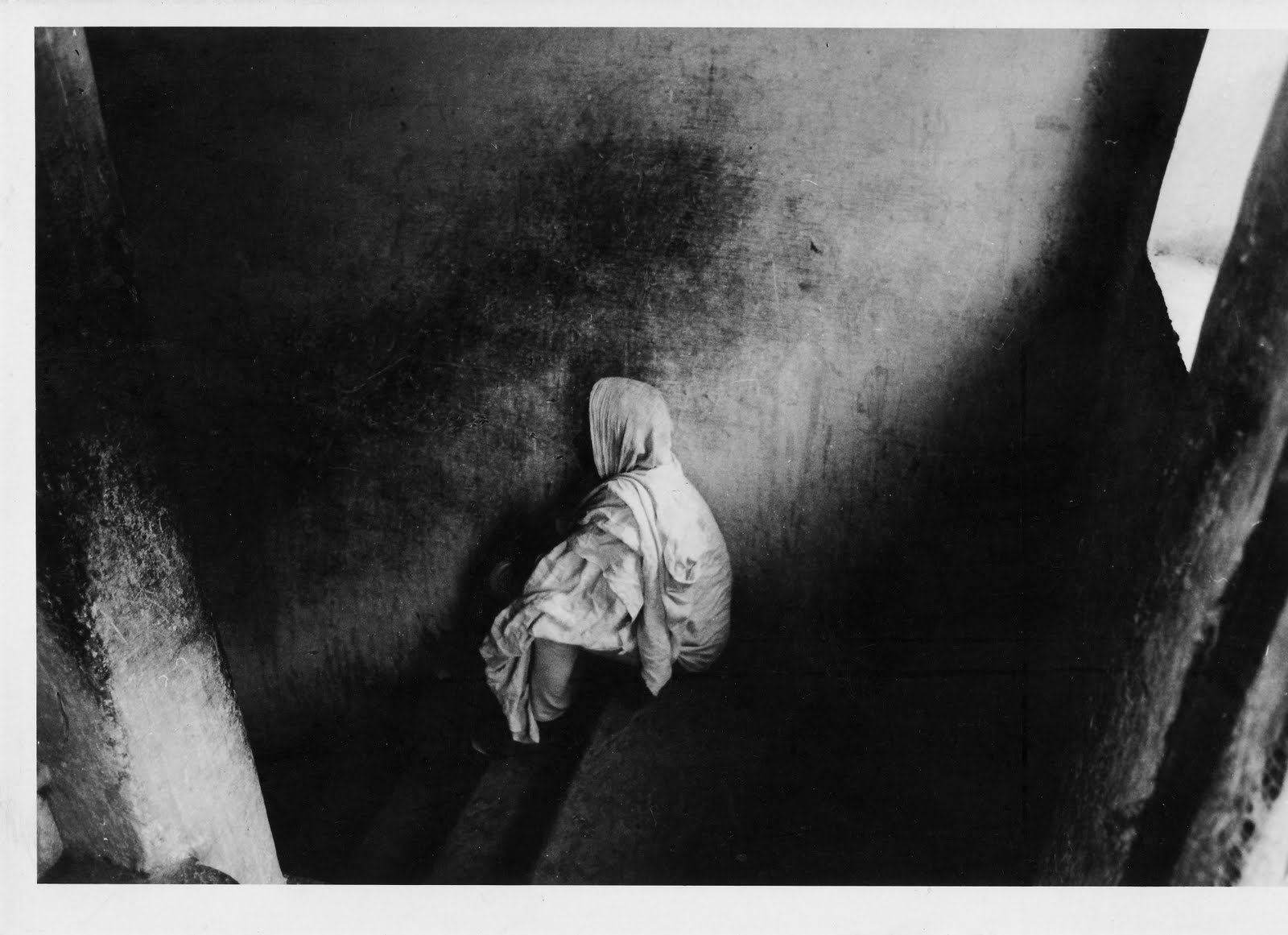
If a scream could be recorded, then filmed, then edited so that only the shadow of the pain revealed by that terrible sound might be heard, the result might look a bit like Pankaj Butalia's MANIPUR SONG.
At the time that I began watching the film (at home, on DVD), the amount of practical information I had about the "small northeastern state" of Manipur wouldn't fill one of the dimples on the outer surface of a thimble. I use those quotation marks because it's the kind of description that is routinely used of a "small northeastern state" and it is, whether we want to think of it that way or not, just one of many ways that we discriminate against places that are physically small. And "marginal". After all, however small Manipur may be, if it were located somewhere close to Connaught Place in New Delhi, we would never refer to it in that way.
The movie is not intended to be an educational supplement for people like myself who have not managed, for whatever reasons, to be better informed about their own country. What it does is remind viewers like me that we live in a vacuum of awareness. A reminder that "news" is only the items that get past all the filters that exist between news-consumers and the continuous bleeding of reality from all the pores, gaping wounds and sores and orifices that make up the world we live in.
Through five or six shifts in perspective, scenes from another world appear. Initially, it is a fairly familiar world – it could be anywhere in those "marginal" places, far from the cities – there are ill-made roads, slender young men in uniforms, their faces smoother and more hairless than their counterparts on the plains, their eyes shaped differently into those elongated shapes that we, of the plains, find various derogatory ways of describing: slit eyes, chinky eyes, slanty eyes – and yet, as the film gradually unfolds, I realize it's not familiar at all. Not to me, anyway.
The scenes that stand out for me include:
*The interviews with the young woman dissident called Sharmila – Wikipedia tells me that her full name is Irom Chanu Sharmila – who is even now living in the limbo of detention, a feeding tube threaded through her nose to prevent her from dying of her hunger. She has been on hunger strike since 2000. She was 28 at the time she began and has not let up since then.
*The "naked protest" of Manipuri women, at the gates of the Assam Rifles headquarters.
*The groups of young men, apparently being urged by soldiers to cane one another – all of them looking so similar to one another (I mean, racially similar) except that the soldiers were taller and better-fed, and the actions carried out with so little apparent passion, that it would have been farcical if it were not so pitiful. Toy soldiers, toy dissidents, but the blood, the pain, and the deaths only too real.
*The women drug addicts injecting themselves with the clear liquid that rules their lives so thoroughly, yet so invisibly too. This footage was, I thought, extraordinary exactly because it was presented with no squalor, no drama, no special lighting, no salacious, invasive, prurient commentary. It was the extreme domesticity of these scenes that gave them depth. We might have been watching a wild-life film in which a syringe is readied for use on a wild animal, to subdue it. And as that thought appears in my head, I realize that it IS what's happening and that these young women, from their quiet lives in distant villages, ARE being anesthetized, subdued and put to sleep, by forces out of their control.
*The school girls at the end, the sweet simplicity of their nursery rhymes and their soft, defenseless faces contrasted against the implacably jagged background of the whole rest of the film.
I realize, seeing this film, that all unknowingly, I've been aware of Irom Chanu Sharmila – because over the course of several years, I've noticed the face of a woman, stenciled in blue, that has appeared here and there on walls around the city. It is a small stencil, but draws attention to itself easily – perhaps because the face, with its pouting mouth and its narrowed eyes, the brows slanted in a permanent frown appears not angry so much as fierce – perhaps because it is positioned on white walls and looks freshly painted. All the time.
There is so much more that might be said, but – just as in the film, with its curious restraint, its silences despite the song referred to in its name – to use violent language, to scream, to lash out, or in any way to lose composure would be besides the point. What we see has little to do with having reactions or registering emotions. The film is that smallest and saddest of things: a tiny but dignified, well-made and carefully crafted gravestone for a culture, a people, a protest, and a movement. A gravestone made even while the culture, the people, the protest and the movement are still alive and still breathing.
[Manipur Song is distributed by Magic Lantern Foundation]