Every time I have an exhibition, I am amazed anew at how much hard work goes into a show. I don't know whether that's just because I haven't had very many. The one I've been preparing for, in Madras, is perhaps my ninth or tenth(I haven't been keeping track over the thirty-plus years from the time of the first one).
By hard work I DON'T mean the exhibits themselves but all the other stuff. The getting-the-work-ready-for-show stuff. The invitations. The guest list. The list of artworks. Recording the works on film (CD, now) so that I don't lose them forever in case any of them get sold. A brochure (I am not planning to print one -- I never have, so far. Too expensive. But there's got to be an "artist statement" accompanying the price list or else the reporters who wander in to stare uncomprehendingly at the work have no material to print up in their paragraph or two of press coverage. Left to themselves, they write descriptive passages such as: "There are some coloured patches on the walls") Just the sheer girding-of-neurons for putting the work on display.
Of course, I could greatly ease my burdens by choosing to have shows in the city of my residence. But that would be tooooo simple. So instead, I keep choosing to go ELSEWHERE, which involves not only packing the work but having to decide whether to frame the pieces before despatch or after. If before, it means that every item weighs three times as much as it might without the frame, and I increase the price of the work by the cost of the freight AND face the stress of traveling with large bits of unwieldy luggage. If after, it means shredding my nerves with tension, as the framing gets done in the five minutes between the time of my arrival in the city of the show and the show's opening. So far, I've gone for a mix of options -- framing some pieces before the show and others at the last minute, depending on size. For this show, however, all the frames are going to have to be done after arrival ... arggh. My nerves are pre-shredded.
Maybe other artists consider all of this as part of the territory of art. I feel towards it like a cat feels when it has been locked into a shower cabinet, with the hot water ON. But there's no option: if I produce work, I have to show it. The only artists who can get away with not having shows are those who are so successful that the world snatches their work wet off their canvases. And the route by which they get to be that successful is by having shows relentlessly, year in, year out, seducing reviewers, bullying patrons, bending over like contortionists until they reach the promised land of infinite saleability.
Meanwhile ... I've still gotta pack my pieces and fly away, on Friday morning. So far, I've got all the work completed -- aside from my prints, of which I will show around thirty pieces, there are 29 of my new stuff, what I'm going to be calling "hybrids" or "squiggle paintings" in my mission statement -- 24 in the 12"x12" size and five in the 18"x24" size. Their formal name is "mixed media collages" but so far everyone to whom I have said that has looked blank -- and well they might, because it doesn't say very much, does it? Neither does "hybrid" but at least it indicates the neither-fish-nor-fowl nature of the little critters and "squiggle paintings" give you a fair impression of one of their lead features -- i.e., very many coloured squiggles.
A few friends have been over to see them. Of them two have said they love them -- and one bought three right away! Of course I can only release them after the show but STILL ... it's very encouraging (oi, you! In case you're reading this, take a bow, please!). On the other hand, since this particular friend is an unusual person, unique in several ways, perhaps his tastes are a bit otherworldly ... ? Only kidding! Another friend, however, was disapproving. She felt I had neither explored the medium enough for it to be authentically funky, nor do the pieces have enough finesse to be fully valid as art.
She was frankly disappointed and we have spent a couple of hours trying to talk ourselves through this difficult patch. There are uneasy moments to be negotiated, like slippery patches of ice on the sidewalk, when a friend can't say she/he likes the work one has shown to her/him. On the one hand, I believe a friend has the absolute right to be unimpressed. On the other hand, the sense of having failed is usually painful to deal with. I can remember one moment, a very long time ago, when I had just finished a canvas -- it was still literally wet, and I was very pleased with it. It represented a distinct departure in style, something that I still think of as a turning point (it was aconceptual portrait of my niece, then about nine years old). But a friend walked in the door of my room that very morning, the first morning of its life, saw the painting, wrinkled his nose and said, "Yuck. Not good."
Oo!! That was hard. A punch straight to the SOULar plexus. He was being honest, but brutal too, under the circumstances. I never quite forgave him. It would have been okay a few days later, and perhaps in softer words. Or perhaps it would never have been okay ... I don't know. I am not particularly sensitive and react fairly cheerfully to criticism. But I have some issues with timing. In general, I avoid showing work when it is still in progress or when I'm trying something out for the first time. I really do hate being watched at work -- I don't even like to be asked whether I am about to start working on a drawing/painting -- it feels like ants crawling on the underside of my skull, yow. Just the thought of it right now is NASTY. Once I'm finished, though, I'm usually very calm and accepting of whatever people might say -- it's a bit like closing the door while changing clothes, but not caring if people boo when you come out wearing a glitter-bra over a khaki-coloured nun's habit.
Anyway, with the current work, I am happy to report, the issue of pain doesn't seem to arise. It's hard to say exactly why. Maybe it's because these things are sort of informal. Light-hearted. I am thrilled with them, but I realize there are many others who will not be. I know from my mother's reaction -- she saw four of the initial pieces I took with me to Madras on my visit of two months ago and said, "But where is the art in this?" -- that my friend of last week, the disappointed one, is not alone in her opinion. I am so sure of her motives however (I mean, I know that her disappointment arises from her desire to wish the best for me) that I can look upon her reaction as a kind of innoculation against all the rough moments that are the typical fallout of a show, even the low-key type I have. There will be annoying reporters and relatives who will look disturbed and long periods during which nothing at all happens except the thud of each minute following the next, with no new visitors and that cold, empty question hanging in the air: "Why don't I go home, drown my sorrows in KitKat and forget about being an artist?"
Ah well. More next week! The show is scheduled to begin on the 8th.

Tuesday, November 30, 2004


Tuesday, November 16, 2004
... and in other news
Just because I've been in a creative frenzy doesn't mean that I've left off fretting about the US election results. And neither have several of my friends. Here are two thought-provoking links sent to me/us by friends:US Election Results 2004, by IQ and
Sorry, Everyone.
Two other friends sent longer documents, one of which is worded in the kind of paint-stripping language which isn't ideal for a nice little blog like this one(but I will send it along to those who ask politely for it, if they can assure me that under-age eyes will not be exposed to it). Here's the other one, sent by friends in Rhode Island:
California letter of Secession
Dear President Bush,
Congratulations on your victory over all us non-evangelicals.
Actually, we're a bit ticked off here in California, so we're leaving you. California will now be its own country. And we're taking all the Blue States with us. In case you are not aware, that includes Hawaii, Oregon, Washington, Minnesota, Wisconsin, Michigan, Illinois, all of the North East States, and the urban half of Ohio.
We spoke to God, and she agrees that this split will be beneficial to almost everybody, and especially to us in the new country of California. In fact, God is so excited about it, she's going to shift the whole country at 4:30 pm EST this Friday.
Therefore, please let everyone know they need to be back in their states by then. God is going to give us the Pacific Ocean and Hollywood. In addition, we're getting San Diego. (Sorry, that's just how it goes.) But God is letting you have the KKK and country music (except the Dixie Chicks). Just so we're clear, the country of California will be pro-choice, pro-gay marriage, and anti-war.
Speaking of war, we're going to need all Blue States citizens back from Iraq. If you need people to fight in Falujah, just ask your evangelical voters. They have tons of kids they're willing to send to their deaths for absolutely no purpose. And they don't care if you don't show pictures of their kids' caskets coming home.
So, you get Texas and all the former slave states, and we get the Governator and stem cell research. (We would love you to take Britney Spears off our hands, though. She IS from the south, right?)
Since we get New York, you'll have to come up with your own late night TV shows because we get MTV, Letterman, the Daily Show and Conan O'Brien. You get ... well, why don't you ask your people at Fox News to come up with something entertaining? (Maybe you should just watch Crossfire. That's a really funny show.)
We wish you all the best in the next four years and we hope, really hope, you find those missing weapons of mass destruction.
Seriously. Soon.
Sincerely, California
Sorry, Everyone.
Two other friends sent longer documents, one of which is worded in the kind of paint-stripping language which isn't ideal for a nice little blog like this one(but I will send it along to those who ask politely for it, if they can assure me that under-age eyes will not be exposed to it). Here's the other one, sent by friends in Rhode Island:
California letter of Secession
Dear President Bush,
Congratulations on your victory over all us non-evangelicals.
Actually, we're a bit ticked off here in California, so we're leaving you. California will now be its own country. And we're taking all the Blue States with us. In case you are not aware, that includes Hawaii, Oregon, Washington, Minnesota, Wisconsin, Michigan, Illinois, all of the North East States, and the urban half of Ohio.
We spoke to God, and she agrees that this split will be beneficial to almost everybody, and especially to us in the new country of California. In fact, God is so excited about it, she's going to shift the whole country at 4:30 pm EST this Friday.
Therefore, please let everyone know they need to be back in their states by then. God is going to give us the Pacific Ocean and Hollywood. In addition, we're getting San Diego. (Sorry, that's just how it goes.) But God is letting you have the KKK and country music (except the Dixie Chicks). Just so we're clear, the country of California will be pro-choice, pro-gay marriage, and anti-war.
Speaking of war, we're going to need all Blue States citizens back from Iraq. If you need people to fight in Falujah, just ask your evangelical voters. They have tons of kids they're willing to send to their deaths for absolutely no purpose. And they don't care if you don't show pictures of their kids' caskets coming home.
So, you get Texas and all the former slave states, and we get the Governator and stem cell research. (We would love you to take Britney Spears off our hands, though. She IS from the south, right?)
Since we get New York, you'll have to come up with your own late night TV shows because we get MTV, Letterman, the Daily Show and Conan O'Brien. You get ... well, why don't you ask your people at Fox News to come up with something entertaining? (Maybe you should just watch Crossfire. That's a really funny show.)
We wish you all the best in the next four years and we hope, really hope, you find those missing weapons of mass destruction.
Seriously. Soon.
Sincerely, California
Thursday, November 11, 2004
BEING AN EXHIBITIONIST
Ever since I returned to Delhi from Madras, I've been whirring like a bumble-bee, producing exhibits for an art show I expect to have in Madras, in December this year.
I'm going to be showing two types of work: one, a series of etchings (including a couple of lithographs) and the other, a series of small collages in hand-made paper and acrylic paint. The show will be held at ARTWORLD, a pleasant family-owned gallery, run by Sarla and Bishu Bannerji.
I've shown the etchings before and so am not terribly worried about how they will be received -- I know they are at least competent at the level of drawing. It's the other ones, the collages, that will represent very new work for me and I am curious to know how they will be received.
My work is normally easy to recognize for what it is -- as an illustrator, I tend toward black-and-white line-drawings, clearly representational, with decoration worked into the clothes and background. My etchings are an extension of this work. Most of them feature figures of people and animals or combinations thereof.
The new collages, however, are explorations in colour and texture, almost wholly abstract. I began playing around with hand-made paper about a year ago, entirely because I happened to visit a wonderful store filled from floor to ceiling (well, okay, not QUITE the ceiling) with thrilling colours and textures of paper. I have always had a lurking fondness for pure colour-fields, and have always liked the early cubists for their starkness and purity. Of course the sad (and obvious) feature of their work is that once you have seen one all-red painting, you've pretty much seen every all-red painting: the surprise -- the "hook" -- that type of art uses can't be repeated very often before becoming repetitive.
In my current work, I am not pretending to any terrific new insights -- truly, all I have is bits of paper and some paint, combined together in very simple arrangments -- but I've had so much delight making these pieces that I feel the need to share them. This is, for me, a sharp departure from the way I normally work. Perhaps because of my years as an illustrator, when I draw, I am usually very concsious of how the result will be interpreted by another observer -- an illustrator NEEDS to be conscious of the third-person perspective, because the usual purpose of an illustration is to augment or illuminate (literally -- the word suggests the meaning of "bringing light to") some other thing, most often a piece of text.
While working on my etchings, I continued in the same basic vein, though I was no longer embellishing some text. I was amused to see the images that emerged. There is a range of familiar themes -- people of one sort or another, slightly stylized and in some cases distorted -- presented with an edge of whimsy: the bull with the man's head and the dogs with bird-faces; the carpet-couple and their trio of child-rugs; the faintly smirking lioness; all in clean lines on plain paper. I could not break myself of the habit of drawing with unseen observers hovering just behind my shoulder so in a sense, when people respond to my work, I half-anticipate whatever they might say.
With the collages, by contrast, I cannot sense any presences beside me. I am alone and playing with the paper, feeling almost surprised to be reduced to this child-state of pleasure. I smile when I have cut a broad stripe of knobbly turquoise blue and placed it hot against a dense, fuzzy black sheet, shot through with wriggling bits of satin thread. It is a very simple pleasure, completely unrelated to the very familiar pleasure of completing a drawing while knowing that it is, for its type of drawing, accomplished.
There is a certain undeniable sense of ambition and conquest in the second pleasure, an element of competition (i.e., with other talents and forces in the world). With the first there can't be anything but just my own, private, inarticulate delight. There's no way to share it -- like (for instance) the wholly internal pleasure of ice-cream -- except by inviting someone else to try it, and to HOPE that they will experience the same pleasure ... There is, after all, no way of knowing for sure.
Each time I have completed a piece -- most of which are small: 12 inches square -- I stand back, trying to imagine if anyone else, seeing it, might get the same pleasure as I do when I look at it. So far (since I haven't shown these pieces to more than a couple of people) I haven't had much to go by in the way of response. The few people who have seen these new ones have said they like them, but then, since these respondents have been my close family, I don't really expect objective responses (though they would FIERCELY deny any partisan feelings!!). I am not very hopeful, but at the same time, I am undeterred. How odd it is, and how different from my usual working methods, to be unconcerned what the observer -- The Observer -- is going to think! Is this it, then? Is this what it feels like to be an artist?
I will eventually post pix at my currently defunct Magnoliazone web-site, whereupon I will also post a link here to the site.
I'm going to be showing two types of work: one, a series of etchings (including a couple of lithographs) and the other, a series of small collages in hand-made paper and acrylic paint. The show will be held at ARTWORLD, a pleasant family-owned gallery, run by Sarla and Bishu Bannerji.
I've shown the etchings before and so am not terribly worried about how they will be received -- I know they are at least competent at the level of drawing. It's the other ones, the collages, that will represent very new work for me and I am curious to know how they will be received.
My work is normally easy to recognize for what it is -- as an illustrator, I tend toward black-and-white line-drawings, clearly representational, with decoration worked into the clothes and background. My etchings are an extension of this work. Most of them feature figures of people and animals or combinations thereof.
The new collages, however, are explorations in colour and texture, almost wholly abstract. I began playing around with hand-made paper about a year ago, entirely because I happened to visit a wonderful store filled from floor to ceiling (well, okay, not QUITE the ceiling) with thrilling colours and textures of paper. I have always had a lurking fondness for pure colour-fields, and have always liked the early cubists for their starkness and purity. Of course the sad (and obvious) feature of their work is that once you have seen one all-red painting, you've pretty much seen every all-red painting: the surprise -- the "hook" -- that type of art uses can't be repeated very often before becoming repetitive.
In my current work, I am not pretending to any terrific new insights -- truly, all I have is bits of paper and some paint, combined together in very simple arrangments -- but I've had so much delight making these pieces that I feel the need to share them. This is, for me, a sharp departure from the way I normally work. Perhaps because of my years as an illustrator, when I draw, I am usually very concsious of how the result will be interpreted by another observer -- an illustrator NEEDS to be conscious of the third-person perspective, because the usual purpose of an illustration is to augment or illuminate (literally -- the word suggests the meaning of "bringing light to") some other thing, most often a piece of text.
While working on my etchings, I continued in the same basic vein, though I was no longer embellishing some text. I was amused to see the images that emerged. There is a range of familiar themes -- people of one sort or another, slightly stylized and in some cases distorted -- presented with an edge of whimsy: the bull with the man's head and the dogs with bird-faces; the carpet-couple and their trio of child-rugs; the faintly smirking lioness; all in clean lines on plain paper. I could not break myself of the habit of drawing with unseen observers hovering just behind my shoulder so in a sense, when people respond to my work, I half-anticipate whatever they might say.
With the collages, by contrast, I cannot sense any presences beside me. I am alone and playing with the paper, feeling almost surprised to be reduced to this child-state of pleasure. I smile when I have cut a broad stripe of knobbly turquoise blue and placed it hot against a dense, fuzzy black sheet, shot through with wriggling bits of satin thread. It is a very simple pleasure, completely unrelated to the very familiar pleasure of completing a drawing while knowing that it is, for its type of drawing, accomplished.
There is a certain undeniable sense of ambition and conquest in the second pleasure, an element of competition (i.e., with other talents and forces in the world). With the first there can't be anything but just my own, private, inarticulate delight. There's no way to share it -- like (for instance) the wholly internal pleasure of ice-cream -- except by inviting someone else to try it, and to HOPE that they will experience the same pleasure ... There is, after all, no way of knowing for sure.
Each time I have completed a piece -- most of which are small: 12 inches square -- I stand back, trying to imagine if anyone else, seeing it, might get the same pleasure as I do when I look at it. So far (since I haven't shown these pieces to more than a couple of people) I haven't had much to go by in the way of response. The few people who have seen these new ones have said they like them, but then, since these respondents have been my close family, I don't really expect objective responses (though they would FIERCELY deny any partisan feelings!!). I am not very hopeful, but at the same time, I am undeterred. How odd it is, and how different from my usual working methods, to be unconcerned what the observer -- The Observer -- is going to think! Is this it, then? Is this what it feels like to be an artist?
I will eventually post pix at my currently defunct Magnoliazone web-site, whereupon I will also post a link here to the site.
Thursday, November 04, 2004
Waking Up To Reality
It's almost a relief. All these weeks of suspense, imagining there was a chance that the Democrats could win the US presidential election when the cards were stacked so heavily against them, have now ended. We can resume life as we know it, extracting tiny scraps of meaning from the great blocks of brutishness and stupidity that surround us.
I will admit that the early hours of Wednesday were grim -- it was awful to see the numbers crawling up, never quite crossing the mark and then ... ahhhh. Knowing that Bush actually won the popular vote this time makes it all the more disheartening, though, like I said, it's a weird kind of relief, a negative relief. It's better for those of us who believe in freedom, democracy, human dignity, respect for all living things, respect for the planet, to KNOW the truth about the rest of humanity, than to live in ignorance of what the majority of our species is like. It helps us to be on our guard and it keeps us alert. It makes it impossible for us to pretend that something like a single election in just one of the world's nations -- even if that nation is the most powerful one, currently -- would be enough to turn our species off the lemming-path it is currently racing along.
So after an initial morning of melancholia, I have slipped back into my normal life -- as, I am sure, have most of us. No doubt the Republicans are wriggling about in their pleasure-palaces, like leeches in a blood bank, feeling obscenely thrilled with themselves. But they're on the same planet as the rest of us, and when their shameless excesses rebound on everybody, they will suffer too -- EVENTUALLY.
This is cold comfort, of course. But what else is there to think about now? After all: if you and I can afford to spend a small part of our lives on the internet, surfing non-essential websites such as this one, it means, most likely, that we spend only the tiniest part of our working day fretting about environmental and political realities. By contrast, there are millions of fellow-humans for whom there is no stepping back from the crisis -- they do not say, "Oh, things are bound to get worse!" because for them there is nothing worse than what they live with TODAY.
So it occurred to me, as I fretted in my genteel, armchair-ridden way, that there's no genteel approach to solving the world's problems. The day will come when there will be no armchairs, and no leisure time, not even for the wealthy. This is already true in some parts of the world, but until it's true for everyone, the chances are ... we'll do what we can to maintain the status quo to suit wherever we're at.
This is a bleak thought, yes. But I was thinking about the Black Death today (there's a sort of reason for it -- I mean, aside from the Republican victory -- some months ago, I posted small note-papers in different rooms in the house, with historical events listed per century on them. It's supposedly a method of remembering what happened in which century. Today, standing in the 1300s, which happens to coincide with the kitchen, I caught a glimpse of my note-paper, peeping out from behind a shelf-door, where it had been hidden for some months) and I was thinking about the almost inconceivable horror of those times: the darkness of ignorance competing with the nightmare scourge whose cause and remedy were to remain unknown for countless decades ahead.
Quite possibly, we are sliding towards another type of cataclysm, along different lines perhaps, but surely just as horrific. Knowing this may not save us from the slide. Then again, maybe we can become more conscientious about conserving those things that are good and worth saving so that whenever next humankind heaves its way up out of the slime again, our era will be interpreted accurately. Books, I think, are the best way to preserve a record of what we have known of reality -- I don't think electronic data will be retrievable as readily as books.
Stone would be better, of course, but a trifle bulky.
I will admit that the early hours of Wednesday were grim -- it was awful to see the numbers crawling up, never quite crossing the mark and then ... ahhhh. Knowing that Bush actually won the popular vote this time makes it all the more disheartening, though, like I said, it's a weird kind of relief, a negative relief. It's better for those of us who believe in freedom, democracy, human dignity, respect for all living things, respect for the planet, to KNOW the truth about the rest of humanity, than to live in ignorance of what the majority of our species is like. It helps us to be on our guard and it keeps us alert. It makes it impossible for us to pretend that something like a single election in just one of the world's nations -- even if that nation is the most powerful one, currently -- would be enough to turn our species off the lemming-path it is currently racing along.
So after an initial morning of melancholia, I have slipped back into my normal life -- as, I am sure, have most of us. No doubt the Republicans are wriggling about in their pleasure-palaces, like leeches in a blood bank, feeling obscenely thrilled with themselves. But they're on the same planet as the rest of us, and when their shameless excesses rebound on everybody, they will suffer too -- EVENTUALLY.
This is cold comfort, of course. But what else is there to think about now? After all: if you and I can afford to spend a small part of our lives on the internet, surfing non-essential websites such as this one, it means, most likely, that we spend only the tiniest part of our working day fretting about environmental and political realities. By contrast, there are millions of fellow-humans for whom there is no stepping back from the crisis -- they do not say, "Oh, things are bound to get worse!" because for them there is nothing worse than what they live with TODAY.
So it occurred to me, as I fretted in my genteel, armchair-ridden way, that there's no genteel approach to solving the world's problems. The day will come when there will be no armchairs, and no leisure time, not even for the wealthy. This is already true in some parts of the world, but until it's true for everyone, the chances are ... we'll do what we can to maintain the status quo to suit wherever we're at.
This is a bleak thought, yes. But I was thinking about the Black Death today (there's a sort of reason for it -- I mean, aside from the Republican victory -- some months ago, I posted small note-papers in different rooms in the house, with historical events listed per century on them. It's supposedly a method of remembering what happened in which century. Today, standing in the 1300s, which happens to coincide with the kitchen, I caught a glimpse of my note-paper, peeping out from behind a shelf-door, where it had been hidden for some months) and I was thinking about the almost inconceivable horror of those times: the darkness of ignorance competing with the nightmare scourge whose cause and remedy were to remain unknown for countless decades ahead.
Quite possibly, we are sliding towards another type of cataclysm, along different lines perhaps, but surely just as horrific. Knowing this may not save us from the slide. Then again, maybe we can become more conscientious about conserving those things that are good and worth saving so that whenever next humankind heaves its way up out of the slime again, our era will be interpreted accurately. Books, I think, are the best way to preserve a record of what we have known of reality -- I don't think electronic data will be retrievable as readily as books.
Stone would be better, of course, but a trifle bulky.
Tuesday, November 02, 2004
FEMINALIEN
A young M.Phil student has made my work the subject of her dissertation. We corresponded by e-mail earlier this year and met a couple of times. Last month, she was kind enough to send me a CD containing the dissertation. I can't tell you its title or her name yet but will hope to, some time in January next year. For the purposes of this post, I'll refer to her as "M.Phil.". And yes, it's all been rather fun.
She's focused specifically on two stories from "Hot Death, Cold Soup" -- the title story and Stains -- and on "Getting There". It was particularly satisfying for me to see a close reading of GT. At the time I wrote the book, I had hoped it would be picked up for its comments about feminism and the protagonist(i.e., myself)'s difficulties in relation to the movement at least as much for its description of my ill-fated trip to Holland.
Alas, with reviewers like Anita Roy dismissing it as "chick lit"(though I think she meant it as a compliment), there wasn't much chance of that -- it got its scattering of chuckles and raspberries, before being forgotten. I felt suitably put in my place. My editor did try to warn me that the book would do better if positioned as a "novel", but I couldn't stomach that idea. The whole point of writing the book (for me) was to produce a sort of confessional, even though it's a very mild one as confessionals go. No way I was going to pass it off as fiction!
So it reached the market looking neither like a novel nor a panties-off memory-download. I hated the cover (a cheap rip-off of an Air France ad) and felt that the publisher (Picador UK) had lost confidence in the book, which in turn meant that I lost confidence in it myself. I wished -- and STILL wish -- they had agreed with me, that one of my drawings on the cover would have made all the sense in the world. *sigh* The book wouldn't have done any better on the market, but at least it would have looked stylish or, next best, weird.
Given this history, it is certainly VERY gratifying that someone has bothered to give the book serious consideration. M.Phil's point of entry is feminism, an ideology that she subscribes to and has made the focus of her work. My initial response to her, when she wrote to say she was going to be looking at my work through feminist spectacles was that I don't call myself a feminist any more, which may make it rather difficult for her to proceed. But she persevered. The result, I think, is quite interesting.
I continue to maintain that I'm not a feminist while M.Phil. believes, regardless of what I say about myself, that my work is surely irrigated very liberally by streams of feminist thought. And yes, I would agree, it is. Does this mean I can never cease to be a feminist? Or are we allowed to switch off our ideological orientation in mid-life? And if we do, does that mean we are doomed to drift, rudderless, through the rest of our lives? Or that we cannot be trusted to maintain any set of deeply cherished truths? Or is it possible to find other, equally great or greater, truths in mid-life (and beyond)?
I don't know.
Between the ages of 17 and 30, I would have definitely described myself as a feminist, even though I was starting to fall off (as described in GT) the platform in my mid-twenties. By my mid-thirties I was uncomfortable being included in feminist forums, but was still okay being connected with Kali for Women, the publisher who brought out "Hot Death ..". By that time, in 1996, I was 43 and had confessed to Urvashi (Butalia, co-founder, with Ritu Menon, of KfW) that I no longer called myself a feminist. She said it was all right, she didn't mind(though I think Ritu may have). I felt guilty: I was and still am very grateful to Kali for publishing my stories and I continue to think that the printing of Hot Death was easily my most pleasurable publishing moment. Nevertheless, even at the time it came out, I think it may have been more honest to say that I was actually uncomfortable being FEMALE, not just a feminist.
This is a statement that I make with boring frequency even though I know I'm never taken very seriously. It's an irritating statement, because it's like someone saying she wants to run away from her own shadow. It can't be done -- and that being the case, it makes much better sense to enjoy what there is, than to be forever trying to run away from it. I know this. Still and all ... I run.
It's not that I'm interested in becoming or being some other sex(once upon a time there were two sexes, then three, then some time in the eighties it was reported that there were seven recognized sexes -- sexualities, perhaps is the better term -- but now, news just in from the front suggests there are at least thirteen. And growing). All regardless -- and perhaps because I am routinely asked to participate in feminist programs or co-opted for inclusion as a woman-artist or woman-writer (I turn down most invitations of this sort) -- I find myself butting my head against the familiar old walls, finding the familiar old bumps and bruises.
Speaking to M.Phil and reading her dissertation brought all the territory up once more. Once more the lurking, whisper-in-the-gut guilt -- there's a sense in which being a lapsed feminist is like breaking a sacred trust -- like saying "I don't believe in fairies!" out loud, and immediately flashing mental video of Tinkerbell, fluttering in distress ...
I believe that feminism is an ideology which works very well -- is perhaps crucially important -- for young women. Given the tough options life offers them, it becomes really useful to have something gender-specific to hang onto, to believe in and to build confidence. It's later on that it becomes harder to believe seriously in the idea that men and women are on a par or that there's justice and fair-play in the world.
Those of us (women) who have relatively pleasant and stress-free lives, when we look around -- how is it possible to ignore the wretchedness of other women's lives? How is it possible to sever the link between their female condition and their fate? I mean: is it possible to maintain the view that men and women "can" live as equals when we can see that equality between the sexes is by no means the norm anywhere in the animal kingdom, including amongst our species?
I have for a long time toyed with the notion that the problem (i.e., MY problem) with feminism lies in the defining label -- that is, the word "feminism" is what bothers me. It suggests that it's specific to women, whereas perhaps -- and this is only a trial-idea -- a better term would be one that suggests a grand general freeing up of humans from the trap of their birth-condition so that they can achieve whatever is the maximum of their potential. Or at any rate, just be happy.
She's focused specifically on two stories from "Hot Death, Cold Soup" -- the title story and Stains -- and on "Getting There". It was particularly satisfying for me to see a close reading of GT. At the time I wrote the book, I had hoped it would be picked up for its comments about feminism and the protagonist(i.e., myself)'s difficulties in relation to the movement at least as much for its description of my ill-fated trip to Holland.
Alas, with reviewers like Anita Roy dismissing it as "chick lit"(though I think she meant it as a compliment), there wasn't much chance of that -- it got its scattering of chuckles and raspberries, before being forgotten. I felt suitably put in my place. My editor did try to warn me that the book would do better if positioned as a "novel", but I couldn't stomach that idea. The whole point of writing the book (for me) was to produce a sort of confessional, even though it's a very mild one as confessionals go. No way I was going to pass it off as fiction!
So it reached the market looking neither like a novel nor a panties-off memory-download. I hated the cover (a cheap rip-off of an Air France ad) and felt that the publisher (Picador UK) had lost confidence in the book, which in turn meant that I lost confidence in it myself. I wished -- and STILL wish -- they had agreed with me, that one of my drawings on the cover would have made all the sense in the world. *sigh* The book wouldn't have done any better on the market, but at least it would have looked stylish or, next best, weird.
Given this history, it is certainly VERY gratifying that someone has bothered to give the book serious consideration. M.Phil's point of entry is feminism, an ideology that she subscribes to and has made the focus of her work. My initial response to her, when she wrote to say she was going to be looking at my work through feminist spectacles was that I don't call myself a feminist any more, which may make it rather difficult for her to proceed. But she persevered. The result, I think, is quite interesting.
I continue to maintain that I'm not a feminist while M.Phil. believes, regardless of what I say about myself, that my work is surely irrigated very liberally by streams of feminist thought. And yes, I would agree, it is. Does this mean I can never cease to be a feminist? Or are we allowed to switch off our ideological orientation in mid-life? And if we do, does that mean we are doomed to drift, rudderless, through the rest of our lives? Or that we cannot be trusted to maintain any set of deeply cherished truths? Or is it possible to find other, equally great or greater, truths in mid-life (and beyond)?
I don't know.
Between the ages of 17 and 30, I would have definitely described myself as a feminist, even though I was starting to fall off (as described in GT) the platform in my mid-twenties. By my mid-thirties I was uncomfortable being included in feminist forums, but was still okay being connected with Kali for Women, the publisher who brought out "Hot Death ..". By that time, in 1996, I was 43 and had confessed to Urvashi (Butalia, co-founder, with Ritu Menon, of KfW) that I no longer called myself a feminist. She said it was all right, she didn't mind(though I think Ritu may have). I felt guilty: I was and still am very grateful to Kali for publishing my stories and I continue to think that the printing of Hot Death was easily my most pleasurable publishing moment. Nevertheless, even at the time it came out, I think it may have been more honest to say that I was actually uncomfortable being FEMALE, not just a feminist.
This is a statement that I make with boring frequency even though I know I'm never taken very seriously. It's an irritating statement, because it's like someone saying she wants to run away from her own shadow. It can't be done -- and that being the case, it makes much better sense to enjoy what there is, than to be forever trying to run away from it. I know this. Still and all ... I run.
It's not that I'm interested in becoming or being some other sex(once upon a time there were two sexes, then three, then some time in the eighties it was reported that there were seven recognized sexes -- sexualities, perhaps is the better term -- but now, news just in from the front suggests there are at least thirteen. And growing). All regardless -- and perhaps because I am routinely asked to participate in feminist programs or co-opted for inclusion as a woman-artist or woman-writer (I turn down most invitations of this sort) -- I find myself butting my head against the familiar old walls, finding the familiar old bumps and bruises.
Speaking to M.Phil and reading her dissertation brought all the territory up once more. Once more the lurking, whisper-in-the-gut guilt -- there's a sense in which being a lapsed feminist is like breaking a sacred trust -- like saying "I don't believe in fairies!" out loud, and immediately flashing mental video of Tinkerbell, fluttering in distress ...
I believe that feminism is an ideology which works very well -- is perhaps crucially important -- for young women. Given the tough options life offers them, it becomes really useful to have something gender-specific to hang onto, to believe in and to build confidence. It's later on that it becomes harder to believe seriously in the idea that men and women are on a par or that there's justice and fair-play in the world.
Those of us (women) who have relatively pleasant and stress-free lives, when we look around -- how is it possible to ignore the wretchedness of other women's lives? How is it possible to sever the link between their female condition and their fate? I mean: is it possible to maintain the view that men and women "can" live as equals when we can see that equality between the sexes is by no means the norm anywhere in the animal kingdom, including amongst our species?
I have for a long time toyed with the notion that the problem (i.e., MY problem) with feminism lies in the defining label -- that is, the word "feminism" is what bothers me. It suggests that it's specific to women, whereas perhaps -- and this is only a trial-idea -- a better term would be one that suggests a grand general freeing up of humans from the trap of their birth-condition so that they can achieve whatever is the maximum of their potential. Or at any rate, just be happy.
Thursday, October 28, 2004
Regarding Patriotism
A recent e-friend sent me an essay he wrote in 2002 called "On Patriotism". He was responding to the then-crisis of the Indo-Pak stand-off at the borders in late spring. Reading his essay reminded me of my own bleak thoughts on the subject:
For some years now, it's been clear to me that patriotism is no longer a worthwhile ideal. More destruction and grief is sponsored in its name, more envy, greed and vanity, than anything else. Most of us are brought up to feel an automatic devotion to the flags and anthems under which we are born, and most of us respond with warm loyalty. I wasn't any different when I was a child, but I grew up outside my country. I can remember the sense of pained shock and disbelief I felt when I returned at the age of eight -- nothing I saw around me conformed to my ideal of a country that I could feel proud of, or love.
Today of course, what I'm questioning is the need to feel those kinds of emotions at all, in reference to countries. We make a mistake, I feel, in thinking of countries as people. Assigning them personal pronouns and ascribing emotions to them merely distorts our understanding of what they are: groups of humans collected under a banner, in a particular geographical location. When we make countries into people, we set ourselves up for feeling emotional about them, as if they were our parents or our enemies. But they are nothing of the sort. They are figments of the collective imagination, merely a means of organizing humans into groups, quite often arbitrarily. Many countries are populated by several different ethnic groups, even though the governments of most nations try to put forward an image of homogeneity or choose one group over other groups as being the most representative.
Patriotism is a false ideal. Unlike (say) love or devotion to our parents, or the desire for food, there's nothing natural about patriotism. It's something we have to be taught, which we would never learn on our own without specific prompting. Its aim is to inspire loyalty in individuals so that they will act in the national interest when called upon, rather than in their own interest or in the interest of something larger than a single nation's or individual's needs. Most of us are brought up to relate to Our Country as if it were a benign parent, yet as adults we're surely aware that there's very little confirm this status.
Mostly, what we learn to understand as we grow up is that Our Country is US -- we make it what it is by our pattern of voting and tax-payment. If we're conscientious and if the machinery of government works smoothly, we can ensure a tolerable standard of living for ourselves. Most often, though, we discover that there's no special mystique to citizenship: however much sentiment we load onto the plate of patriotism, it can just as easily be tipped up and replaced by despair or contempt following a change of government. Contrast this against feelings towards parents/family -- whether we love them or hate them, there is an internal stickiness to familial bonds that can't be erased by fiat. They can't be forged artificially either: it has surely happened often enough that a person is brought up out of contact from his/her biological family and finds, when united, that sharing DNA isn't enough after all. It's like missing something crucial like a tongue or a retina at birth -- even if artificial substitutes can be constructed by medical science later on, the nervous system will not have developed a vocabulary of comprehension. An artificial eye (even if such a thing existed) could only work on someone who had already learnt to see.
I believe that the effort of instilling patriotism is a little bit like attempting to install a sense organ -- such as an eye or a tongue -- for which there is no corresponding neural network in the human brain. Many of us are conditioned to believe there is, so we can fool ourselves into responding emotionally to claims upon our patriotism but the fact that some people can transfer their allegiance to other countries and to other ideologies suggests that the same is true for all of us.
Consider for instance the way that the patriotic citizens of all the various countries on this planet appear to feel equally passionate about their nations' history/geography/culture/biota: how do we make sense of that passion? How is it possible for every citizen to be right? Either everyone is equally deluded about his/her own country's virtues or there are real differences in the physical and cultural assets of nations, yet everyone is brought up to be blind to the assets of all other nations save their own. Either way, there is self-deception.
I can remember, for instance, feeling so vain to know that I belonged to the nation that housed the Taj Mahal! But over time, as I met the citizens of countries that housed (say) the pyramids or the Golden Buddha, or Mt Everest or the Great Barrier Reef ... well, the preciousness of my national asset seemed hard to maintain -- not because it was less or more, but only because it seemed rather the same. There's no way I can decide whether or not the Taj Mahal is more precious than the Great Barrier Reef or the Great Wall of China. So I would rather avoid the whole business of feeling proud or not-proud -- after all, how can I lay claim to the beauty of the Taj? It's just a coincidence that I happened to be born whithin the geo-political entity that contains the monument. It really owes nothing to my efforts or even my ancestry. I can admire it and enjoy it, I can be astounded by the craftsmanship that went into it -- just the same as I can enjoy the Sphinx or the Great Wall -- and that's about all.
It would be so great if, wandering the globe, we could all be enabled to think: there's our Sphinx -- our Machu Pichu -- our Easter Island -- our golden marmoset -- our Grand Canyon -- our Emperor Penguins -- everything belongs to every one of us resident on this planet and we can all rejoice equally in all of it.
Of course, in the real world, what matters is economic rather than cultural assets. If we as a species could pool the world's resources of petroleum, wood, water, agricultural land and all the rest, PERHAPS we'd have made the first true step towards unity, peace and international understanding. Then again, if we really did pool our resources, if we really did dole out assets on an equitable basis so that no nation or ethnic group had a greater share of the pie than any other ...
*sigh*
Wouldn't last a decade, would it?
For some years now, it's been clear to me that patriotism is no longer a worthwhile ideal. More destruction and grief is sponsored in its name, more envy, greed and vanity, than anything else. Most of us are brought up to feel an automatic devotion to the flags and anthems under which we are born, and most of us respond with warm loyalty. I wasn't any different when I was a child, but I grew up outside my country. I can remember the sense of pained shock and disbelief I felt when I returned at the age of eight -- nothing I saw around me conformed to my ideal of a country that I could feel proud of, or love.
Today of course, what I'm questioning is the need to feel those kinds of emotions at all, in reference to countries. We make a mistake, I feel, in thinking of countries as people. Assigning them personal pronouns and ascribing emotions to them merely distorts our understanding of what they are: groups of humans collected under a banner, in a particular geographical location. When we make countries into people, we set ourselves up for feeling emotional about them, as if they were our parents or our enemies. But they are nothing of the sort. They are figments of the collective imagination, merely a means of organizing humans into groups, quite often arbitrarily. Many countries are populated by several different ethnic groups, even though the governments of most nations try to put forward an image of homogeneity or choose one group over other groups as being the most representative.
Patriotism is a false ideal. Unlike (say) love or devotion to our parents, or the desire for food, there's nothing natural about patriotism. It's something we have to be taught, which we would never learn on our own without specific prompting. Its aim is to inspire loyalty in individuals so that they will act in the national interest when called upon, rather than in their own interest or in the interest of something larger than a single nation's or individual's needs. Most of us are brought up to relate to Our Country as if it were a benign parent, yet as adults we're surely aware that there's very little confirm this status.
Mostly, what we learn to understand as we grow up is that Our Country is US -- we make it what it is by our pattern of voting and tax-payment. If we're conscientious and if the machinery of government works smoothly, we can ensure a tolerable standard of living for ourselves. Most often, though, we discover that there's no special mystique to citizenship: however much sentiment we load onto the plate of patriotism, it can just as easily be tipped up and replaced by despair or contempt following a change of government. Contrast this against feelings towards parents/family -- whether we love them or hate them, there is an internal stickiness to familial bonds that can't be erased by fiat. They can't be forged artificially either: it has surely happened often enough that a person is brought up out of contact from his/her biological family and finds, when united, that sharing DNA isn't enough after all. It's like missing something crucial like a tongue or a retina at birth -- even if artificial substitutes can be constructed by medical science later on, the nervous system will not have developed a vocabulary of comprehension. An artificial eye (even if such a thing existed) could only work on someone who had already learnt to see.
I believe that the effort of instilling patriotism is a little bit like attempting to install a sense organ -- such as an eye or a tongue -- for which there is no corresponding neural network in the human brain. Many of us are conditioned to believe there is, so we can fool ourselves into responding emotionally to claims upon our patriotism but the fact that some people can transfer their allegiance to other countries and to other ideologies suggests that the same is true for all of us.
Consider for instance the way that the patriotic citizens of all the various countries on this planet appear to feel equally passionate about their nations' history/geography/culture/biota: how do we make sense of that passion? How is it possible for every citizen to be right? Either everyone is equally deluded about his/her own country's virtues or there are real differences in the physical and cultural assets of nations, yet everyone is brought up to be blind to the assets of all other nations save their own. Either way, there is self-deception.
I can remember, for instance, feeling so vain to know that I belonged to the nation that housed the Taj Mahal! But over time, as I met the citizens of countries that housed (say) the pyramids or the Golden Buddha, or Mt Everest or the Great Barrier Reef ... well, the preciousness of my national asset seemed hard to maintain -- not because it was less or more, but only because it seemed rather the same. There's no way I can decide whether or not the Taj Mahal is more precious than the Great Barrier Reef or the Great Wall of China. So I would rather avoid the whole business of feeling proud or not-proud -- after all, how can I lay claim to the beauty of the Taj? It's just a coincidence that I happened to be born whithin the geo-political entity that contains the monument. It really owes nothing to my efforts or even my ancestry. I can admire it and enjoy it, I can be astounded by the craftsmanship that went into it -- just the same as I can enjoy the Sphinx or the Great Wall -- and that's about all.
It would be so great if, wandering the globe, we could all be enabled to think: there's our Sphinx -- our Machu Pichu -- our Easter Island -- our golden marmoset -- our Grand Canyon -- our Emperor Penguins -- everything belongs to every one of us resident on this planet and we can all rejoice equally in all of it.
Of course, in the real world, what matters is economic rather than cultural assets. If we as a species could pool the world's resources of petroleum, wood, water, agricultural land and all the rest, PERHAPS we'd have made the first true step towards unity, peace and international understanding. Then again, if we really did pool our resources, if we really did dole out assets on an equitable basis so that no nation or ethnic group had a greater share of the pie than any other ...
*sigh*
Wouldn't last a decade, would it?
Wednesday, October 27, 2004
An Elegant Darkness
Back in the capital. My final night in Madras was spent speeding my way through a novel called "A Dark-Adapted Eye" by Ruth Rendell writing in her persona as Barbara Vine. R.R. is best known for her carefully crafted murder-mysteries, but I've never managed to get into any of her books before. Maybe I've just never tried, or maybe the ones I've dipped into previously haven't had quite the quality of highly polished, finely tuned intrigue that this one has.
It begins with a situation in which a family of three, a daughter and both her parents await the hour of a relative's death. My first assumption was that all three were conspirators in a murder, because the narrator tells us that there's only one situation in which we can know the exact moment down to the minute of a person's death-to-be. Ah yes, I say to myself, it's going to be one of THOSE books, in which a whole family is party to a ... then I realize I'm wrong. It's no mere murder that the family is silently awaiting the exact timing of, but a hanging. The father's sister is a condemned woman. The narrator's voice, belonging to the to-be-hanged woman's niece, allows us to share the singularity of such a situation and with this introduction leads us step by gentle step down a cold and tragic path.
The quality of this book lies in the exquisite care with which the characters are drawn and the astonishing complexity of a plot that appears at first glance almost pitifully obvious. Since we know without doubt that a violent crime has occurred as a result of which a woman is hanged, what remains is to understand the nature of the crime and the background to it. It is an unusual entry point to a murder mystery -- because there seems to be no mystery. And yet ... there is. Not only is it one that makes for compelling reading, it remains a mystery right till the very last page. And perhaps even beyond it.
The story is located in a small village in England and much of the action takes place during the war years, between the first and second, then into the second and ending somewhat after it. The exposition of the plot takes place at a slow but exceedingly precise pace, like a highly detailed tableau in cross-stitch. We are introduced in pairs and groupings to the members of an English middle-class family, with care taken to show to what precise degree each one is set off from their preferred locations on England's social scale and why. The story centres on two women, the aunt who is hanged at the beginning of the book, Vera Hallyard and her younger sister Eden.
There is a powerful sense of place and the author's absolute understanding of social niceties pickled in time, even as she reveals them in transition. Whereas our murderers of today are often presented as psychotic freaks, the woman at the heart this story is neither a psychotic, nor a freak. Just an unfortunate being, trapped in the amber of her situation, unable to break out of it, unable to bear it. In her desperate condition, we might all glimpse a mirror of so many familiar family situations -- the kindly uncle who slopes into alcoholism, the beautiful cousin who throws away all her chances for a worthless swain, the chance encounter that reveals a vast clanking machinery of hidden passion that was undreamt of till that moment.
It's not the kind of book that will be found in bookshops, but it was in the British Council Library in Madras -- and that, of course, was why I HAD to finish it all in one desperate day, ending bleary-eyed but hugely satisfied at 4.15 a.m.! Fortunately my flight was scheduled for the afternoon and I had 12 hours left in which to gather my wits and return to Delhirium.
Ah yes -- and I also managed to visit my favourite little bookshop, the well-loved, the one-and-only GIGGLES of Connemara Hotel. The owner, Nalini Chettur, is famous for her ability to assess a reader's tastes, always managing to offer up delicacies for each individual's reading needs. She does a great line in coffee and conversation too, so I came away from my encounter feeling well-stuffed besides being laden down with EIGHT books. Two I have despatched without much amusement, but they were ones that I asked for, not offered by Nalini: ARABAT by Clive Barker and ERAGON by Christopher Paolini -- the latter was much vaunted, as its author was 15 when he wrote it. However it doesn't(I'm still reading it) hold my interest, despite a fetching dragon on the cover. The former, about a young girl's adventures in a mysterious OtherSpace called The Arabat simply didn't(I've stopped reading it) hold my attention beyond the first six chapters being neither magical nor well-written enough for me. *shrug* Guess I don't share tastes with the millions of readers who made this a coast-to-coast bestseller in the US.
The others are much more promising. Two by Henry Petroski, who writes marvellous essays on design: SMALL THINGS CONSIDERED and PUSHING THE LIMITS; a Desmond Morris with all the usual pop-sexy trivia: THE NAKED WOMAN; Umberto Eco with ON BEAUTY; MAY CONTAIN NUTS edited by Michael Rosen, a compendium of USAnian humour pieces and THE FULL CUPBOARD OF LIFE by Alexander McCall Smith about our favourite Botswana Detective, Mma Ramotswe. I will report on them as I read 'em, though of course the Eco and Morris are really sort of picture books and won't yield much in the way of reading.
And as for Bartimaeus ... not now, Kato, not now!
It begins with a situation in which a family of three, a daughter and both her parents await the hour of a relative's death. My first assumption was that all three were conspirators in a murder, because the narrator tells us that there's only one situation in which we can know the exact moment down to the minute of a person's death-to-be. Ah yes, I say to myself, it's going to be one of THOSE books, in which a whole family is party to a ... then I realize I'm wrong. It's no mere murder that the family is silently awaiting the exact timing of, but a hanging. The father's sister is a condemned woman. The narrator's voice, belonging to the to-be-hanged woman's niece, allows us to share the singularity of such a situation and with this introduction leads us step by gentle step down a cold and tragic path.
The quality of this book lies in the exquisite care with which the characters are drawn and the astonishing complexity of a plot that appears at first glance almost pitifully obvious. Since we know without doubt that a violent crime has occurred as a result of which a woman is hanged, what remains is to understand the nature of the crime and the background to it. It is an unusual entry point to a murder mystery -- because there seems to be no mystery. And yet ... there is. Not only is it one that makes for compelling reading, it remains a mystery right till the very last page. And perhaps even beyond it.
The story is located in a small village in England and much of the action takes place during the war years, between the first and second, then into the second and ending somewhat after it. The exposition of the plot takes place at a slow but exceedingly precise pace, like a highly detailed tableau in cross-stitch. We are introduced in pairs and groupings to the members of an English middle-class family, with care taken to show to what precise degree each one is set off from their preferred locations on England's social scale and why. The story centres on two women, the aunt who is hanged at the beginning of the book, Vera Hallyard and her younger sister Eden.
There is a powerful sense of place and the author's absolute understanding of social niceties pickled in time, even as she reveals them in transition. Whereas our murderers of today are often presented as psychotic freaks, the woman at the heart this story is neither a psychotic, nor a freak. Just an unfortunate being, trapped in the amber of her situation, unable to break out of it, unable to bear it. In her desperate condition, we might all glimpse a mirror of so many familiar family situations -- the kindly uncle who slopes into alcoholism, the beautiful cousin who throws away all her chances for a worthless swain, the chance encounter that reveals a vast clanking machinery of hidden passion that was undreamt of till that moment.
It's not the kind of book that will be found in bookshops, but it was in the British Council Library in Madras -- and that, of course, was why I HAD to finish it all in one desperate day, ending bleary-eyed but hugely satisfied at 4.15 a.m.! Fortunately my flight was scheduled for the afternoon and I had 12 hours left in which to gather my wits and return to Delhirium.
Ah yes -- and I also managed to visit my favourite little bookshop, the well-loved, the one-and-only GIGGLES of Connemara Hotel. The owner, Nalini Chettur, is famous for her ability to assess a reader's tastes, always managing to offer up delicacies for each individual's reading needs. She does a great line in coffee and conversation too, so I came away from my encounter feeling well-stuffed besides being laden down with EIGHT books. Two I have despatched without much amusement, but they were ones that I asked for, not offered by Nalini: ARABAT by Clive Barker and ERAGON by Christopher Paolini -- the latter was much vaunted, as its author was 15 when he wrote it. However it doesn't(I'm still reading it) hold my interest, despite a fetching dragon on the cover. The former, about a young girl's adventures in a mysterious OtherSpace called The Arabat simply didn't(I've stopped reading it) hold my attention beyond the first six chapters being neither magical nor well-written enough for me. *shrug* Guess I don't share tastes with the millions of readers who made this a coast-to-coast bestseller in the US.
The others are much more promising. Two by Henry Petroski, who writes marvellous essays on design: SMALL THINGS CONSIDERED and PUSHING THE LIMITS; a Desmond Morris with all the usual pop-sexy trivia: THE NAKED WOMAN; Umberto Eco with ON BEAUTY; MAY CONTAIN NUTS edited by Michael Rosen, a compendium of USAnian humour pieces and THE FULL CUPBOARD OF LIFE by Alexander McCall Smith about our favourite Botswana Detective, Mma Ramotswe. I will report on them as I read 'em, though of course the Eco and Morris are really sort of picture books and won't yield much in the way of reading.
And as for Bartimaeus ... not now, Kato, not now!
Friday, October 22, 2004
Gator Grabbing
Well today I picked up a Nalligator. Yep. A two-year old female, all of two feet long, with the dearest little paws and diminutive ridges all down her scaly back and a smooth-as-silk underbelly and the tiniest, darlingest wee set of razor-sharp teeth you ever saw ...
Yes, it's true, I am a gator-grabber. Actually, a general reptile-fancier, though I'm not brave enough to go running after wrigglies in the wild. But show me a hand-reared, farm-bred beast and I'm ready to place my extremities at risk -- because, of course, there IS no risk, with a friendly, attractive handler standing around, holding the beastie by its neck and tail before placing it carefully in my hands.
This interesting event occurred this afternoon at Madras's Crocodile Bank, a well-known tourist attraction started by Rom Whitaker and his (ex)wife Zai. They also started the equally well-known Madras Snake Park. I've been to the Croc Farm before and watched the snake-venom extraction and gawped at their (now) 16-foot Salt Water Croc, the largest of the world's crocodillian (sp?) species some of which grow upto 25 feet. But this was the first time I ever had a hands-on encounter. There was a rather fetching Green Iguana too, with skin the colour of moss and the texture of a very sturdy foot-scraper. I would have liked to get up close and cuddly to the gharials but our charming guide, a personal friend of my niece's, assured us that despite their impossibly dainty-looking jaws -- they look like a pair of pencil leads equipped with double rows of inch-long sharp white teeth tacked onto standard-issue crocodillian head and body -- they can do damage when provoked. Of course, human beings are not their average prey so they'd much rather run and hide when faced by one of us, except when defending a nest, whereupon they might stand their ground and wave their snaggle-toothed snouts threateningly in our direction.
While we watched, we saw a wading bird -- a Lesser Heron, I think -- actually snatch a fish out of the water not five inches away from a lurking gharial. And what did our ferocious aquatic predator do? Nada, that's what. No wonder they're on the endangered list! They can't even confront a Lesser Heron, for gosh sakes, how will they ever face the challenge of sharing a planet with the Supreme Predator of All -- i.e., us?
While at the Crocodile Farm, it was hard to ignore the several herds of Supreme Predator Familiensis. I have grown so misanthropic that when I see children dangling close to crocodile-pits, my one instinct is to push them in. Words such as "culling", "extermination" and "triage" come to mind -- nasty words, such as might be encountered only under extreme conditions like war and genocide -- but when one witnesses the rate at which our species is reproducing, surely we have to realize that these ARE extreme conditions? Catastrophic reproduction, spreading squirmy, greasy human duckweed across the face of our once beautiful water-planet ...
Okay, time to stop. Gotta suppress my demons and go to sleep -- ah, speaking of demons: I did promise to write an appreciation of BARTIMAEUS didn't I? But not tonight.
Yes, it's true, I am a gator-grabber. Actually, a general reptile-fancier, though I'm not brave enough to go running after wrigglies in the wild. But show me a hand-reared, farm-bred beast and I'm ready to place my extremities at risk -- because, of course, there IS no risk, with a friendly, attractive handler standing around, holding the beastie by its neck and tail before placing it carefully in my hands.
This interesting event occurred this afternoon at Madras's Crocodile Bank, a well-known tourist attraction started by Rom Whitaker and his (ex)wife Zai. They also started the equally well-known Madras Snake Park. I've been to the Croc Farm before and watched the snake-venom extraction and gawped at their (now) 16-foot Salt Water Croc, the largest of the world's crocodillian (sp?) species some of which grow upto 25 feet. But this was the first time I ever had a hands-on encounter. There was a rather fetching Green Iguana too, with skin the colour of moss and the texture of a very sturdy foot-scraper. I would have liked to get up close and cuddly to the gharials but our charming guide, a personal friend of my niece's, assured us that despite their impossibly dainty-looking jaws -- they look like a pair of pencil leads equipped with double rows of inch-long sharp white teeth tacked onto standard-issue crocodillian head and body -- they can do damage when provoked. Of course, human beings are not their average prey so they'd much rather run and hide when faced by one of us, except when defending a nest, whereupon they might stand their ground and wave their snaggle-toothed snouts threateningly in our direction.
While we watched, we saw a wading bird -- a Lesser Heron, I think -- actually snatch a fish out of the water not five inches away from a lurking gharial. And what did our ferocious aquatic predator do? Nada, that's what. No wonder they're on the endangered list! They can't even confront a Lesser Heron, for gosh sakes, how will they ever face the challenge of sharing a planet with the Supreme Predator of All -- i.e., us?
While at the Crocodile Farm, it was hard to ignore the several herds of Supreme Predator Familiensis. I have grown so misanthropic that when I see children dangling close to crocodile-pits, my one instinct is to push them in. Words such as "culling", "extermination" and "triage" come to mind -- nasty words, such as might be encountered only under extreme conditions like war and genocide -- but when one witnesses the rate at which our species is reproducing, surely we have to realize that these ARE extreme conditions? Catastrophic reproduction, spreading squirmy, greasy human duckweed across the face of our once beautiful water-planet ...
Okay, time to stop. Gotta suppress my demons and go to sleep -- ah, speaking of demons: I did promise to write an appreciation of BARTIMAEUS didn't I? But not tonight.
Sunday, October 17, 2004
BLOGGING ON
For the past week, I've been in Madras in the bosom of my family. I do love being 'home' -- it isn't home in any sense except that my Mother lives here and also in the sense that I don't have any other plausible base -- but I am also strangely transformed when I am surrounded by my nearest and dearest. For instance, I found I couldn't blog while I was sharing this room with my sister and niece, even though we are all self-contained and have no difficulty leaving the others alone while we pursue our various private obsessions. I could, for instance, play URU's expansion packs while my sister complained about my lack of manners/taste/sense -- but blogging? No, I couldn't do that.
Lots of interesting things seen and done. It is so curious to be immersed in multiple streams of consciousness. For instance, in the past week, one of the on-going stories concerns a young first-cousin-once-removed (i.e., the offspring of a first cousin), a girl. There's a long, complex story involved but this week's episode saw this eighteen year-old of divorced parents choosing to leave the comfort and security of her grandparents' home to live with her largely-absentee (so far) mother. What has amazed and saddened several observers is that by doing this, the girl seems bent on destroying her chance at going to college (the grandparents begged of her to wait till she'd got a degree before leaving their care -- she'd already had one month in the hostel, and had started attending classes) in favour of a mother who has never been able to hold down a job and who has no independent means of support. Yet from her point, this lady is her MOM and certainly in the eyes of most outside observers, a mother's bond with a child can never be substituted by any other agency, however well-intentioned.
Of course there are many more twists and complexities, but at the heart of the story is the question: is a parent/child bond really all that sacred? Is there too much sentiment riding on these issues? Of course each individual will have his or her own perspective, based on his or her own experience of life. My own view is that the girl is making an idiotic mistake but then ... that's just me. I find emotional/sentimental resolutions unnerving and irritating, but apparently most humans thrive on them.
Another weird point that I find myself contemplating when I am surrounded by family, and thus living in a psycho-social bath of personal-histories streaming away on every side -- couplings, recouplings, replications, terminations, renewals, reversals, tragedies, triumphs -- a rather unfortunate thought keeps recurring: that at least from the point of view of the traditional world, having daughters really IS a drag. Isn't this a ghastly realization to have? But really, when I hear several variations upon the theme of people who beget daughters, then keep them contained in tiny, air-tight containers, then shatter into vicious little fragments when the daughter -- god curse her hormones! -- succumbs to evolutionary forces and gets preggers ... well, from the point of view of such people -- who represent apparently the over-whelming mass of the world -- a daughter is a blue-chip liability. But it's not because of anything inherently nasty about the female condition; it's the inability of human society to cope with the realities of reproduction. A very carefully plotted, cunningly maintained and ferociously defended form of extreme stupidity.
Aside from these disturbing ideas ... I can report that the most interesting read I've had in a while has been the first two books of the BARTIMAEUS TRILOGY, by Jonathan Stroud. Utterly delicious. When I am feeling strong enough (in a day or two) I will post a long appreciation.
Lots of interesting things seen and done. It is so curious to be immersed in multiple streams of consciousness. For instance, in the past week, one of the on-going stories concerns a young first-cousin-once-removed (i.e., the offspring of a first cousin), a girl. There's a long, complex story involved but this week's episode saw this eighteen year-old of divorced parents choosing to leave the comfort and security of her grandparents' home to live with her largely-absentee (so far) mother. What has amazed and saddened several observers is that by doing this, the girl seems bent on destroying her chance at going to college (the grandparents begged of her to wait till she'd got a degree before leaving their care -- she'd already had one month in the hostel, and had started attending classes) in favour of a mother who has never been able to hold down a job and who has no independent means of support. Yet from her point, this lady is her MOM and certainly in the eyes of most outside observers, a mother's bond with a child can never be substituted by any other agency, however well-intentioned.
Of course there are many more twists and complexities, but at the heart of the story is the question: is a parent/child bond really all that sacred? Is there too much sentiment riding on these issues? Of course each individual will have his or her own perspective, based on his or her own experience of life. My own view is that the girl is making an idiotic mistake but then ... that's just me. I find emotional/sentimental resolutions unnerving and irritating, but apparently most humans thrive on them.
Another weird point that I find myself contemplating when I am surrounded by family, and thus living in a psycho-social bath of personal-histories streaming away on every side -- couplings, recouplings, replications, terminations, renewals, reversals, tragedies, triumphs -- a rather unfortunate thought keeps recurring: that at least from the point of view of the traditional world, having daughters really IS a drag. Isn't this a ghastly realization to have? But really, when I hear several variations upon the theme of people who beget daughters, then keep them contained in tiny, air-tight containers, then shatter into vicious little fragments when the daughter -- god curse her hormones! -- succumbs to evolutionary forces and gets preggers ... well, from the point of view of such people -- who represent apparently the over-whelming mass of the world -- a daughter is a blue-chip liability. But it's not because of anything inherently nasty about the female condition; it's the inability of human society to cope with the realities of reproduction. A very carefully plotted, cunningly maintained and ferociously defended form of extreme stupidity.
Aside from these disturbing ideas ... I can report that the most interesting read I've had in a while has been the first two books of the BARTIMAEUS TRILOGY, by Jonathan Stroud. Utterly delicious. When I am feeling strong enough (in a day or two) I will post a long appreciation.
Thursday, October 07, 2004
A Minor Whine
The other day, I took a short walk out of the gated colony in which I live, to the nearby market. As I approached the back-gate, a man passing within a few feet of me, turned his face to one side, away from me, and spat.
Let me be clear: I knew he wasn't spitting AT me; he was small-built and spare, shorter than me, wearing a workman's grimy pajamas and thin vest, dark-skinned, black-haired, moustachioed. He might have been a carpenter or day-labourer. Such a person, typically, is brought up to feel he doesn't have the right to look directly at someone like me, and so he doesn't. Yet I knew that the spitting action was in some way related to my presence on the street, because it's a gesture I've seen many times: a quick, sideways voiding of bodily waste, by men and sometimes women too, who spit as an instinctive response to feeling discomfort.
It's really not a big deal, because it happens all the time. The only difference, perhaps, on this occasion, was that I was still under the spell of New York. I had not yet zipped up my custom-designed invisi-lenses which protect me from sights I'd rather not see while out on the streets here. So I noticed the gesture more than I normally would, more than I WILL, in a few weeks from now, when it will have become so routine that I will no longer pay attention to it. It got me thinking about the way it makes me feel to know that my sheer presence can cause another human being to feel the need to void a little body fluid.
It was not because of anything particular in my personal appearance -- actually it probably had very little to do with me personally. It was a generic response to something unfamiliar or unexpected. Maybe my presence there on the back-lane, en route to the back-gate took that young labourer by surprise. Maybe my hair was a little too short or my blouse a little too bright a shade of red for his taste. Whatever it was, the sight of me triggered a response. I am sure the man would be astonished to hear that I (a) noticed his action (b) thought twice about it. Because another feature of the exchange, if I can call it that, was that it was supposed to pass unnoticed. I don't believe the labourer intended me to notice his action, and it's even possible that I'm simply over-reacting to something that had nothing to do with me. He had a need to spit, I happened to pass by at that precise moment, and so when he spat, I imagined it was on account of me.
Except that it happens routinely. At any time, when I am walking around in a public place, it can happen that someone passing by me -- a cyclist, an autorickshaw driver -- turns his head to one side and spits.
Most of the time, it's true, I screen it out of my mind. I'm sure that's a much more practical response. But this morning -- like I said, I wasn't wearing my mental shields -- I noticed and reacted (privately) to the incident. I mean: whether or not the gesture is aimed AT me, surely it has to remind me that I am not a valid or acceptable feature of the environment in which I live? Surely it is a hostile act?
The moment the exchange occurred, I became conscious of a number of things: that I was bigger than the man; that I occupied the middle of the lane; that I walked with the confidence of someone who felt it was my right to be in the middle of the lane, while he sidled along the margins; that very likely, in his view and in his society, women ought to walk with their heads modestly covered and perhaps their faces averted from men; that women over a certain age should not go around in bright red clothes; that women who don't wear clear and positive marks identifying their marital status (as I do not) are to be considered suspicious, and very likely of shady character; yet on the other hand, my gait and confident presence suggested that I could only be a resident of the colony, and therefore a member of that class to which this labourer would feel himself bound to show respect; that I live in a city where the overwhelming majority of my fellow citizens do not recognize me as being a member of their tribe, but an outsider in some fundamental way. An outsider to their idea of a decent and normal world.
It is very disorienting to return to what is supposed to be 'my country' and yet feel so utterly distanced from the people around me. Or -- to immediately amend that statement -- it ISN'T really disorienting at all: it is the norm of my experience and I usually don't notice it, or pay attention to this sensation, because it would take too much energy to keep on and on noticing it, and the only reason (I think) I reacted on this occasion is that I had just returned from being a foreigner in another city, where, by contrast, I felt entirely comfortable. No-one paid the least attention to me: I was neither more nor less visible than anyone else on the streets. What a privilege it was, to be invisible!
-- uh-oh -- the power's gone! Gotta post and exit --
Let me be clear: I knew he wasn't spitting AT me; he was small-built and spare, shorter than me, wearing a workman's grimy pajamas and thin vest, dark-skinned, black-haired, moustachioed. He might have been a carpenter or day-labourer. Such a person, typically, is brought up to feel he doesn't have the right to look directly at someone like me, and so he doesn't. Yet I knew that the spitting action was in some way related to my presence on the street, because it's a gesture I've seen many times: a quick, sideways voiding of bodily waste, by men and sometimes women too, who spit as an instinctive response to feeling discomfort.
It's really not a big deal, because it happens all the time. The only difference, perhaps, on this occasion, was that I was still under the spell of New York. I had not yet zipped up my custom-designed invisi-lenses which protect me from sights I'd rather not see while out on the streets here. So I noticed the gesture more than I normally would, more than I WILL, in a few weeks from now, when it will have become so routine that I will no longer pay attention to it. It got me thinking about the way it makes me feel to know that my sheer presence can cause another human being to feel the need to void a little body fluid.
It was not because of anything particular in my personal appearance -- actually it probably had very little to do with me personally. It was a generic response to something unfamiliar or unexpected. Maybe my presence there on the back-lane, en route to the back-gate took that young labourer by surprise. Maybe my hair was a little too short or my blouse a little too bright a shade of red for his taste. Whatever it was, the sight of me triggered a response. I am sure the man would be astonished to hear that I (a) noticed his action (b) thought twice about it. Because another feature of the exchange, if I can call it that, was that it was supposed to pass unnoticed. I don't believe the labourer intended me to notice his action, and it's even possible that I'm simply over-reacting to something that had nothing to do with me. He had a need to spit, I happened to pass by at that precise moment, and so when he spat, I imagined it was on account of me.
Except that it happens routinely. At any time, when I am walking around in a public place, it can happen that someone passing by me -- a cyclist, an autorickshaw driver -- turns his head to one side and spits.
Most of the time, it's true, I screen it out of my mind. I'm sure that's a much more practical response. But this morning -- like I said, I wasn't wearing my mental shields -- I noticed and reacted (privately) to the incident. I mean: whether or not the gesture is aimed AT me, surely it has to remind me that I am not a valid or acceptable feature of the environment in which I live? Surely it is a hostile act?
The moment the exchange occurred, I became conscious of a number of things: that I was bigger than the man; that I occupied the middle of the lane; that I walked with the confidence of someone who felt it was my right to be in the middle of the lane, while he sidled along the margins; that very likely, in his view and in his society, women ought to walk with their heads modestly covered and perhaps their faces averted from men; that women over a certain age should not go around in bright red clothes; that women who don't wear clear and positive marks identifying their marital status (as I do not) are to be considered suspicious, and very likely of shady character; yet on the other hand, my gait and confident presence suggested that I could only be a resident of the colony, and therefore a member of that class to which this labourer would feel himself bound to show respect; that I live in a city where the overwhelming majority of my fellow citizens do not recognize me as being a member of their tribe, but an outsider in some fundamental way. An outsider to their idea of a decent and normal world.
It is very disorienting to return to what is supposed to be 'my country' and yet feel so utterly distanced from the people around me. Or -- to immediately amend that statement -- it ISN'T really disorienting at all: it is the norm of my experience and I usually don't notice it, or pay attention to this sensation, because it would take too much energy to keep on and on noticing it, and the only reason (I think) I reacted on this occasion is that I had just returned from being a foreigner in another city, where, by contrast, I felt entirely comfortable. No-one paid the least attention to me: I was neither more nor less visible than anyone else on the streets. What a privilege it was, to be invisible!
-- uh-oh -- the power's gone! Gotta post and exit --
Saturday, October 02, 2004
Return to Nude Elly*
*That was a favourite joke of mine, back in the days when I indulged in uninhibited, unprotected e-chats at the public boards at Rediff. The lively web-rats there would snuggle up with "ASL pliz?" and I would rattle back with: "43-F-Nude Elly" (I WAS 43, eight years ago) -- and that would crack them up coz they refused to believe that such dinosaurs could ever be found waddling about cyberspace and then they'd want to know where in the universe Nude Elly was ... I just told them to say it out loud.
Anyway, so here I am, returned after six thrilling weeks amongst the skies and scrapers of NYC.
Flew back on the national carrier. I wish I could report that it was really no different to any other airline -- because I like to be loyal, and one of my good friends is a top exec -- but ... it isn't. Never mind the behind-the-times seats (what??!! No bendy flaps on the head-rests? No foot-rests? No in-seat video screens? And NO, I was flying Economy, just like the rest of the cattle, on BA last year), what was not acceptable was the crust of dirt that lined the joint of the floor with the wall of the aircraft. No aircraft, however third-worldy, needs to actually LOOK dirty. I am sure they are all equally disgusting if picked apart with a fine toothed comb, but I am no fine-toothed comb, and I rarely notice dirt unless I trip over it. This was of the 100% can't-miss variety.
Not only that, but a passenger two seats ahead of me suddenly leapt up in the manner of a young woman who has been accosted by an animal I will only refer to here as a C-Roach(because I hate to acknowledge their existence). I mean, I guessed from the way she became briefly airborne what her problem was and then, a moment later, heard her exclaiming to her equally young companion -- they were both in their early nineteens, I'd guess -- "Did you see the SIZE of the thing?" No other creature elicits such a response, so I KNEW. Another passenger, sitting in the seat in front of theirs began swatting at the ticketless traveller with a newspaper, and apparently succeeded in subduing it with extreme prejudice. Then a senior airhostess sauntered by and when the girls (Indian, but UK-based, from accent and acreage of skin on view) complained about their six-legged companion, had a hearty laugh! The young passengers were NOT amused and demanded change of seat, restitution of bug-free rights, ticket-refund, etc.
Aside from this, there were no incidents worth reporting. Oh a passenger appeared to have lost his wife to the Shopping Arena, during the 20 minute stop-over in London -- but I didn't hang around to witness the resolution of this situation, because by then one of the child passengers with an over-active voice box was experiencing a major seizure and it took all of my energy to tune out the sound. I read somewhere that a baby crying is second only to a jet-engine taking off in the decibel department and it was certainly easy to believe. There's a lot of money to be made for the inventor of a device that mutes the sound of a crying infant -- I have in mind a sound-proof globe that fits over a child's head, with a safety light to alert the parent to the fact of a crying fit in progress -- after all, there may be, in rare cases, some genuine reason for the vocalizing.
Seven hours later, I was back in the capital city of our glorious republic. The immigration process has been speeded up and customs is no longer interested in laptops, so it was a mere 40-minute breeze-through to the arrival lounge where E was waiting to collect me. My cell-phone had chirped to life the moment I turned it on in the Immigration Q -- and we'd been chatting about how long the baggage was taking to appear. Oh what a relief not be on the US cellular networks, bleeding dollars with every second of phone-time! Really, someone should rescue the World's Only (remaining) Super Power from the clutches of third-rate cellphone service providers with their year-long contracts, inflexible payment options and scanty coverage.
Ahh ... but that's all behind me for the moment. Hello Hutch! Goodbye Sprint! And goodnight to you all, goodnight.
Anyway, so here I am, returned after six thrilling weeks amongst the skies and scrapers of NYC.
Flew back on the national carrier. I wish I could report that it was really no different to any other airline -- because I like to be loyal, and one of my good friends is a top exec -- but ... it isn't. Never mind the behind-the-times seats (what??!! No bendy flaps on the head-rests? No foot-rests? No in-seat video screens? And NO, I was flying Economy, just like the rest of the cattle, on BA last year), what was not acceptable was the crust of dirt that lined the joint of the floor with the wall of the aircraft. No aircraft, however third-worldy, needs to actually LOOK dirty. I am sure they are all equally disgusting if picked apart with a fine toothed comb, but I am no fine-toothed comb, and I rarely notice dirt unless I trip over it. This was of the 100% can't-miss variety.
Not only that, but a passenger two seats ahead of me suddenly leapt up in the manner of a young woman who has been accosted by an animal I will only refer to here as a C-Roach(because I hate to acknowledge their existence). I mean, I guessed from the way she became briefly airborne what her problem was and then, a moment later, heard her exclaiming to her equally young companion -- they were both in their early nineteens, I'd guess -- "Did you see the SIZE of the thing?" No other creature elicits such a response, so I KNEW. Another passenger, sitting in the seat in front of theirs began swatting at the ticketless traveller with a newspaper, and apparently succeeded in subduing it with extreme prejudice. Then a senior airhostess sauntered by and when the girls (Indian, but UK-based, from accent and acreage of skin on view) complained about their six-legged companion, had a hearty laugh! The young passengers were NOT amused and demanded change of seat, restitution of bug-free rights, ticket-refund, etc.
Aside from this, there were no incidents worth reporting. Oh a passenger appeared to have lost his wife to the Shopping Arena, during the 20 minute stop-over in London -- but I didn't hang around to witness the resolution of this situation, because by then one of the child passengers with an over-active voice box was experiencing a major seizure and it took all of my energy to tune out the sound. I read somewhere that a baby crying is second only to a jet-engine taking off in the decibel department and it was certainly easy to believe. There's a lot of money to be made for the inventor of a device that mutes the sound of a crying infant -- I have in mind a sound-proof globe that fits over a child's head, with a safety light to alert the parent to the fact of a crying fit in progress -- after all, there may be, in rare cases, some genuine reason for the vocalizing.
Seven hours later, I was back in the capital city of our glorious republic. The immigration process has been speeded up and customs is no longer interested in laptops, so it was a mere 40-minute breeze-through to the arrival lounge where E was waiting to collect me. My cell-phone had chirped to life the moment I turned it on in the Immigration Q -- and we'd been chatting about how long the baggage was taking to appear. Oh what a relief not be on the US cellular networks, bleeding dollars with every second of phone-time! Really, someone should rescue the World's Only (remaining) Super Power from the clutches of third-rate cellphone service providers with their year-long contracts, inflexible payment options and scanty coverage.
Ahh ... but that's all behind me for the moment. Hello Hutch! Goodbye Sprint! And goodnight to you all, goodnight.
Wednesday, September 29, 2004
SCENES IN A BASEMENT
Last Friday I was invited to watch a rehearsal of BARBARA BUSH NEVER SLEPT HERE, a play written by David DeWitt, directed by Jim Bracchitta. The reason for the invitation was that Paul Knox, who directed the reading of my play The Mating Game Show at Salaam the previous week, is producing the show.
It was a fascinating and very rewarding experience, of which I will only be able to reproduce the least flavour because I'm a bit sleepy and as always, I'm writing this at dead of night. It felt almost better than seeing the staged play – which I'm going to miss, as it will open on the 7th of October and I'm leaving NYC in two days.
Part of what made it so thrilling was that before the rehearsal began in earnest, small groups of actors worked on isolated scenes. I don't know how much work had already been done on those scenes, but for me, watching them completely ignorant of their place in the larger narrative and unaware of the how's and wherefore's it seemed to me that they were being shaped right in front of my eyes – from collections of words and meanings into bright, taut, tight images, like turning the focusing ring on a camera until every line of a picture is sharp. Two women, one mature but still young (I think her name was Shiela) and the other middle-aged (Patsy), discuss an incident involving a man whom they both know, while also discussing Patsy's passion for politics.
I had no idea as I watched this scene rehearsal, what the context of the scene was, or who Patsy was – because of the play's title, I assumed (wrongly) that she was meant to be Barbara Bush – except there seemed nothing in the dialogue to support that idea, so after a very short while, I dropped it. The actresses, Pamela Dunlap and Alice King, performed their duet of thrusts and counter-thrusts almost like a piece of music. It was a very short scene and yet within the space of four runs, they had brought it out of the flat page into three dimensional space, just by varying their intonation and patterns of stress.
A couple more scenes were rehearsed on their own and then it was time to start the run-through. Here I must pause to describe the location of this rehearsal. It was in the basement beneath a room which was being used as a gallery. The show on the walls of the gallery was called The War Room, and featured three wall-sized canvases painted in shades of gray about the conflict in Iraq. In the display window were four life-sized manniquins dressed in identical (well I didn't look at them very carefully) black burqas. The basement looked very much like basements tend to look, i.e., like a bunker that has not yet recovered from World War II, but this one was also strewn with various oddments of domestic life – bits of furniture, kitchen equipment and the like. It was not immediately obvious to me whether these items belonged to the basement or were props for the play – most, it turned out, certainly were.
Aside from me, the audience for the rehearsal included the playwright, a photographer (alas I don't remember his name), Paul, and Jim the director, a rather beautiful young woman (Dyanne Court) with a glorious mane of auburn curls hanging down her back who was the stage manager and another young woman (Makiko Suzuki) neat and precise as an origami crane, the set designer. Also present were the lighting designer (Brian Aldiss) and the sound designer (Bart Fasbender).
The play is, at one level, about the events surrounding the return of a middle-aged man to the small town of his youth, after a career in politics. At another level, it is about the sparks that human beings give off, whether they want to or not, as they brush against one another in their various passages through life. At another level, it is about the lives of politicians and how the crucible of a healthy democracy must always – surely! – be its small towns and dusty by-lanes. At another level it is about the difference in the strengths of men and women, the different ways in which their ambitions shape their lives, their relationships, their moods. It is a thoughtful play, drawing on character-vignettes which were recognizable but didn't feel tired or clichéd. I think what I liked best about the script was its under-stated artistry – a cool normalcy, without bright lights and loud drama, yet eloquent, smooth and provocative.
It was also, in a sly and appealing way, a bit like a crochet-hook poked into the substance of daily affairs on the eve of what seems likely to be a fateful Presidential election – fateful not just for the US, but for the whole planet – digging up sharp, spiky, spicy comments about the current political situation without engaging in direct attacks or praise.
Having heard the smaller scenes, it was an especial delight to see them now patted into place like the final pieces of a jigsaw – suddenly understanding the meanings of those colours and shapes that just a half hour ago seemed to belong to some very different picture. Each of the characters – there was a young couple too, on the verge of marriage – created a precise reality of his/her own just by the way they moved their bodies or inflected their voices.
It seemed to me that what they brought to their performance was not merely their interpretations of these particular roles but also a life-times' worth of observations of others around them and of themselves. When the director asked them to look for a slight variation of one mood, they were able to look within themselves, like an embroiderer seeking in her basket for yet another version of almond green, then spoke the same lines with the altered emphasis. The point is, they had a palette of experiences rich enough that when asked to look for variations of expressions, they could comply. It was just so satisfying (and for me, also envy-inspiring!) to see that process of bringing completion to a text so that it was no longer merely words but became a shared - though fictional - memory of something vivid and memorable.
The play will be performed at Baruch's BERNIE WEST THEATRE, produced by Circle East Theatre Company, during the month of October this year. If anyone wants more in the way of contact information, they can post comments here and I may be able to rustle up some answers.
It was a fascinating and very rewarding experience, of which I will only be able to reproduce the least flavour because I'm a bit sleepy and as always, I'm writing this at dead of night. It felt almost better than seeing the staged play – which I'm going to miss, as it will open on the 7th of October and I'm leaving NYC in two days.
Part of what made it so thrilling was that before the rehearsal began in earnest, small groups of actors worked on isolated scenes. I don't know how much work had already been done on those scenes, but for me, watching them completely ignorant of their place in the larger narrative and unaware of the how's and wherefore's it seemed to me that they were being shaped right in front of my eyes – from collections of words and meanings into bright, taut, tight images, like turning the focusing ring on a camera until every line of a picture is sharp. Two women, one mature but still young (I think her name was Shiela) and the other middle-aged (Patsy), discuss an incident involving a man whom they both know, while also discussing Patsy's passion for politics.
I had no idea as I watched this scene rehearsal, what the context of the scene was, or who Patsy was – because of the play's title, I assumed (wrongly) that she was meant to be Barbara Bush – except there seemed nothing in the dialogue to support that idea, so after a very short while, I dropped it. The actresses, Pamela Dunlap and Alice King, performed their duet of thrusts and counter-thrusts almost like a piece of music. It was a very short scene and yet within the space of four runs, they had brought it out of the flat page into three dimensional space, just by varying their intonation and patterns of stress.
A couple more scenes were rehearsed on their own and then it was time to start the run-through. Here I must pause to describe the location of this rehearsal. It was in the basement beneath a room which was being used as a gallery. The show on the walls of the gallery was called The War Room, and featured three wall-sized canvases painted in shades of gray about the conflict in Iraq. In the display window were four life-sized manniquins dressed in identical (well I didn't look at them very carefully) black burqas. The basement looked very much like basements tend to look, i.e., like a bunker that has not yet recovered from World War II, but this one was also strewn with various oddments of domestic life – bits of furniture, kitchen equipment and the like. It was not immediately obvious to me whether these items belonged to the basement or were props for the play – most, it turned out, certainly were.
Aside from me, the audience for the rehearsal included the playwright, a photographer (alas I don't remember his name), Paul, and Jim the director, a rather beautiful young woman (Dyanne Court) with a glorious mane of auburn curls hanging down her back who was the stage manager and another young woman (Makiko Suzuki) neat and precise as an origami crane, the set designer. Also present were the lighting designer (Brian Aldiss) and the sound designer (Bart Fasbender).
The play is, at one level, about the events surrounding the return of a middle-aged man to the small town of his youth, after a career in politics. At another level, it is about the sparks that human beings give off, whether they want to or not, as they brush against one another in their various passages through life. At another level, it is about the lives of politicians and how the crucible of a healthy democracy must always – surely! – be its small towns and dusty by-lanes. At another level it is about the difference in the strengths of men and women, the different ways in which their ambitions shape their lives, their relationships, their moods. It is a thoughtful play, drawing on character-vignettes which were recognizable but didn't feel tired or clichéd. I think what I liked best about the script was its under-stated artistry – a cool normalcy, without bright lights and loud drama, yet eloquent, smooth and provocative.
It was also, in a sly and appealing way, a bit like a crochet-hook poked into the substance of daily affairs on the eve of what seems likely to be a fateful Presidential election – fateful not just for the US, but for the whole planet – digging up sharp, spiky, spicy comments about the current political situation without engaging in direct attacks or praise.
Having heard the smaller scenes, it was an especial delight to see them now patted into place like the final pieces of a jigsaw – suddenly understanding the meanings of those colours and shapes that just a half hour ago seemed to belong to some very different picture. Each of the characters – there was a young couple too, on the verge of marriage – created a precise reality of his/her own just by the way they moved their bodies or inflected their voices.
It seemed to me that what they brought to their performance was not merely their interpretations of these particular roles but also a life-times' worth of observations of others around them and of themselves. When the director asked them to look for a slight variation of one mood, they were able to look within themselves, like an embroiderer seeking in her basket for yet another version of almond green, then spoke the same lines with the altered emphasis. The point is, they had a palette of experiences rich enough that when asked to look for variations of expressions, they could comply. It was just so satisfying (and for me, also envy-inspiring!) to see that process of bringing completion to a text so that it was no longer merely words but became a shared - though fictional - memory of something vivid and memorable.
The play will be performed at Baruch's BERNIE WEST THEATRE, produced by Circle East Theatre Company, during the month of October this year. If anyone wants more in the way of contact information, they can post comments here and I may be able to rustle up some answers.
Friday, September 24, 2004
OTHERWORLDS
Onward … into the dark heart of my secret obsession. Not so secret, huh, you say? Now that I'm sharing it at this blog? Well you can judge for yourself. I believe it will remain a secret even after I say what it is.
In a word, it's a game. A game that I play now and then, on the computer, along with millions of other dedicated players (though I play only the single-player version, not the online multi-player type). It's one of the MYST series of games though the current one isn't in the direct line of descent, but a sort of branch-line, called URU. About three days ago, I finished playing URU, thinking that I could relax and take a break from what is, for me, like an extremely potent drug. I dread the immersion in it almost as much as I enjoy it, because I know it blots out all other realities until I am through with it. But a day later, I realized I could buy myself an "extension-pack" … and I did … and now I realize that I am in deep, deep trouble. Not only is the extension pack two CDs' worth of MYST-type adventure, but just next week, I will have access to the fourth game in the main-line MYST series, called MYST REVELATIONS.
Ahh. It is SO hard to discuss this! I am aware that very few – okay, NONE – of my friends is in sympathy with my situation. I don't know anyone who has really got quite as hooked on MYST as I did. To some extent it's a time-issue – most people have much more use for their spare time than to want to waste it on playing a mere game. But it's also a puzzle issue – I don't seem to have friends who really enjoy puzzles. Maybe the reason for that is that puzzle-players are fundamentally solitary, and therefore we don't exactly make an effort to socialize?
Anyway, it all starts with MYST. The first I heard of it was from someone I met casually, in Berkeley, to whom I mentioned my immersion in a particular kind of computer game – a very simple, DOS based game called The Hitch-Hiker's Guide to the Galaxy. Yes, it's based on Douglas Adams' classic book of that name and was designed by him in collaboration with others interested in creating amusements entirely in DOS-text. H2G2 (as Hitch-Hiker's is informally known) is pure mind-candy, no graphics, and totally wacky. But deadly addictive. I played out the final sequence of it in a 5-hour blitz of mind-numbingly boring trial-and-error exercises. When I reached the end of the 'game', the only prize was the final message from its creators: 'You have reached the surface of the planet Magrathea. Yow!'
How can I explain why this was neither a turn-off nor a disappointment? It may have something to do with the immersive nature of such game-play – it's very similar to working with such intensity on a story or a painting, that the world and all its cares/concerns are completely switched off. Anyway, like I said, I was describing this game to someone and he said in that case, I would probably be an ideal candidate for playing something he'd only seen a demo-version of. Something called MYST. I was intrigued at once. Then I read a PCGAMES magazine article about it, with screen-shots … In the article, the reviewer (the game had not yet been released to the market) talked about becoming helplessly seduced in this OtherWorld, this curiously realistic dimension of pictures and music in which certain objects become portals into yet more worlds … He talked about walking on a city street in the real world, with MYST's haunting visuals still active in his imagination, so that some part of his mind was still wondering where to click next … on that manhole cover perhaps? On the handle of that parked car in the distance? Or maybe that traffic light?
It's very hard to describe.
By the time I first played MYST, I was in a fever of anticipation and for once, something that I looked forward to delivered its full payload of reward. The original game is now a dinosaur in computer-game terms. It used stills and restricted movements, with only a few thrilling moments of audio-video action and no living characters. Many computer games claim a strong story line but most of them are only sketchy armatures onto which are loaded a number of puzzles and challenges. MYST is different. It's a story as much as it's a collection of linked puzzles, like a maze with complex doorways embedded all along its course. Part of its fascination is that it deals with books: books are the main portals through which journeys across different layers of the story take place and as one plays the game, one recognizes that in real life, real books DO function as portals into other worlds! They DO colour and alter one's perception of reality as one reads them.
MYST was followed by RIVEN and EXILE. Typically, these games take about two weeks to complete. For me, RIVEN was the ultimate game: it was very rich visually, it had great audio, and its puzzles were intriguing without being annoying. As for the story … there's a feature that occurs right at the end which is as poignant as anything I've encountered in books or movies. I was quite amazed: I didn't expect a 'mere game' to go in that direction. EXILE was a bit disappointing. Even though it used the talents of a Hollywood actor (I forget his name) for its central villain, it felt much more like an ordinary game – in my view, the sign that a game is 'just a game' is when the smooth line of narrative is paused just so that a puzzle can be completed. Still, it was created in the MYST realm of games, where the player does not see him/herself, but connects with the world of the game from a first-person perspective.
URU breaks with that tradition and allows the player the choice of first-person and third-person perspective. At the outset of the game, the player sets up an 'Avatar' – a character who represents the player – and the rest of the game is played via that persona. I played most of the game via the persona of Magnolia, a fifty-something woman with short hair and glasses. I found the game a great deal less attractive than the previous MYST games because the creators have included (no doubt because of industry-pressures to follow current trends) physical actions on the part of the avatar are amongst the activities required to complete the game.
I found this extremely annoying because it meant that poor old Magnolia took a lot longer to get across a particular feature of the game merely because I use keyboard controls that are too clunky to perform the (for instance) running-jump required in some places. Eventually, the irritation of struggling with purely physical limitations drove me to do something I've not done before – i.e., go on-line to the URU web-site to get walkthroughs for the final third of the game. If not for the walkthroughs I would still be stuck in some dungeon of inner-space, unbathed, unfed, unexercised and my wrists numb, as I desperately attempt to cross the finish-line of the game and return to real life.
Still, it was visually stunning and by the time I came to the end, I stopped resenting the fact that I'd been robbed of the pleasure I get from completing a puzzle WITHOUT recourse to hints and walkthroughs. I realize now that perhaps games like these can only be played at a certain time of life and that for me that time is now over: I cannot afford to give up monster chunks of time trying to figure out how to pass through a make-believe wall in a non-existant world and maybe it's okay to confront that truth. I finished URU in just under a week, with only very occasional moments of frustrating key-frenzy.
What is it that these games provide me and others like me? I believe it's the basic travel/adventure excitement, but played out within safe confines of my own room. It is unfortunate but true that I far prefer spending time in Myst-worlds than I do in real world tourist locations. Myst-worlds provide much of the thrill of travelling(because the major enticement in all the games is the fantastic environments that open up with each new twist in the plot), with none of the expense, physical discomfort and communicable diseases of real travel.
It is of course disquieting to realize that I have yet more worlds explore now that I have the URU expansion packs, with REVELATIONS due on the market just next week. I may spend the rest of the year wearing a glazed expression whenever I'm not actually close to my computer. The worst feature of these games is that I have no way of sharing them with anyone because they are fundamentally solitary. There's an online version that requires broadband and that is played with dozens of others in tow, but I would find that as nasty as I DO find package tours – like reading a book as a community enterprise or showering in public – yuck! Not for this trappist monk.
That's the other thing: playing these games seems to activate, for me, the same pleasure areas that reading a truly immersive book. Just as I don't want to speak to anyone or shift a toe away from my favoured reading-couch when I am deep into a novel, I want to be left completely undisturbed when I am playing one of these games. All appeals to friendship, commonsense, good citizenship, ordinary civility, hygiene, sanity – all are kept in suspension until the period of fascination is over!
So yes, it's a drug, it's a dirty habit, it's antisocial, it's perverse, it's unhealthy and no doubt I will repent my folly in time to come. But for now - excuse me! I've just got to get back to those tri-nocular crabs scuttling about a bone-white atoll in an unknown ocean, to see if I can't swim across to that odd-shaped building in the distance …
Obsession.
In a word, it's a game. A game that I play now and then, on the computer, along with millions of other dedicated players (though I play only the single-player version, not the online multi-player type). It's one of the MYST series of games though the current one isn't in the direct line of descent, but a sort of branch-line, called URU. About three days ago, I finished playing URU, thinking that I could relax and take a break from what is, for me, like an extremely potent drug. I dread the immersion in it almost as much as I enjoy it, because I know it blots out all other realities until I am through with it. But a day later, I realized I could buy myself an "extension-pack" … and I did … and now I realize that I am in deep, deep trouble. Not only is the extension pack two CDs' worth of MYST-type adventure, but just next week, I will have access to the fourth game in the main-line MYST series, called MYST REVELATIONS.
Ahh. It is SO hard to discuss this! I am aware that very few – okay, NONE – of my friends is in sympathy with my situation. I don't know anyone who has really got quite as hooked on MYST as I did. To some extent it's a time-issue – most people have much more use for their spare time than to want to waste it on playing a mere game. But it's also a puzzle issue – I don't seem to have friends who really enjoy puzzles. Maybe the reason for that is that puzzle-players are fundamentally solitary, and therefore we don't exactly make an effort to socialize?
Anyway, it all starts with MYST. The first I heard of it was from someone I met casually, in Berkeley, to whom I mentioned my immersion in a particular kind of computer game – a very simple, DOS based game called The Hitch-Hiker's Guide to the Galaxy. Yes, it's based on Douglas Adams' classic book of that name and was designed by him in collaboration with others interested in creating amusements entirely in DOS-text. H2G2 (as Hitch-Hiker's is informally known) is pure mind-candy, no graphics, and totally wacky. But deadly addictive. I played out the final sequence of it in a 5-hour blitz of mind-numbingly boring trial-and-error exercises. When I reached the end of the 'game', the only prize was the final message from its creators: 'You have reached the surface of the planet Magrathea. Yow!'
How can I explain why this was neither a turn-off nor a disappointment? It may have something to do with the immersive nature of such game-play – it's very similar to working with such intensity on a story or a painting, that the world and all its cares/concerns are completely switched off. Anyway, like I said, I was describing this game to someone and he said in that case, I would probably be an ideal candidate for playing something he'd only seen a demo-version of. Something called MYST. I was intrigued at once. Then I read a PCGAMES magazine article about it, with screen-shots … In the article, the reviewer (the game had not yet been released to the market) talked about becoming helplessly seduced in this OtherWorld, this curiously realistic dimension of pictures and music in which certain objects become portals into yet more worlds … He talked about walking on a city street in the real world, with MYST's haunting visuals still active in his imagination, so that some part of his mind was still wondering where to click next … on that manhole cover perhaps? On the handle of that parked car in the distance? Or maybe that traffic light?
It's very hard to describe.
By the time I first played MYST, I was in a fever of anticipation and for once, something that I looked forward to delivered its full payload of reward. The original game is now a dinosaur in computer-game terms. It used stills and restricted movements, with only a few thrilling moments of audio-video action and no living characters. Many computer games claim a strong story line but most of them are only sketchy armatures onto which are loaded a number of puzzles and challenges. MYST is different. It's a story as much as it's a collection of linked puzzles, like a maze with complex doorways embedded all along its course. Part of its fascination is that it deals with books: books are the main portals through which journeys across different layers of the story take place and as one plays the game, one recognizes that in real life, real books DO function as portals into other worlds! They DO colour and alter one's perception of reality as one reads them.
MYST was followed by RIVEN and EXILE. Typically, these games take about two weeks to complete. For me, RIVEN was the ultimate game: it was very rich visually, it had great audio, and its puzzles were intriguing without being annoying. As for the story … there's a feature that occurs right at the end which is as poignant as anything I've encountered in books or movies. I was quite amazed: I didn't expect a 'mere game' to go in that direction. EXILE was a bit disappointing. Even though it used the talents of a Hollywood actor (I forget his name) for its central villain, it felt much more like an ordinary game – in my view, the sign that a game is 'just a game' is when the smooth line of narrative is paused just so that a puzzle can be completed. Still, it was created in the MYST realm of games, where the player does not see him/herself, but connects with the world of the game from a first-person perspective.
URU breaks with that tradition and allows the player the choice of first-person and third-person perspective. At the outset of the game, the player sets up an 'Avatar' – a character who represents the player – and the rest of the game is played via that persona. I played most of the game via the persona of Magnolia, a fifty-something woman with short hair and glasses. I found the game a great deal less attractive than the previous MYST games because the creators have included (no doubt because of industry-pressures to follow current trends) physical actions on the part of the avatar are amongst the activities required to complete the game.
I found this extremely annoying because it meant that poor old Magnolia took a lot longer to get across a particular feature of the game merely because I use keyboard controls that are too clunky to perform the (for instance) running-jump required in some places. Eventually, the irritation of struggling with purely physical limitations drove me to do something I've not done before – i.e., go on-line to the URU web-site to get walkthroughs for the final third of the game. If not for the walkthroughs I would still be stuck in some dungeon of inner-space, unbathed, unfed, unexercised and my wrists numb, as I desperately attempt to cross the finish-line of the game and return to real life.
Still, it was visually stunning and by the time I came to the end, I stopped resenting the fact that I'd been robbed of the pleasure I get from completing a puzzle WITHOUT recourse to hints and walkthroughs. I realize now that perhaps games like these can only be played at a certain time of life and that for me that time is now over: I cannot afford to give up monster chunks of time trying to figure out how to pass through a make-believe wall in a non-existant world and maybe it's okay to confront that truth. I finished URU in just under a week, with only very occasional moments of frustrating key-frenzy.
What is it that these games provide me and others like me? I believe it's the basic travel/adventure excitement, but played out within safe confines of my own room. It is unfortunate but true that I far prefer spending time in Myst-worlds than I do in real world tourist locations. Myst-worlds provide much of the thrill of travelling(because the major enticement in all the games is the fantastic environments that open up with each new twist in the plot), with none of the expense, physical discomfort and communicable diseases of real travel.
It is of course disquieting to realize that I have yet more worlds explore now that I have the URU expansion packs, with REVELATIONS due on the market just next week. I may spend the rest of the year wearing a glazed expression whenever I'm not actually close to my computer. The worst feature of these games is that I have no way of sharing them with anyone because they are fundamentally solitary. There's an online version that requires broadband and that is played with dozens of others in tow, but I would find that as nasty as I DO find package tours – like reading a book as a community enterprise or showering in public – yuck! Not for this trappist monk.
That's the other thing: playing these games seems to activate, for me, the same pleasure areas that reading a truly immersive book. Just as I don't want to speak to anyone or shift a toe away from my favoured reading-couch when I am deep into a novel, I want to be left completely undisturbed when I am playing one of these games. All appeals to friendship, commonsense, good citizenship, ordinary civility, hygiene, sanity – all are kept in suspension until the period of fascination is over!
So yes, it's a drug, it's a dirty habit, it's antisocial, it's perverse, it's unhealthy and no doubt I will repent my folly in time to come. But for now - excuse me! I've just got to get back to those tri-nocular crabs scuttling about a bone-white atoll in an unknown ocean, to see if I can't swim across to that odd-shaped building in the distance …
Obsession.
Tuesday, September 21, 2004
THE MORNING AFTER
... and a good time was had by all(I think)! The young actors who gave their time and energies to the reading did remarkably well, especially considering they had only two rehearsals and the audience was engaged, intelligent and responsive.
I am very grateful to everyone who participated and in particular to Paul Knox, the director, for the quality of his involvement. SALAAM theatre hosts its readings at the Asian American Writers' Workshop on the third Mondays of every month. It's not a huge space but perfectly adequate for the purpose and it seats around 50/60 people when full. Around 45 people came yesterday and after the performance, which lasted an hour and fifteen minutes, stayed on to ask questions and to share their responses to the issues presented in the play.
THE MATING GAME SHOW begins with an introduction to the six contestants, Dolly, Honey, Sweetie and Juju, Rocky, Sonny, participating in a TV game show in which they will either win a mate or … not. In the first act we see the players interacting with one another and with the show's host, Zed, who seems to be a two-faced manipulator, interested only in providing the show's audience of millions with entertainment at any cost. He invites Pooja, a young reporter who is very disturbed by events backstage, to do what she can to prevent yet another death onstage later in the evening. In the second act we see the game show, during which one of the girls will find herself forfeiting her life, because she cannot adequately match answers with her partner.
The play attempts to use the format of a game show to focus on dowry-related issues. While it's true that the audience last night certainly got the point, one of the probems (in my view) with my format is that it doesn't permit the actors much opportunity to express their personalities – whenever they DID get a chance, the mood picked up immediately. While the actual game show was a successful device for discussing dowry/marriage related issues, I felt the play needs more work if it is to succeed as a piece of theatre. I'll continue tinkering in the weeks and months ahead …
Members of the audience (largely, but not exclusively, Indian/South Asian) said they felt the play opened their eyes to the shameful practice of dowry murders, but was not depressing for all that. One lady said she wondered why the parents of the competitors were not brought into the picture, in order to explore their culpability in the situation. She also said (and I was very grateful for her perception) that she could see similarities between the fate of Indian girls trapped in dowry-fuelled marriages and that of American women buckling under the enormous social pressure to remain within unhappy marriages just to avoid being alone and single in an unforgiving social environment. Another audience member, my dear friend Dr Visa Chandrashekharan, made a warmly expressed point about finding the play positive, despite the negative view it offers of India.
For full descriptions of the cast and their bios, I would suggest visiting the SALAAM link to the right, but here's a quick who's who: Meeta Gawande and Priyanka Matthew played the ATTENDANTS in charge of props and sound effects; Mellini Kantayya: HONEY, Anita Raghuvanshi: DOLLY; Reena Shah: SWEETIE; Debargo Sanya: JUJU; Prashant Kumar: SONNY; Sam Morjaria: ROCKY; Nitika Nadgar: POOJA and Don Nahaku: ZED.
PAUL KNOX is the executive director of Circle East, formerly the Circle Repertory Company Lab. Among his directing credits are "Cornbury The Queen's Governor" and "Gilles De Rais", both by William M. Hoffman, and his own works, "Kalighat", which was produced by the Indo-American Arts Council and the Baruch Performing Arts Centre, and "Gehri Dosti: Five Short Plays with a South Asian Bent ;-)" which premiered at Harvard University last fall. His plays have also been seen at Circle East, the Circle Rep Lab, the Neighborhood Playhouse, the 42nd Street Workshop, the Columbia University Dramatists, Wellesley College, SAATh (the South Asian American Theatre of Boston) and at SALAAM. His new play, "Dawn of the Solstice Night" will be premiered by Circle East in January. Paul is also cofounder and trustee of the Tides Foundation – India Fund, which supports grassroots education and communty building efforts among sexually marginalized groups in South Asia.
I am very grateful to everyone who participated and in particular to Paul Knox, the director, for the quality of his involvement. SALAAM theatre hosts its readings at the Asian American Writers' Workshop on the third Mondays of every month. It's not a huge space but perfectly adequate for the purpose and it seats around 50/60 people when full. Around 45 people came yesterday and after the performance, which lasted an hour and fifteen minutes, stayed on to ask questions and to share their responses to the issues presented in the play.
THE MATING GAME SHOW begins with an introduction to the six contestants, Dolly, Honey, Sweetie and Juju, Rocky, Sonny, participating in a TV game show in which they will either win a mate or … not. In the first act we see the players interacting with one another and with the show's host, Zed, who seems to be a two-faced manipulator, interested only in providing the show's audience of millions with entertainment at any cost. He invites Pooja, a young reporter who is very disturbed by events backstage, to do what she can to prevent yet another death onstage later in the evening. In the second act we see the game show, during which one of the girls will find herself forfeiting her life, because she cannot adequately match answers with her partner.
The play attempts to use the format of a game show to focus on dowry-related issues. While it's true that the audience last night certainly got the point, one of the probems (in my view) with my format is that it doesn't permit the actors much opportunity to express their personalities – whenever they DID get a chance, the mood picked up immediately. While the actual game show was a successful device for discussing dowry/marriage related issues, I felt the play needs more work if it is to succeed as a piece of theatre. I'll continue tinkering in the weeks and months ahead …
Members of the audience (largely, but not exclusively, Indian/South Asian) said they felt the play opened their eyes to the shameful practice of dowry murders, but was not depressing for all that. One lady said she wondered why the parents of the competitors were not brought into the picture, in order to explore their culpability in the situation. She also said (and I was very grateful for her perception) that she could see similarities between the fate of Indian girls trapped in dowry-fuelled marriages and that of American women buckling under the enormous social pressure to remain within unhappy marriages just to avoid being alone and single in an unforgiving social environment. Another audience member, my dear friend Dr Visa Chandrashekharan, made a warmly expressed point about finding the play positive, despite the negative view it offers of India.
For full descriptions of the cast and their bios, I would suggest visiting the SALAAM link to the right, but here's a quick who's who: Meeta Gawande and Priyanka Matthew played the ATTENDANTS in charge of props and sound effects; Mellini Kantayya: HONEY, Anita Raghuvanshi: DOLLY; Reena Shah: SWEETIE; Debargo Sanya: JUJU; Prashant Kumar: SONNY; Sam Morjaria: ROCKY; Nitika Nadgar: POOJA and Don Nahaku: ZED.
PAUL KNOX is the executive director of Circle East, formerly the Circle Repertory Company Lab. Among his directing credits are "Cornbury The Queen's Governor" and "Gilles De Rais", both by William M. Hoffman, and his own works, "Kalighat", which was produced by the Indo-American Arts Council and the Baruch Performing Arts Centre, and "Gehri Dosti: Five Short Plays with a South Asian Bent ;-)" which premiered at Harvard University last fall. His plays have also been seen at Circle East, the Circle Rep Lab, the Neighborhood Playhouse, the 42nd Street Workshop, the Columbia University Dramatists, Wellesley College, SAATh (the South Asian American Theatre of Boston) and at SALAAM. His new play, "Dawn of the Solstice Night" will be premiered by Circle East in January. Paul is also cofounder and trustee of the Tides Foundation – India Fund, which supports grassroots education and communty building efforts among sexually marginalized groups in South Asia.
Monday, September 20, 2004
Ready to Read ... Almost
Two rehearsals later … from cold words on a page, the play has begun to twitch with its own private life. But let me pull back a bit for the sake of chronology.
The first rehearsal took place on Friday evening. On account of the short notice and the fact that many of the actors on Salaam's/Paul Knox's list of possibles were unavailable for the reading – the whole complement of eight actors and two 'attendants' (I'll explain) were not present for the reading. Even so, a lot of work got done: sitting around a table, scripts in hand, the cast members plus Paul reading two roles and me reading the stage directions, the play was read out loud for the first time since that memorable session three months ago at the Roy-Dutta residence in New Delhi. Instead of chocolate cake, we had pretzels and fruit juices with mini-crullers on the side (I'll explain).
A quick overview of the play: six contestants, three women, three men, prepare to face the final round of a TV game-show designed to help themselves win a mate and a dowry - if they're lucky. If they're unlucky, they face forfeits including torture and death, live in front of an audience of millions. The subtext of the play is the practice known euphemistically in the Indian press as "Dowry Death" in which young brides who have brought insufficient dowries are murdered by their husbands and in-laws, frequently by being burned alive, so that the man can marry again and gain a fresh dowry.
Okay, so at the rehearsal, the two cast members missing were for "Zareer" (a.k.a. Zed) the game show host, and one of the male contestants, "Rocky". Paul did a heroic job of reading both parts, but it really is strenuous because Zed has a lot of speaking to do since he has the job of explaining the game show to the audience. The two attendants were needed for helping with some of the staging (moving chairs around etc) as well as for reading out stage directions and the BUZZ and DINGS (sound FX) of the game show. But I think at the end of the reading the young cast members had a sense of what was expected of them. Paul asked each person to describe what they felt about the characters they were portraying and for me that was an interesting process because it gave me an immediate insight into the extent to which the characterization did or did not work.
I had linked to a couple of online web-sites to get updates about the numbers and statistics relating to dowry murders and was able to offer a little background about the situation. From the time I wrote the first version of this play (in 1991) the numbers of dowry-related crimes/incidents have been rising steadily, so the play has only ever become more rather than less relevant. At the same time, I think it's fair to say that we've all become more blase about it: the stories that appear in the press are rarely front-page news in India now and though there are occasional alarm-calls about the rising numbers of crimes, they've become part of the murmur of violence that ripples constantly just under the surface of modern life in India.
The cast members are all young Americans of Indian origin*, all born and brought up in the US. They had heard of dowry murders but were not especially aware of how prevalent the crime is. I felt conscious of being the source of a possibly unbelievable tale of violence and cruelty – but then, that's always been my purpose in writing about dowry murders: to get people to think about them. At this first rehearsal, listening to the play being read in voices and accents far removed from the source-events, I wondered whether the form of the play is a little too abstract – it's really very difficult to believe, within the context of a pleasant drawing room in Manhattan, that on the other side of the planet, there are a number of families in which some members are conspiring at this very moment to fry their brides.
It could be argued, of course, that at any given time, there are would-be murderers all over the planet, plotting and scheming to cut off someone else's air-supply … but there is a quality of domesticity about reports of dowry-murders that makes them a bit different, I think. The stories are not merely remarkable for being very similar in their details (as if each family had been reading the same newspapers to get tips about how to plan their own murders), but they're also peculiarly cosy: families apparently sit together to plot the crime and in some cases they take steps to defend their actions, by preventing the girls' families from seeking justice. There's a very real sense in which the quality of wrongness is altered when so many people indulge in it – we're forced to look for meanings and justifications beyond ordinary morality – and yet, in the meantime, young women are being burnt alive and/or tortured till they take their own lives.
I'm going to skip over the intervening day-and-a-half separating the two rehearsals, to this afternoon, when the group met again, this time with the complete cast, minus only one of the attendants(*there is now one member of the cast who is not of Indian origin -- he's playing the role of Zed and is Hawaiian). Paul had stayed up all night choreographing movements and positions so that the cast would be able to present the reading as smoothly as possible given that they'd have their scripts with them and would only perform the minimum of movements. We met in the rehearsal space of the Public Theatre, on Lafayette Street near Astor Place.
Paul began the rehearsal with a couple of games to promote mental alertness and responsiveness within the group – it was quite fun to see the effect they had, like wake-up calls straight to the psyche – and then the rehearsal began. The mood at this session was quite different to the previous one: each character was now more clearly grounded in his/her personality and the interactions between them were less mechanical. It was really good to see how the input of the new 'Zed' and the third male contestant (I'll post the names of the actors separately) altered and enlarged the flow of energy entering the play. In addition, the actors were able to sit and/or stand in locations similar to what they'll assume tomorrow, during the final reading and that did a lot to smooth the transitions in the dialogue.
I'd like to describe more here, but am going to hold back on purpose so that I'll have a fuller account to offer after the final reading. I'll confine myself to saying that I'm feeling a good deal more confident about the play today(confidence in my conception of it)! Let's see how events turn out tomorrow …
And now just a word about 'mini-crullers': a cruller is something my sister Surya introduced me to, MANY years ago. It's a close relative of the doughnut, can be found at doughnut-vending outlets and looks like a sort of frillier, lighter version of the familiar plump, quoit-shaped item. Crullers don't seem to come in a range of flavours and toppings nor are they always available. Hence, when I notice 'em, I buy 'em. The other day, while in the local grocery store, I noticed an irresistible packet of not merely crullers, but TEENY ones, lightly sugar-glazed. They were so cute! And so easy to eat! And best of all, they were a good deal cheaper than anything else in the store. So I bought 'em and shared 'em with the cast and ... now I have none left in the house. Thank goodness.
The first rehearsal took place on Friday evening. On account of the short notice and the fact that many of the actors on Salaam's/Paul Knox's list of possibles were unavailable for the reading – the whole complement of eight actors and two 'attendants' (I'll explain) were not present for the reading. Even so, a lot of work got done: sitting around a table, scripts in hand, the cast members plus Paul reading two roles and me reading the stage directions, the play was read out loud for the first time since that memorable session three months ago at the Roy-Dutta residence in New Delhi. Instead of chocolate cake, we had pretzels and fruit juices with mini-crullers on the side (I'll explain).
A quick overview of the play: six contestants, three women, three men, prepare to face the final round of a TV game-show designed to help themselves win a mate and a dowry - if they're lucky. If they're unlucky, they face forfeits including torture and death, live in front of an audience of millions. The subtext of the play is the practice known euphemistically in the Indian press as "Dowry Death" in which young brides who have brought insufficient dowries are murdered by their husbands and in-laws, frequently by being burned alive, so that the man can marry again and gain a fresh dowry.
Okay, so at the rehearsal, the two cast members missing were for "Zareer" (a.k.a. Zed) the game show host, and one of the male contestants, "Rocky". Paul did a heroic job of reading both parts, but it really is strenuous because Zed has a lot of speaking to do since he has the job of explaining the game show to the audience. The two attendants were needed for helping with some of the staging (moving chairs around etc) as well as for reading out stage directions and the BUZZ and DINGS (sound FX) of the game show. But I think at the end of the reading the young cast members had a sense of what was expected of them. Paul asked each person to describe what they felt about the characters they were portraying and for me that was an interesting process because it gave me an immediate insight into the extent to which the characterization did or did not work.
I had linked to a couple of online web-sites to get updates about the numbers and statistics relating to dowry murders and was able to offer a little background about the situation. From the time I wrote the first version of this play (in 1991) the numbers of dowry-related crimes/incidents have been rising steadily, so the play has only ever become more rather than less relevant. At the same time, I think it's fair to say that we've all become more blase about it: the stories that appear in the press are rarely front-page news in India now and though there are occasional alarm-calls about the rising numbers of crimes, they've become part of the murmur of violence that ripples constantly just under the surface of modern life in India.
The cast members are all young Americans of Indian origin*, all born and brought up in the US. They had heard of dowry murders but were not especially aware of how prevalent the crime is. I felt conscious of being the source of a possibly unbelievable tale of violence and cruelty – but then, that's always been my purpose in writing about dowry murders: to get people to think about them. At this first rehearsal, listening to the play being read in voices and accents far removed from the source-events, I wondered whether the form of the play is a little too abstract – it's really very difficult to believe, within the context of a pleasant drawing room in Manhattan, that on the other side of the planet, there are a number of families in which some members are conspiring at this very moment to fry their brides.
It could be argued, of course, that at any given time, there are would-be murderers all over the planet, plotting and scheming to cut off someone else's air-supply … but there is a quality of domesticity about reports of dowry-murders that makes them a bit different, I think. The stories are not merely remarkable for being very similar in their details (as if each family had been reading the same newspapers to get tips about how to plan their own murders), but they're also peculiarly cosy: families apparently sit together to plot the crime and in some cases they take steps to defend their actions, by preventing the girls' families from seeking justice. There's a very real sense in which the quality of wrongness is altered when so many people indulge in it – we're forced to look for meanings and justifications beyond ordinary morality – and yet, in the meantime, young women are being burnt alive and/or tortured till they take their own lives.
I'm going to skip over the intervening day-and-a-half separating the two rehearsals, to this afternoon, when the group met again, this time with the complete cast, minus only one of the attendants(*there is now one member of the cast who is not of Indian origin -- he's playing the role of Zed and is Hawaiian). Paul had stayed up all night choreographing movements and positions so that the cast would be able to present the reading as smoothly as possible given that they'd have their scripts with them and would only perform the minimum of movements. We met in the rehearsal space of the Public Theatre, on Lafayette Street near Astor Place.
Paul began the rehearsal with a couple of games to promote mental alertness and responsiveness within the group – it was quite fun to see the effect they had, like wake-up calls straight to the psyche – and then the rehearsal began. The mood at this session was quite different to the previous one: each character was now more clearly grounded in his/her personality and the interactions between them were less mechanical. It was really good to see how the input of the new 'Zed' and the third male contestant (I'll post the names of the actors separately) altered and enlarged the flow of energy entering the play. In addition, the actors were able to sit and/or stand in locations similar to what they'll assume tomorrow, during the final reading and that did a lot to smooth the transitions in the dialogue.
I'd like to describe more here, but am going to hold back on purpose so that I'll have a fuller account to offer after the final reading. I'll confine myself to saying that I'm feeling a good deal more confident about the play today(confidence in my conception of it)! Let's see how events turn out tomorrow …
And now just a word about 'mini-crullers': a cruller is something my sister Surya introduced me to, MANY years ago. It's a close relative of the doughnut, can be found at doughnut-vending outlets and looks like a sort of frillier, lighter version of the familiar plump, quoit-shaped item. Crullers don't seem to come in a range of flavours and toppings nor are they always available. Hence, when I notice 'em, I buy 'em. The other day, while in the local grocery store, I noticed an irresistible packet of not merely crullers, but TEENY ones, lightly sugar-glazed. They were so cute! And so easy to eat! And best of all, they were a good deal cheaper than anything else in the store. So I bought 'em and shared 'em with the cast and ... now I have none left in the house. Thank goodness.
Breakfast at Saugerties
This weekend my friend Gerri invited me over to her place in the country, near the town of Saugerties. Actually she invited me several years ago, the first time I met her, in Madras, in the company of Ranvir Shah – but that is a story too long and pleasurable to relate, so I will spare everyone the effort of wading through it, except to say that I thank Ranvir warmly for that introduction (and for much else too …).
Saturday morning dawned gray and gloomy – by the time I struggled out of bed, buckets of rain were emptying out of the sky and thunder was ricocheting off the craggy skyscraper-peaks all around me. Two hours later, however, by the time I had my backpack secured and was ready to make the short trip across town to the home of Gerri's colleague Heather, the air was clear. I caught a cab at the corner of Lex and 35th and in the course of the brief journey, not only heard over the cabbie's radio that Macaulay Culkin the (one-time) child actor of the Home Alone movies had been busted for possession of drugs, but the cabbie felt moved enough by this tale of lost innocence to tell me that he had been a serious drug-abuser himself. "There's only two things that can happen to a serious addict," he said. "Either you can get killed or you can go to jail – and they both happened to me!" I said that he seemed remarkably alive and unshackled for all that – but he explained that it was all behind him (he appeared to believe that death is a semi-permanent condition, of which he experienced the semi variety) – but he didn't expect to live more than another couple of years because all his friends of that era had died by the age of 55 – and he was 53. My ride had come to the end by this time, so all I could do was wish him better luck and a longer life than his friends.
Heather lives in a tall building with a fantastic view of the river – I had just enough time to admire it before we hit the road, following Gerri's instructions, by around 11.15. There was a strong wind blowing and small patches of sky appearing between scudding clouds, while Heather's formidable collection of music was made magically available to us courtesy her i-Pod(a small gadget of the kind I would normally find impossible not to own except that it relates to music and I've not been connected to that world of excitement for a LONG time). The two of us had met for the first time only about a week ago at dinner with Gerri, but had bonded quickly. Now, in the course of a very enjoyable two-hour drive, she introduced me to several new continents of music as, it turns out, she is a very serious music buff. She has striking black eye-brows, black hair worn spiky, and a warm, crisp-apple-cheeked personality full of crunch and we talked about vegetarianism, cyber-friends, animals and the importance of coffee in all our lives.
We arrived at Gerri's country home in good time and were ushered into a charming house, full of books and paintings, wooden furniture and all manner of amazing and interesting things to look at. Gerri is an ace-planner and since she had told me weeks ago that she was thinking of inviting a number of her friends over for the evening on the 18th, she had organized what she'd do and how she'd do it well in advance of Heather's and my arrival. Gerri is like a little bit like a grown-up pixie, wearing her curly auburn hair in a short bright cap on her head, her face is round and precise and she's always smiling. She has many gifts and talents aside from running her office – the one I'm going to mention here is that she is a wonderful quilter. Years ago she'd shown me a design she'd started for a gorgeous piece made entirely from South Indian silk – in deep purple, gold, hot magentas, electric blue and charcoal black - magnificent.
The evening was a great success. It began early, around 5.30, but the light was already beginning to wane. Gerri, Heather and I had changed into party clothes – nothing very fancy, just a friendly refining of the familiar daily tones. All of Gerri's friends brought something to add to the table so that aside from Gerri's huge salmon – the whole fish laid out in all its delectable pinkness and decorated, with half an olive for its eye and a quizzical expression on its beak-like mouth, salads and side dishes, there was also lasagne, Italian-style meatballs in sauce, a small forest of artichokes, asparagus, potatoes-in-jacket – oh and sooo much else – including a great Brie-and-potato pie, a crab dip, crisp veggies and chips for appetizers! And then, barely had we recovered from the dinner, but the serving dishes were all whisked off and the whole table covered again with desserts! Gerri had invited around 40 friends, most of whom knew one another but others who were meeting for the first time. The average age-range was in the fifties, I'd say, with Heather and only one other young friend holding down the below-thirties element – and everyone, so far as I could tell, was either a painter or a writer or a professional in one field or another.
Gerri's friend and partner of many years, Ron, was also an artist. His favourite subject was rabbits and his paintings, carvings and countless other representations, including a marvellously whimsical Last Supper in bunny-face! Sadly, I was never able to meet him, because he died suddenly some years ago. Many of the people present were his friends too, and between them they seemed to be channelling his spirit, because everyone said they felt his presence, smiling amongst them. It's been a very long time since I've been to any kind of party – and certainly a VERY long time since I've been in a company of people, none of whom I've met, before yet they all seem friendly and interesting, doing creative things with their lives and adding to the net worth of the Universe. I don't think I had a SINGLE boring or repetitive conversation the whole evening! And to the best of my knowledge, there were ZERO Republicans within a hundred yards of the house …
Best of all, everyone present not only contributed some of the food, but also, as the party flowed along, helped with a gentle, but continuous process of clearing and consolidating the food. Even though I had told Gerri that washing dishes is my solitary skill in the domestic arena, by the time the last guest had left, there was almost nothing left for Heather and me to help Gerri with. By eleven o'clock, the house was returned to normalcy, with everything put away and only the four black garbage bags on the porch remaining as a physical reminder of the so-recently-concluded revels!
The next morning was a glory of blue sky, fresh-laundered clouds and sunlight like Mösel wine, golden and heady. We had to make an earlier start than any of us would have preferred, but I needed to be back in town for a rehearsal. Gerri brewed up a percolator of coffee and enticed Heather out of bed with a platter of French toast made from Italian bread, sprinkled with powdered sugar and set off with maple syrup. A couple of hours later, still warmed by all the friendly flavours, scents, conversation and memories of the evening before, I was on the train and rattling discretely towards New York, with the Hudson river swollen with summer rain flowing swift and brown beside the train's tracks.
Saturday morning dawned gray and gloomy – by the time I struggled out of bed, buckets of rain were emptying out of the sky and thunder was ricocheting off the craggy skyscraper-peaks all around me. Two hours later, however, by the time I had my backpack secured and was ready to make the short trip across town to the home of Gerri's colleague Heather, the air was clear. I caught a cab at the corner of Lex and 35th and in the course of the brief journey, not only heard over the cabbie's radio that Macaulay Culkin the (one-time) child actor of the Home Alone movies had been busted for possession of drugs, but the cabbie felt moved enough by this tale of lost innocence to tell me that he had been a serious drug-abuser himself. "There's only two things that can happen to a serious addict," he said. "Either you can get killed or you can go to jail – and they both happened to me!" I said that he seemed remarkably alive and unshackled for all that – but he explained that it was all behind him (he appeared to believe that death is a semi-permanent condition, of which he experienced the semi variety) – but he didn't expect to live more than another couple of years because all his friends of that era had died by the age of 55 – and he was 53. My ride had come to the end by this time, so all I could do was wish him better luck and a longer life than his friends.
Heather lives in a tall building with a fantastic view of the river – I had just enough time to admire it before we hit the road, following Gerri's instructions, by around 11.15. There was a strong wind blowing and small patches of sky appearing between scudding clouds, while Heather's formidable collection of music was made magically available to us courtesy her i-Pod(a small gadget of the kind I would normally find impossible not to own except that it relates to music and I've not been connected to that world of excitement for a LONG time). The two of us had met for the first time only about a week ago at dinner with Gerri, but had bonded quickly. Now, in the course of a very enjoyable two-hour drive, she introduced me to several new continents of music as, it turns out, she is a very serious music buff. She has striking black eye-brows, black hair worn spiky, and a warm, crisp-apple-cheeked personality full of crunch and we talked about vegetarianism, cyber-friends, animals and the importance of coffee in all our lives.
We arrived at Gerri's country home in good time and were ushered into a charming house, full of books and paintings, wooden furniture and all manner of amazing and interesting things to look at. Gerri is an ace-planner and since she had told me weeks ago that she was thinking of inviting a number of her friends over for the evening on the 18th, she had organized what she'd do and how she'd do it well in advance of Heather's and my arrival. Gerri is like a little bit like a grown-up pixie, wearing her curly auburn hair in a short bright cap on her head, her face is round and precise and she's always smiling. She has many gifts and talents aside from running her office – the one I'm going to mention here is that she is a wonderful quilter. Years ago she'd shown me a design she'd started for a gorgeous piece made entirely from South Indian silk – in deep purple, gold, hot magentas, electric blue and charcoal black - magnificent.
The evening was a great success. It began early, around 5.30, but the light was already beginning to wane. Gerri, Heather and I had changed into party clothes – nothing very fancy, just a friendly refining of the familiar daily tones. All of Gerri's friends brought something to add to the table so that aside from Gerri's huge salmon – the whole fish laid out in all its delectable pinkness and decorated, with half an olive for its eye and a quizzical expression on its beak-like mouth, salads and side dishes, there was also lasagne, Italian-style meatballs in sauce, a small forest of artichokes, asparagus, potatoes-in-jacket – oh and sooo much else – including a great Brie-and-potato pie, a crab dip, crisp veggies and chips for appetizers! And then, barely had we recovered from the dinner, but the serving dishes were all whisked off and the whole table covered again with desserts! Gerri had invited around 40 friends, most of whom knew one another but others who were meeting for the first time. The average age-range was in the fifties, I'd say, with Heather and only one other young friend holding down the below-thirties element – and everyone, so far as I could tell, was either a painter or a writer or a professional in one field or another.
Gerri's friend and partner of many years, Ron, was also an artist. His favourite subject was rabbits and his paintings, carvings and countless other representations, including a marvellously whimsical Last Supper in bunny-face! Sadly, I was never able to meet him, because he died suddenly some years ago. Many of the people present were his friends too, and between them they seemed to be channelling his spirit, because everyone said they felt his presence, smiling amongst them. It's been a very long time since I've been to any kind of party – and certainly a VERY long time since I've been in a company of people, none of whom I've met, before yet they all seem friendly and interesting, doing creative things with their lives and adding to the net worth of the Universe. I don't think I had a SINGLE boring or repetitive conversation the whole evening! And to the best of my knowledge, there were ZERO Republicans within a hundred yards of the house …
Best of all, everyone present not only contributed some of the food, but also, as the party flowed along, helped with a gentle, but continuous process of clearing and consolidating the food. Even though I had told Gerri that washing dishes is my solitary skill in the domestic arena, by the time the last guest had left, there was almost nothing left for Heather and me to help Gerri with. By eleven o'clock, the house was returned to normalcy, with everything put away and only the four black garbage bags on the porch remaining as a physical reminder of the so-recently-concluded revels!
The next morning was a glory of blue sky, fresh-laundered clouds and sunlight like Mösel wine, golden and heady. We had to make an earlier start than any of us would have preferred, but I needed to be back in town for a rehearsal. Gerri brewed up a percolator of coffee and enticed Heather out of bed with a platter of French toast made from Italian bread, sprinkled with powdered sugar and set off with maple syrup. A couple of hours later, still warmed by all the friendly flavours, scents, conversation and memories of the evening before, I was on the train and rattling discretely towards New York, with the Hudson river swollen with summer rain flowing swift and brown beside the train's tracks.
Thursday, September 16, 2004
Strangely Normal
-- I cannot resist posting a link to this review of Jonathan Strange & Mr Norrell by Michael Dirda in the Washington Post. I have just finished reading the book -- it was a heroic effort but I accomplished it -- and am now in need of other opinions to bolster my belief that though it is superbly accomplished, it ... oh, it doesn't SING!
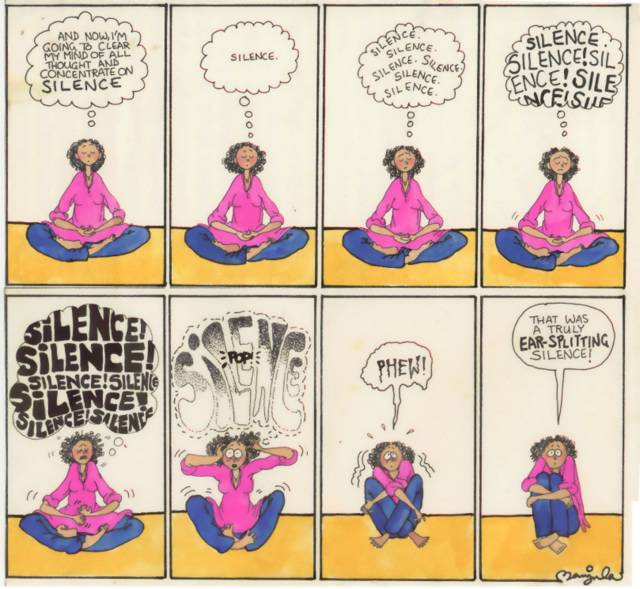

Wednesday, September 15, 2004
The Mating Game Show
This week I met with the team of people who will be working on the reading of my play THE MATING GAME SHOW on Monday, 20th September. The group is called SALAAM -- the name stands for South Asian League of Artists in AMerica -- begun by Geeta Citygirl. She was born and brought up in the US and she changed her surname from Chopra to Citygirl. SALAAM is very active and has been able to maintain itself in production for three years, which is highly commendable for a small group most of whose members support themselves with day jobs other than theatre. They have done readings of my plays before, so this is not my first time with them, but for me of course it's always rathre thrilling to be present at a reading.
This time the director is a playwright too -- his name is PAUL KNOX and one of his recent staged works is a play called KALIGHAT. I haven't seen it, but from reviews and notices that appeared in the NYC press at the time it was produced (last year, I think) it is a powerful and moving play set in Mother Teresa's home for the dying, in Calcutta.
On Monday evening, I went over to Geeta's apartment in order to spend a little time with her, Paul and two other SALAAM members, Priya Mathew and Anuvab Pal so that we could decide on the logistics of the reading. I had a slightly revised version of the play's script which needed to be printed out and decisions needed to be taken about the cast of actors. The choice of who will read which parts is a crucial one and most our time in Geeta's house was taken up with that. There are a number of young Indians ("South Asians" is the correct term these days, because it includes Pakistanis, Bangladeshis and Sri Lankans) who are considering acting as a career. It isn't easy to earn a living as a brown-skinned actor whose most likely roles are Asian Shopkeeper or Asian Taxi-driver ... but from the discussion on Monday night, it was clear that there were a number of names to choose from and also a number of on-going productions that were keeping several of the actors busy.
Geeta's apartment was some distance away from where I am and I got quite lost on the subway getting there! The New York subway system is quite different to London's -- though there are maps and numbers, it's not always obvious how to switch from one line to the next -- but anyway, it only meant a half hour delay and one trip going in the wrong direction. Geeta lives in a vast housing complex, in a cheery, light-filled space that she calls her 'crib' -- because it's where she sleeps! -- bursting with books and posters and gadgets. She is a little shorter than me, has shoulder-length hair, a big friendly smile and more energy than can be contained in a football field. She had laid out snacks to eat -- two types of chips, two dips, cheese, cookies and drinks. Priyanka and Anuvab left around 8 pm while Paul and I stayed till about nine.
When it was time to go howeward, Paul introduced me to the bus system as he was going part of the way in the same direction as me. I didn't have the necessary small change with me, so we went down to the subway station to buy a MetroCard. My brain goes blank when I am faced by machines that sell train and bus tickets -- it's VERY silly, because they're designed to be idiot-proof -- but I always sink to below-idiot standards the first time around. Anyway, Paul was very patient -- he talked me through the choices like a Kindergarten schoolteacher whose dull student is unable to figure out how to fit square blocks into square holes -- and I am now the proud possessor of a multiple-use MetroCard.
We talked on the bus-ride about his work and his visits to India. He told me that on his first visit he spent six months in Calcutta, working with the Sisters of Charity in the home for the dying, and his play KALIGHAT is of course inspired by some of his experiences there. He is a young man and I cannot imagine what it must have been like to go straight from the US to a home for the dying in Calcutta, but that's what he did, and he seems remarkably centred and accepting of his experiences there.
I hope to post more material about the rehearsals and the reading here as events scroll out. I'm sort of hoping that by doing this I will inspire other bloggers -- Zig! I'm looking at you here! -- to think in terms of doing stuff along SALAAM's lines. I'm going to post a link to SALAAM on the right and will hope that all those who link to YES will also follow links to KITABKHANA, ZIGZACKLY and CAFERATI -- all featured on the right -- when they have the time. All are India-based lit.-inspired blogs, each with its own spices and meats to offer, good places to make connections and to meet new names and faces. I also want to mention that the revisions I made to THE MATING GAME SHOW were made possible on account of the informal reading hosted at Nilanjana Roy's home in New Delhi, with the generous participation of herself and Debangshu. Maybe when I'm back we can do a reprise ... of course I'm really only thinking of the quantities of chocolate cake that greased the wheels of literature on that occasion, so it's not very surprising that I should be looking forward to more of the same!
This time the director is a playwright too -- his name is PAUL KNOX and one of his recent staged works is a play called KALIGHAT. I haven't seen it, but from reviews and notices that appeared in the NYC press at the time it was produced (last year, I think) it is a powerful and moving play set in Mother Teresa's home for the dying, in Calcutta.
On Monday evening, I went over to Geeta's apartment in order to spend a little time with her, Paul and two other SALAAM members, Priya Mathew and Anuvab Pal so that we could decide on the logistics of the reading. I had a slightly revised version of the play's script which needed to be printed out and decisions needed to be taken about the cast of actors. The choice of who will read which parts is a crucial one and most our time in Geeta's house was taken up with that. There are a number of young Indians ("South Asians" is the correct term these days, because it includes Pakistanis, Bangladeshis and Sri Lankans) who are considering acting as a career. It isn't easy to earn a living as a brown-skinned actor whose most likely roles are Asian Shopkeeper or Asian Taxi-driver ... but from the discussion on Monday night, it was clear that there were a number of names to choose from and also a number of on-going productions that were keeping several of the actors busy.
Geeta's apartment was some distance away from where I am and I got quite lost on the subway getting there! The New York subway system is quite different to London's -- though there are maps and numbers, it's not always obvious how to switch from one line to the next -- but anyway, it only meant a half hour delay and one trip going in the wrong direction. Geeta lives in a vast housing complex, in a cheery, light-filled space that she calls her 'crib' -- because it's where she sleeps! -- bursting with books and posters and gadgets. She is a little shorter than me, has shoulder-length hair, a big friendly smile and more energy than can be contained in a football field. She had laid out snacks to eat -- two types of chips, two dips, cheese, cookies and drinks. Priyanka and Anuvab left around 8 pm while Paul and I stayed till about nine.
When it was time to go howeward, Paul introduced me to the bus system as he was going part of the way in the same direction as me. I didn't have the necessary small change with me, so we went down to the subway station to buy a MetroCard. My brain goes blank when I am faced by machines that sell train and bus tickets -- it's VERY silly, because they're designed to be idiot-proof -- but I always sink to below-idiot standards the first time around. Anyway, Paul was very patient -- he talked me through the choices like a Kindergarten schoolteacher whose dull student is unable to figure out how to fit square blocks into square holes -- and I am now the proud possessor of a multiple-use MetroCard.
We talked on the bus-ride about his work and his visits to India. He told me that on his first visit he spent six months in Calcutta, working with the Sisters of Charity in the home for the dying, and his play KALIGHAT is of course inspired by some of his experiences there. He is a young man and I cannot imagine what it must have been like to go straight from the US to a home for the dying in Calcutta, but that's what he did, and he seems remarkably centred and accepting of his experiences there.
I hope to post more material about the rehearsals and the reading here as events scroll out. I'm sort of hoping that by doing this I will inspire other bloggers -- Zig! I'm looking at you here! -- to think in terms of doing stuff along SALAAM's lines. I'm going to post a link to SALAAM on the right and will hope that all those who link to YES will also follow links to KITABKHANA, ZIGZACKLY and CAFERATI -- all featured on the right -- when they have the time. All are India-based lit.-inspired blogs, each with its own spices and meats to offer, good places to make connections and to meet new names and faces. I also want to mention that the revisions I made to THE MATING GAME SHOW were made possible on account of the informal reading hosted at Nilanjana Roy's home in New Delhi, with the generous participation of herself and Debangshu. Maybe when I'm back we can do a reprise ... of course I'm really only thinking of the quantities of chocolate cake that greased the wheels of literature on that occasion, so it's not very surprising that I should be looking forward to more of the same!
Monday, September 13, 2004
Flexing the Culture Muscle
This weekend has been filled (well, by MY normally inactive standards) with cultural events, courtesy a small but very active theatre group called SALAAM. The name stands for South Asian League of Artists in AMerica, begun by a warm, high-energy NYC resident called Geeta Citygirl three years ago. She wears a painted heart on her left cheek and she greets callers to her phone's answering service with 'Peace ...' but she's one of life's givers -- from what I've seen of her, she's in perpetual motion and its all directed towards her theatre activities and friends.
On Friday night I attended a reading of '9/10' by Richard Willett. It takes a moment for the penny to drop -- it's about the day BEFORE 9/11 -- and as it happened, the reading occurred on the tenth of September. It took the form of four dialogues between four pairs of people, on the eve of the event that would alter their lives irrevocably. There is nothing to connect the four narratives except of course the fact that they're in a building that will be, just one day later, rendered down to a smoking ruin.
It was clever, thought-provoking and well presented. I was particularly struck by the young couple Colin and Allison, a firefighter and his girlfriend who happens to be the daughter of a fire-fighter who died in a fire -- the play has the effect of snapping a lightbulb on over certain realities -- the fact that there was a time when fire-fighters were not accorded the status of high-visibility heroes they've had since post-9/11. Allison, it turns out, has a particular fixation with the sinking of the Titanic. She has been spending time over at the New York Public Library, looking at micro-film records of news reports. The day of the tragedy, the film is worn thin with having been used so often -- but what she has looked at just that afternoon, is the film of the day BEFORE the Titanic sank ...
In an oblique but highly effective way, she makes us stop and consider the absolutism of world events -- the way that a major news story ruthlessly wipes out all the stories that went before it, however urgent, poignant or impressive, in the tidal wave of news about the current catastrophe. Using the Titanic as the flashpoint, the playwright causes the audience to listen to these four conversations with a keen sense of premonition -- like ghosts of the future -- to what life was like in that 'innocent' time that is now lost forever, before the Towers fell.
Of course, too, as a non-American, I heard the play with a mental ear cocked towards all the stories that stream out of other lands and other histories, which should but don't have the same effect as a Titanic or a 9/11. Does it mean that they're really of less consequence -- are a million Rwandans of less consequence than 3000 New Yorkers? Or do we as readers of the media need to tune our own sensibilities more sharply so that we and not the news media can create the sense of consequence for ourselves?
So, like I said, it was a rewarding and eye-opening performance. About the playwright (from the flyer): his plays "... have been presented off-Broadway and at theatres across the country. Honours include an Edward F. Albee Foundation Fellowship, a Tennessee Williams Scholaship, an OOBR Award and grants from the Arch and Bruce Brown Foundation and the New York State Council of the Arts ... he is the co-artistic director of the New Directions Theatre (www.newdirectionstheater.org -- ha! I'm forced to use American spellings in a web-address!), where his play THE FLID SHOW will re-open in January 2005, and is also the author ten published short stories."
Then on Sunday I went to a performance of "FATWA" by a young Indian playwright, Anuvab Pal. Also thought-provoking and well presented, the play concerns two elderly men, Michael Jordan (Joe Jamrog) and Mohammed Ali (Jerry Matz) -- both obscure, wannabe-writers, unrelated to their famous namesakes. At the opening of the play, Michael Jordan has just been told that his novel AFSHANA is to be published while Mohammed Ali has failed yet again to get HIS long prose-poem published despite forty years of trying. It turns out that 'Afshana' is the name of Mohammed Ali's dead wife, killed on the eve of their honeymoon, by Jordan's rash driving. The two men have maintained an uneasy, quarrelsome friendship through the years -- based in equal parts on Bangladeshi kababs and an interest in literature! -- and in the course of the play, Jordan attempts a reparation of sorts, through a fatwa-inspired plan to earn some money for Ali.
The dialogue was for the most part engaging and crisp and the two principles held their own well -- two old men don't normally make for the most thrilling main characters, but this couple held our interest with their bad-tempered wrangling, as they struggle to squeeze what advantage they can out of the bare resources at their command -- Jordan's underwhelming success as an author and Ali's guttering life-force (he has terminal cancer). It was commendable, I thought, that the playwright chose to focus away from typical South Asian preoccupations to look at issues and characters outside the fold. In particular, I thought Matz as Ali provided a nicely rendered portrait of a man in the irascible twilight of existence -- when you can do what you like because you know there's not enough time left for the consequences to be worth fretting over.
The play was staged by AlterEgo described as "a team of professionals from various disciplines. ... collaborat(ing) with the New York theatre communicty to showcase innovative Theatre. What makes us unique is our ability to use AlterEgo as a platform to express our artistic vision while drawing from our diverse professional experiences to run a not-for profit theatre company." Anuvab Pal's plays include Chaos Theory, Out of Fashion and Life, Love and EBITDA. He is a member of the Dramatists Guild of America, a member playwright of Pulse Ensemble Theatre, Harbor Theatre, a teaching associate with Epic Theatre and Literary Manager of SALAAM Theatre. The director, Michael Barakiva was educated at the Juillard School, Vassar College.
Their ages are not mentioned in the brochure but they both appeared to be in their early twenties -- YOUNG! And talented. A good combination ...
Meanwhile, next Monday, SALAAM Theatre will host a reading of my play The Mating Game Show. Stay tuned for updates ...
On Friday night I attended a reading of '9/10' by Richard Willett. It takes a moment for the penny to drop -- it's about the day BEFORE 9/11 -- and as it happened, the reading occurred on the tenth of September. It took the form of four dialogues between four pairs of people, on the eve of the event that would alter their lives irrevocably. There is nothing to connect the four narratives except of course the fact that they're in a building that will be, just one day later, rendered down to a smoking ruin.
It was clever, thought-provoking and well presented. I was particularly struck by the young couple Colin and Allison, a firefighter and his girlfriend who happens to be the daughter of a fire-fighter who died in a fire -- the play has the effect of snapping a lightbulb on over certain realities -- the fact that there was a time when fire-fighters were not accorded the status of high-visibility heroes they've had since post-9/11. Allison, it turns out, has a particular fixation with the sinking of the Titanic. She has been spending time over at the New York Public Library, looking at micro-film records of news reports. The day of the tragedy, the film is worn thin with having been used so often -- but what she has looked at just that afternoon, is the film of the day BEFORE the Titanic sank ...
In an oblique but highly effective way, she makes us stop and consider the absolutism of world events -- the way that a major news story ruthlessly wipes out all the stories that went before it, however urgent, poignant or impressive, in the tidal wave of news about the current catastrophe. Using the Titanic as the flashpoint, the playwright causes the audience to listen to these four conversations with a keen sense of premonition -- like ghosts of the future -- to what life was like in that 'innocent' time that is now lost forever, before the Towers fell.
Of course, too, as a non-American, I heard the play with a mental ear cocked towards all the stories that stream out of other lands and other histories, which should but don't have the same effect as a Titanic or a 9/11. Does it mean that they're really of less consequence -- are a million Rwandans of less consequence than 3000 New Yorkers? Or do we as readers of the media need to tune our own sensibilities more sharply so that we and not the news media can create the sense of consequence for ourselves?
So, like I said, it was a rewarding and eye-opening performance. About the playwright (from the flyer): his plays "... have been presented off-Broadway and at theatres across the country. Honours include an Edward F. Albee Foundation Fellowship, a Tennessee Williams Scholaship, an OOBR Award and grants from the Arch and Bruce Brown Foundation and the New York State Council of the Arts ... he is the co-artistic director of the New Directions Theatre (www.newdirectionstheater.org -- ha! I'm forced to use American spellings in a web-address!), where his play THE FLID SHOW will re-open in January 2005, and is also the author ten published short stories."
Then on Sunday I went to a performance of "FATWA" by a young Indian playwright, Anuvab Pal. Also thought-provoking and well presented, the play concerns two elderly men, Michael Jordan (Joe Jamrog) and Mohammed Ali (Jerry Matz) -- both obscure, wannabe-writers, unrelated to their famous namesakes. At the opening of the play, Michael Jordan has just been told that his novel AFSHANA is to be published while Mohammed Ali has failed yet again to get HIS long prose-poem published despite forty years of trying. It turns out that 'Afshana' is the name of Mohammed Ali's dead wife, killed on the eve of their honeymoon, by Jordan's rash driving. The two men have maintained an uneasy, quarrelsome friendship through the years -- based in equal parts on Bangladeshi kababs and an interest in literature! -- and in the course of the play, Jordan attempts a reparation of sorts, through a fatwa-inspired plan to earn some money for Ali.
The dialogue was for the most part engaging and crisp and the two principles held their own well -- two old men don't normally make for the most thrilling main characters, but this couple held our interest with their bad-tempered wrangling, as they struggle to squeeze what advantage they can out of the bare resources at their command -- Jordan's underwhelming success as an author and Ali's guttering life-force (he has terminal cancer). It was commendable, I thought, that the playwright chose to focus away from typical South Asian preoccupations to look at issues and characters outside the fold. In particular, I thought Matz as Ali provided a nicely rendered portrait of a man in the irascible twilight of existence -- when you can do what you like because you know there's not enough time left for the consequences to be worth fretting over.
The play was staged by AlterEgo described as "a team of professionals from various disciplines. ... collaborat(ing) with the New York theatre communicty to showcase innovative Theatre. What makes us unique is our ability to use AlterEgo as a platform to express our artistic vision while drawing from our diverse professional experiences to run a not-for profit theatre company." Anuvab Pal's plays include Chaos Theory, Out of Fashion and Life, Love and EBITDA. He is a member of the Dramatists Guild of America, a member playwright of Pulse Ensemble Theatre, Harbor Theatre, a teaching associate with Epic Theatre and Literary Manager of SALAAM Theatre. The director, Michael Barakiva was educated at the Juillard School, Vassar College.
Their ages are not mentioned in the brochure but they both appeared to be in their early twenties -- YOUNG! And talented. A good combination ...
Meanwhile, next Monday, SALAAM Theatre will host a reading of my play The Mating Game Show. Stay tuned for updates ...
Subscribe to:
Posts (Atom)